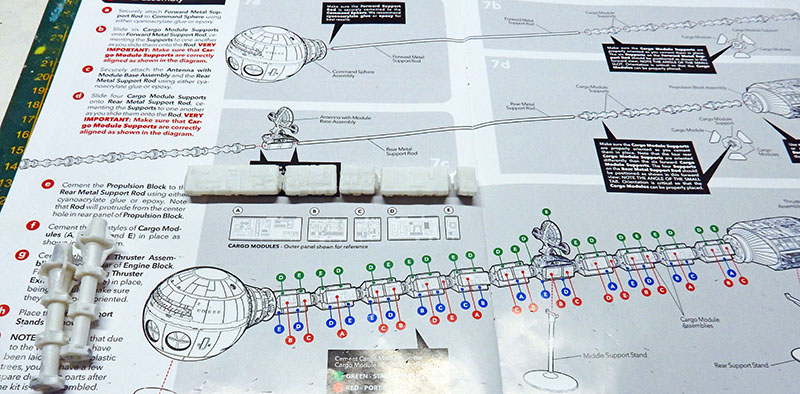
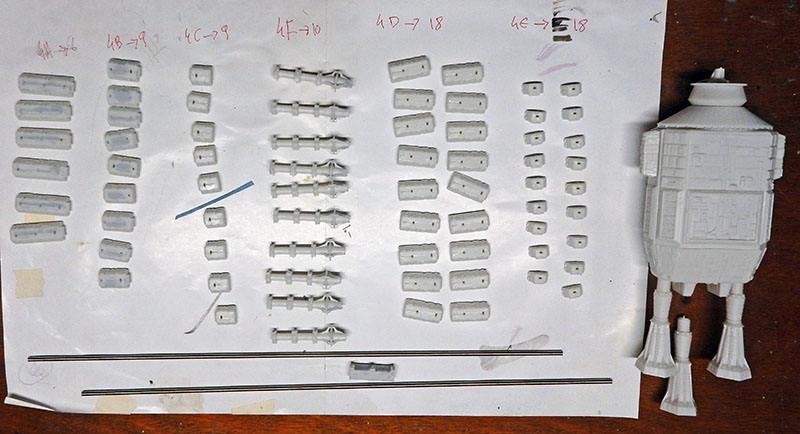
You need to carefully check the color-coded map to see exactly where the containers are placed, because they have a specific orientation that isn't always the same...
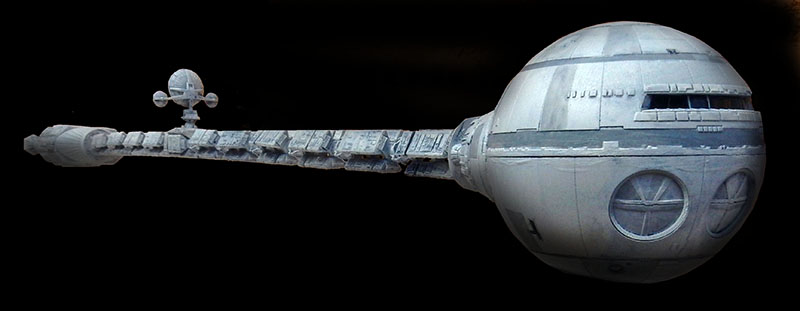
The manufacturer had the good sense to include metal rods that slide into the 4F parts as well as the antenna base (at the bottom, between the rods) to reinforce the assembly once it’s glued together—which measures over one meter...
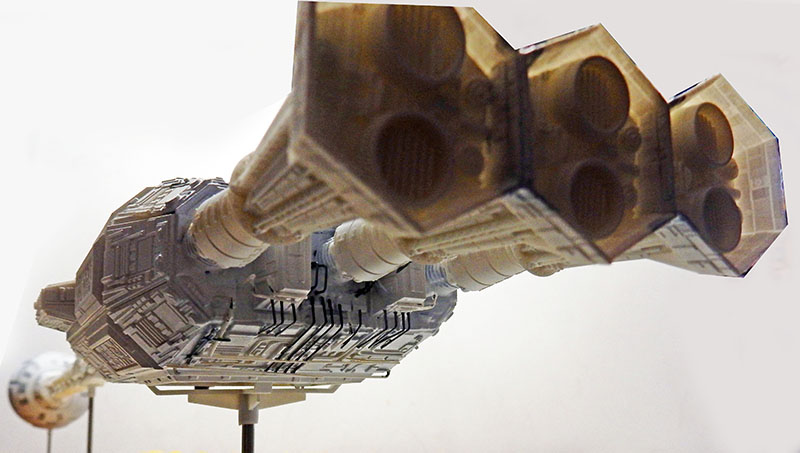
The engine block isn't difficult to work on, except that you need to coat the gaskets with liquid sealant and sand down the smooth surfaces...
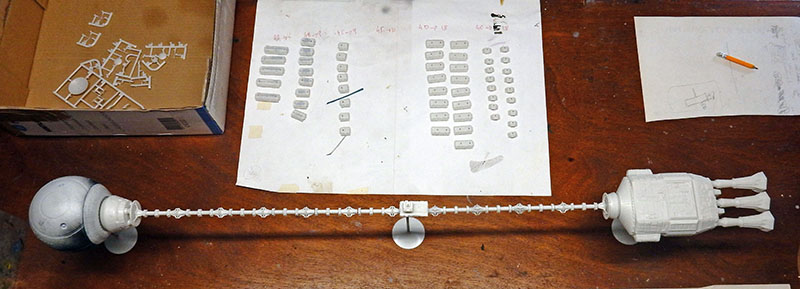
A view of the column secured on each side, ready to hold the components...
The appeal of this model—which would be more than enough—would be its simple lighting, achieved by installing one white (or yellow) LED in the sphere and three blue LEDs in the reactors...
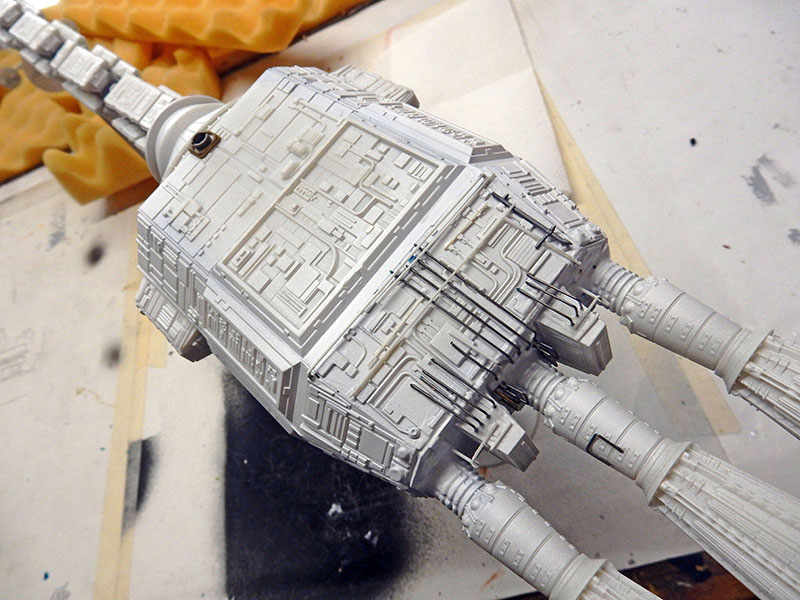
Curiously, the photos from the film show tubing at the rear of the engine block and a few small details that resin and photo-etched parts manufacturers don't mention—even though, unlike the interior details of the sphere (which are abundant), these are clearly visible...
So they are made of piano wire and Evergreen plastic...
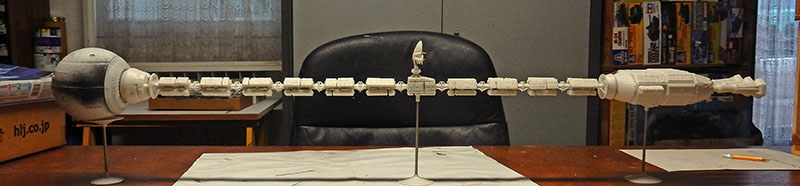
Installing the spherical section poses no particular problems. The antenna has been improved...
Painting
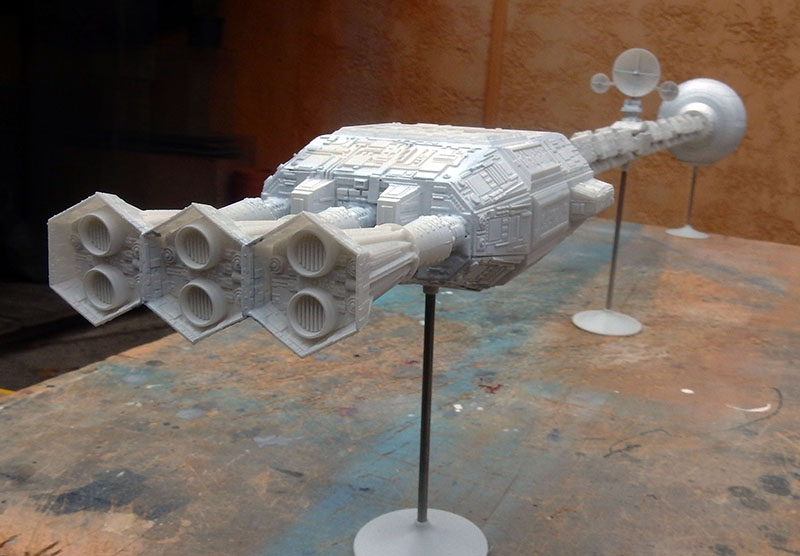
After applying the essential white primer to cover up imperfections, apply a coat of white...
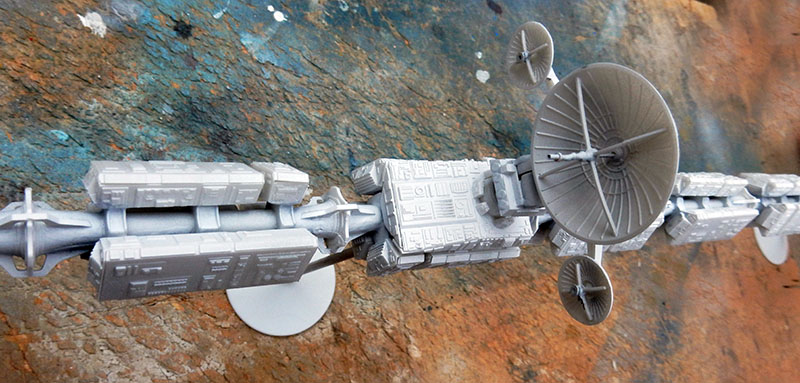
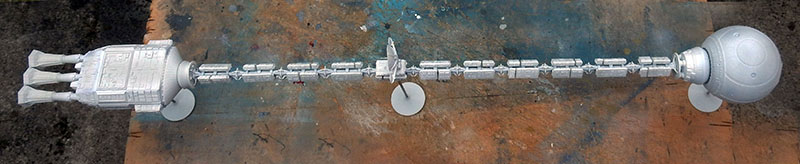
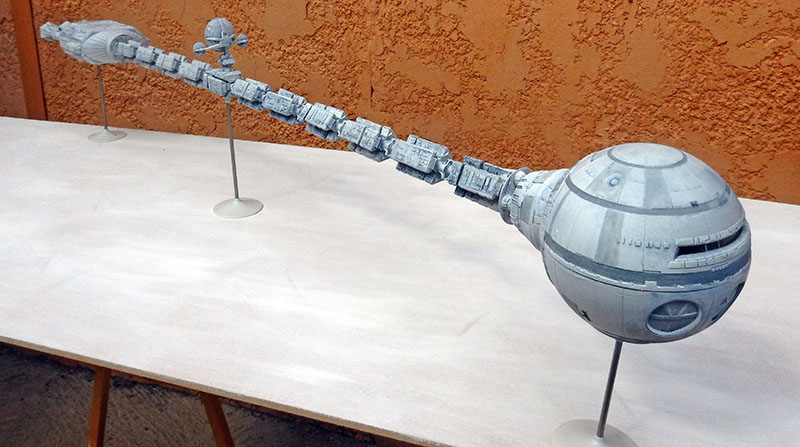
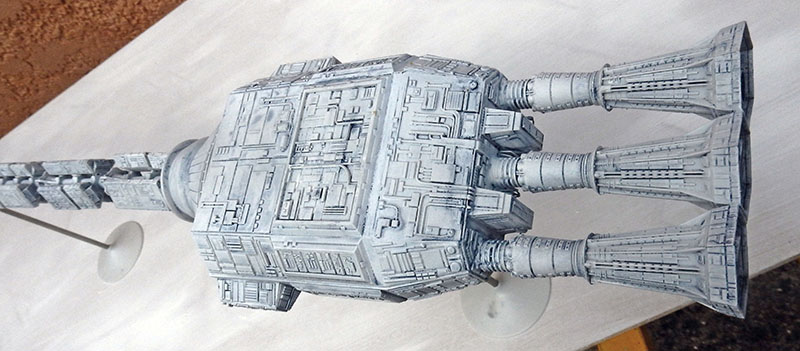
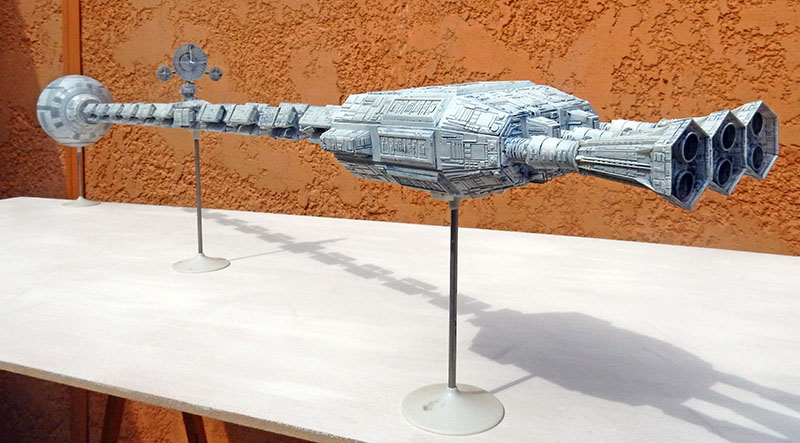
Black pastel will simulate the soot coming out of the engines...
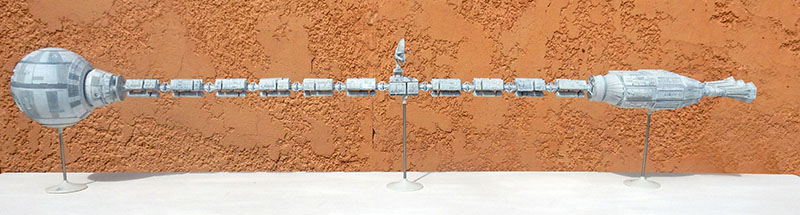
The Setting
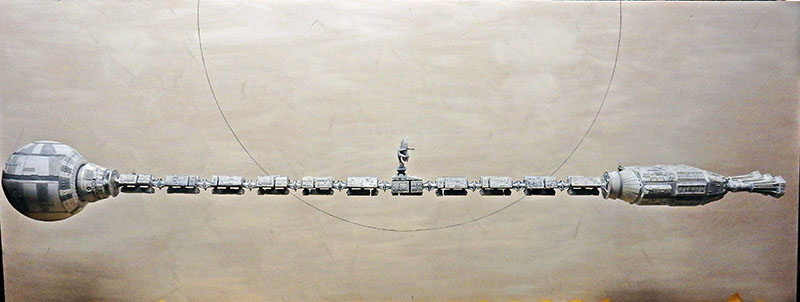
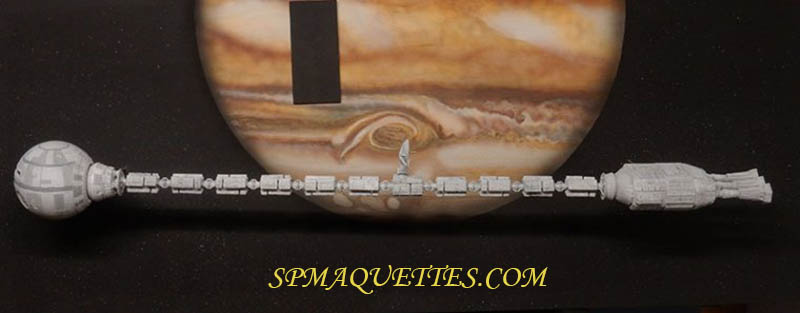
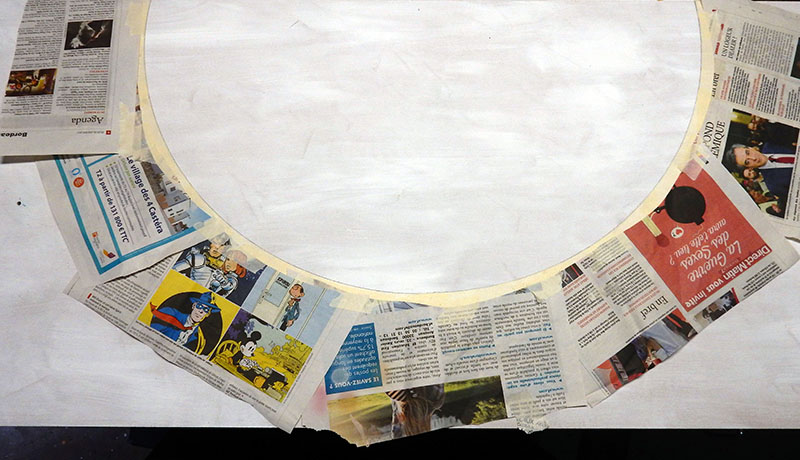
The hemisphere of Jupiter measures 0.67 m. The panel is painted with white Gesso paint for canvases...
Tip: To draw a circle—if you don't have a very large compass—take a pencil, tie a string to it that's as long as the circle's radius, and draw the circle...
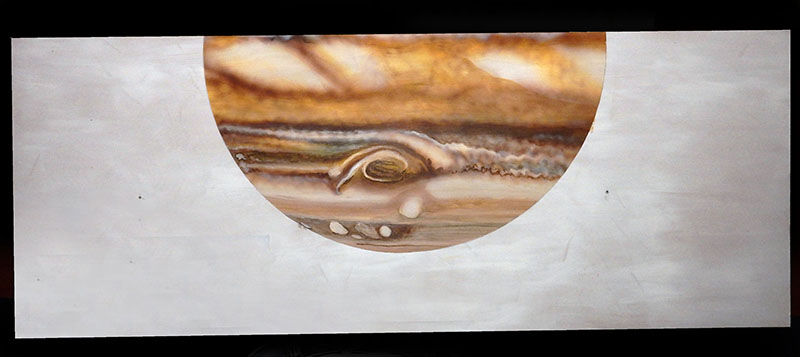
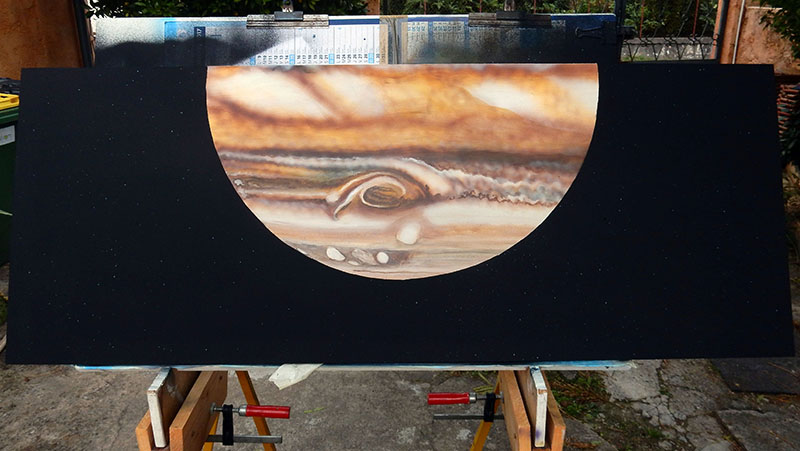
Then, white, blue, and yellow paint will be brushed on to simulate distant stars that are invisible in the photos...
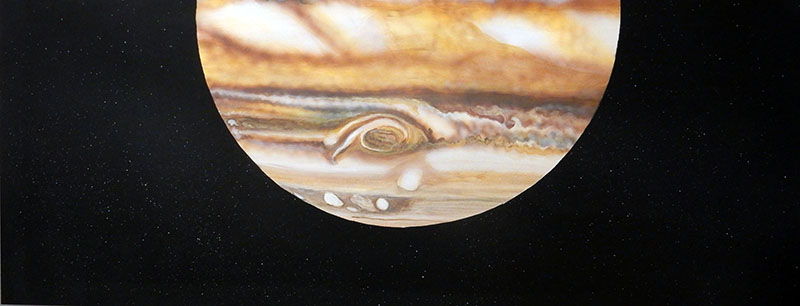
We finish by adding a shadow around the celestial body to make it look more realistic...
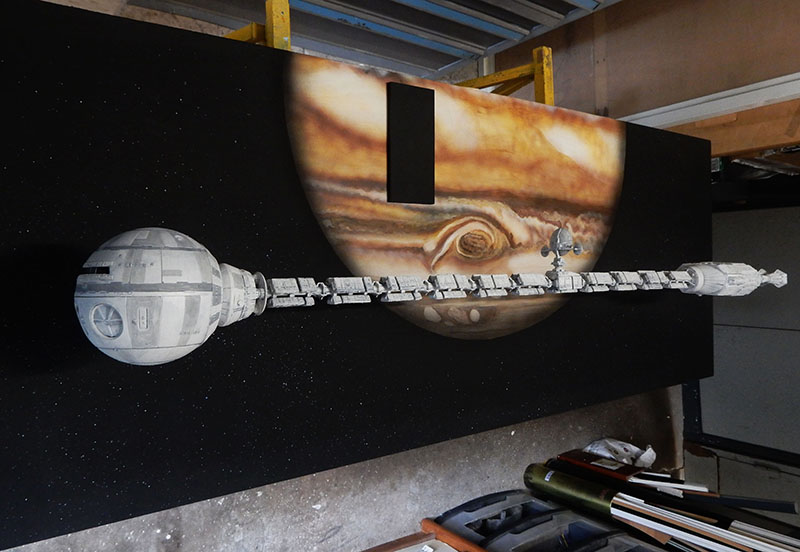
The model will have a Plexiglas cover and will be hung like a painting...