INTRODUCTION TO WORKING WITH WAX
INTRODUCTION TO WORKING WITH WAX
It allows for the creation of very small, highly precise pieces and enables almost unlimited revisions because it is a reusable material. It can be shaped, remelted, and sculpted; it can remain in good condition for years without deteriorating. The major drawback is the material’s fragility. To help reinforce it, a framework such as wire can be used. Another advantage is that as the wax cools, its shrinkage is extremely minimal, if not virtually nonexistent...
Modeling wax and sculpting
wax
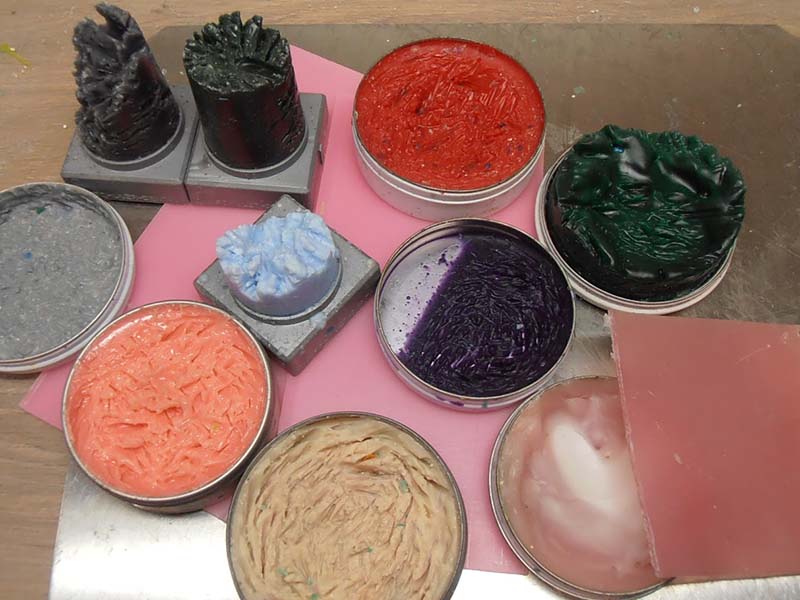
In the field of dental prosthetics and in specialty stores, you can find various types of waxes. Almost all of them are derived from the petrochemical industry, with some containing varying proportions of beeswax. Depending on the intended use, there are different types of wax with varying specifications, such as hardness or color. I mainly use two types: one called “sculpting wax” and another called “modeling wax”...
The first is modeling clay because it’s “softer” and also gets a bit sticky at times. It lets me shape the object easily, though I can’t add too many details because, as I mentioned before, it gets “sticky”...
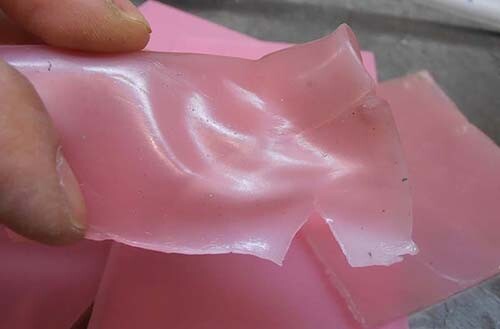
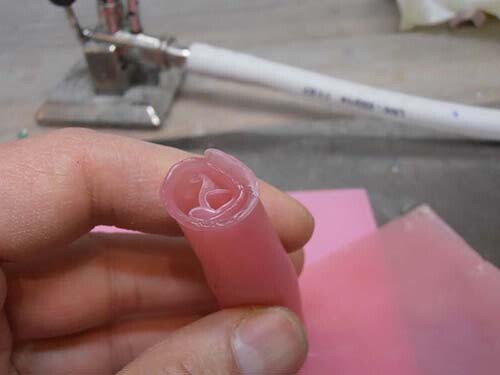
I have two types of wax for modeling: one that comes in sheets (the same kind used to shape dental prostheses) and another I found at a store specializing in arts and crafts—it’s brown and is supposed to be for sculpting, but personally I find it too soft and sticky. The pink wax is for shaping, and the brown one is for roughly “filling in” the volumes...
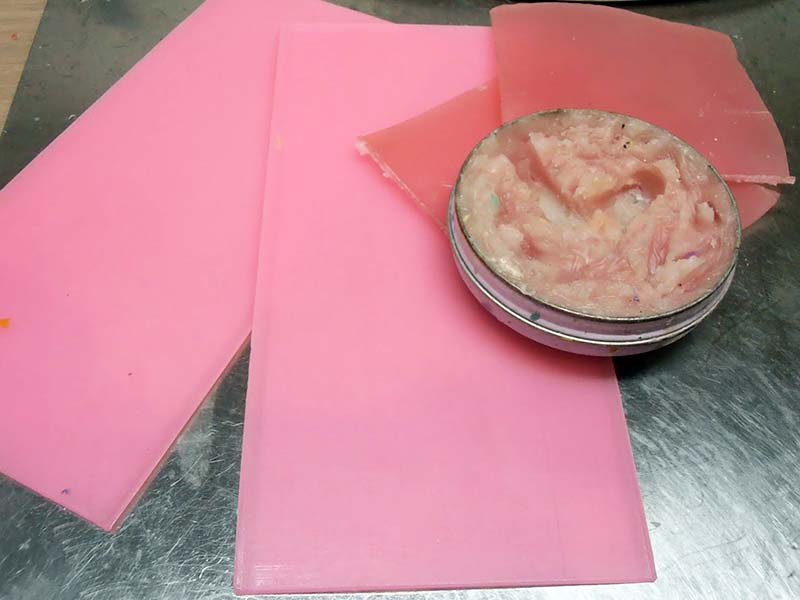
You can also create blends to adjust the hardness of the wax. To do this, use an old saucepan to melt and mix the waxes, then pour the mixture onto a very smooth surface (stainless steel, glass, etc.) coated with a fairly greasy insulating agent (Isolit used in dental prosthetics or sprayed cooking oil) to form sheets...
 |  |
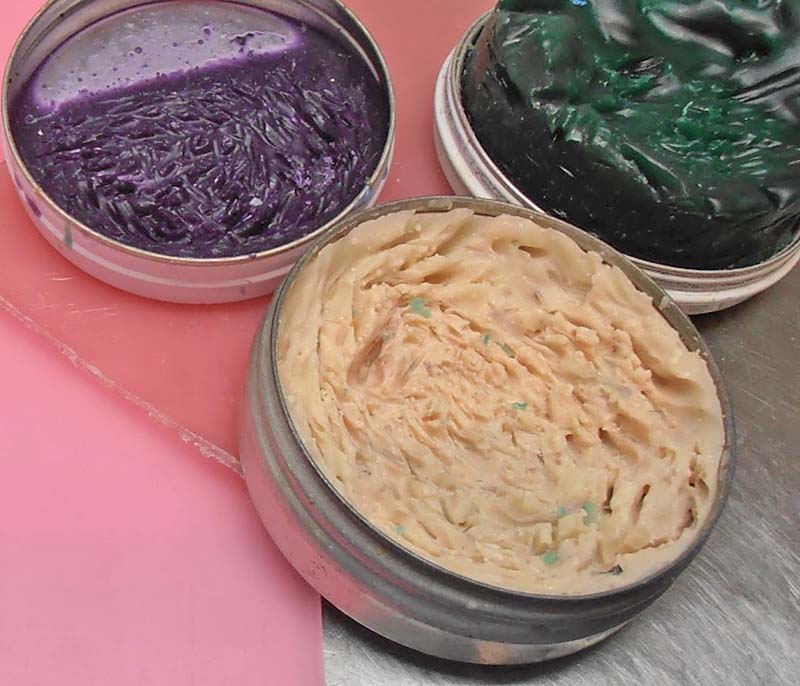
The second is a type of wax that, as its name suggests, is used for sculpting, since it is very hard but also very brittle. It is used to create very small details and finishing touches...
Tools for melting and working with wax.
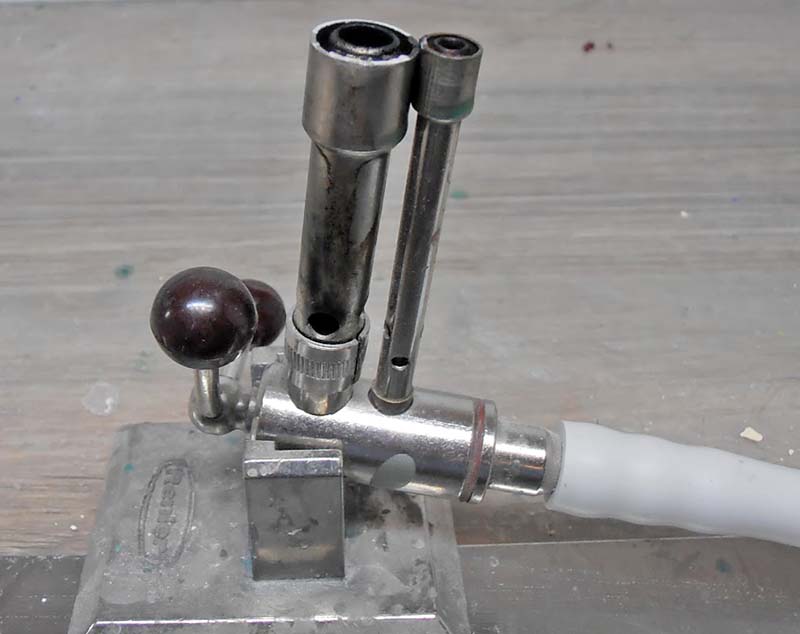
Please note: These tools must be used with great caution in a well-ventilated area. The wax and heating tools emit gases that can be irritating and hazardous to your health...
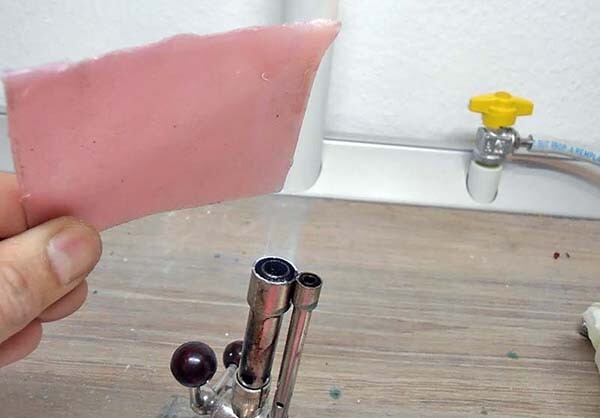
The alcohol lamp is very convenient—all you have to do is refill it with methyl alcohol...
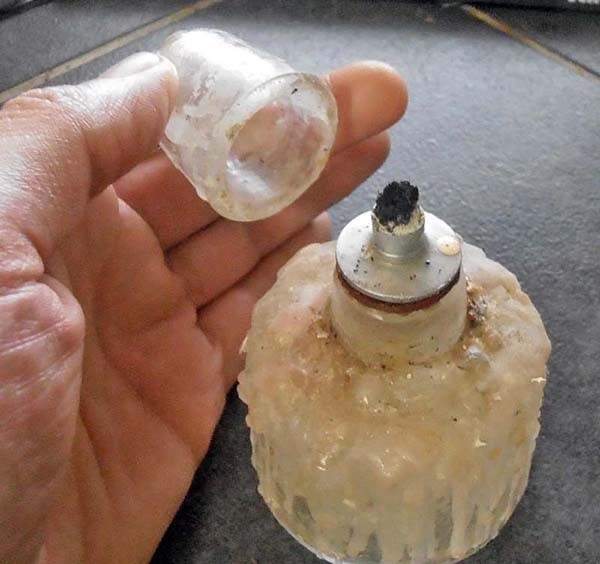
The alcohol lamp is very convenient—all you have to do is refill it with methyl alcohol...
The heated or electric spatula (which works like a soldering iron but at a lower temperature to avoid burning the wax) is very handy. It plugs into an outlet, has adjustable temperature settings, and allows you to apply small amounts of material, heat it, and rework it...
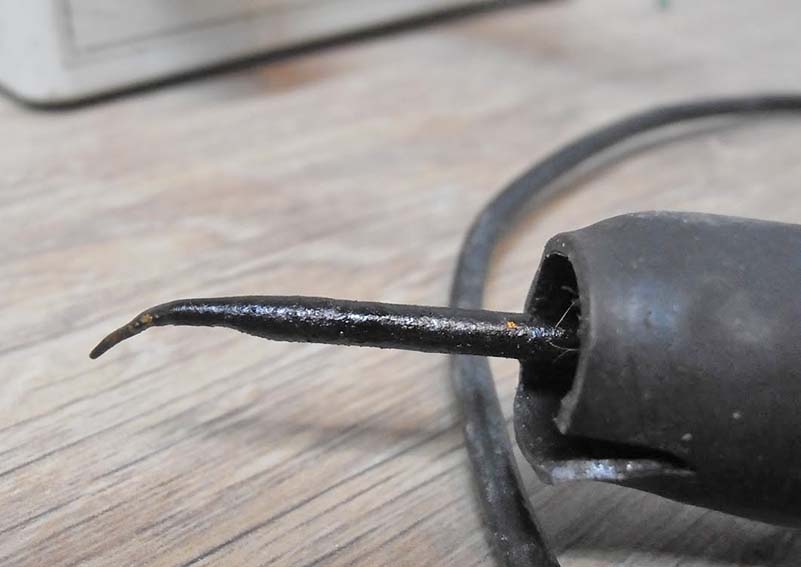
Candles: When they burn, they release a huge amount of carbon, which leaves black soot in the wax and on the instruments. AVOID THEM!!!
Modeling and sculpting tools.
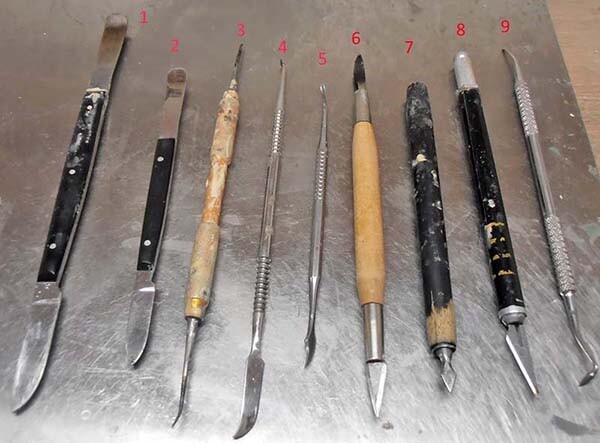
Wax knives #1 and #2 shown above are used to apply wax; they can also be used for smoothing by using the back of the spoon-shaped part, as shown here...
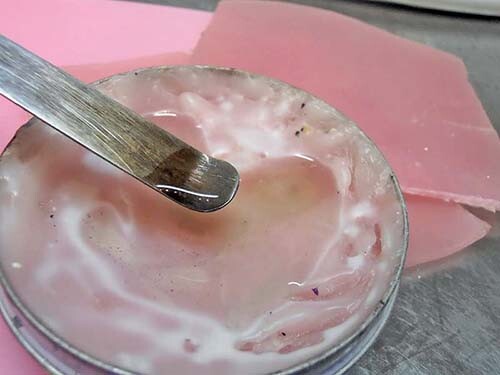 | 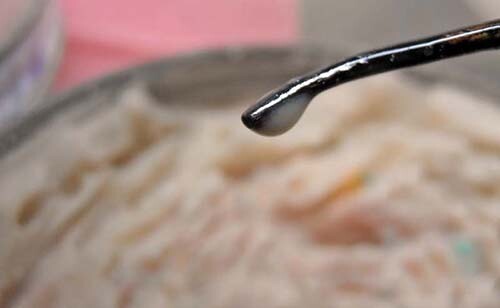 |
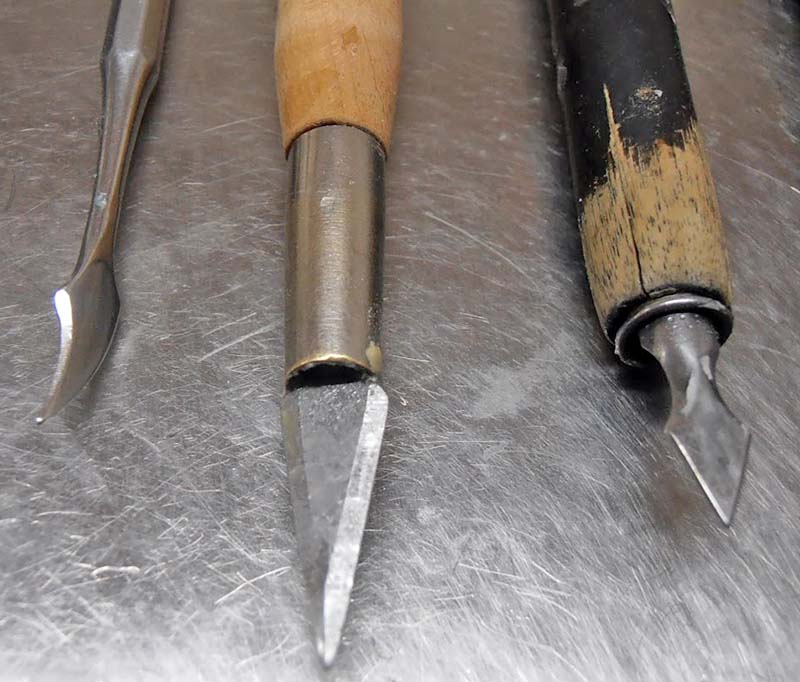
No. 8—a good old scalpel!
N°s 4, 5, 7.
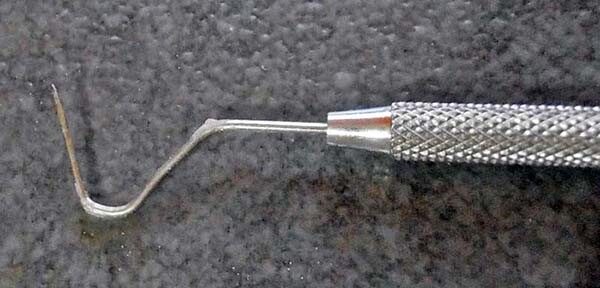
N°9 Zahl, Lecron et pleins d'autres noms exotiques pour ces instruments de sculpture issus de la prothèse dentaire...
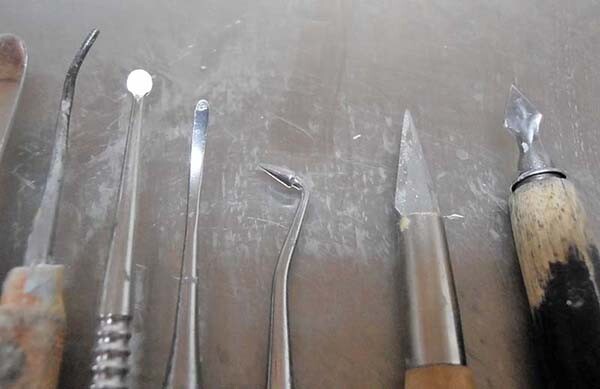
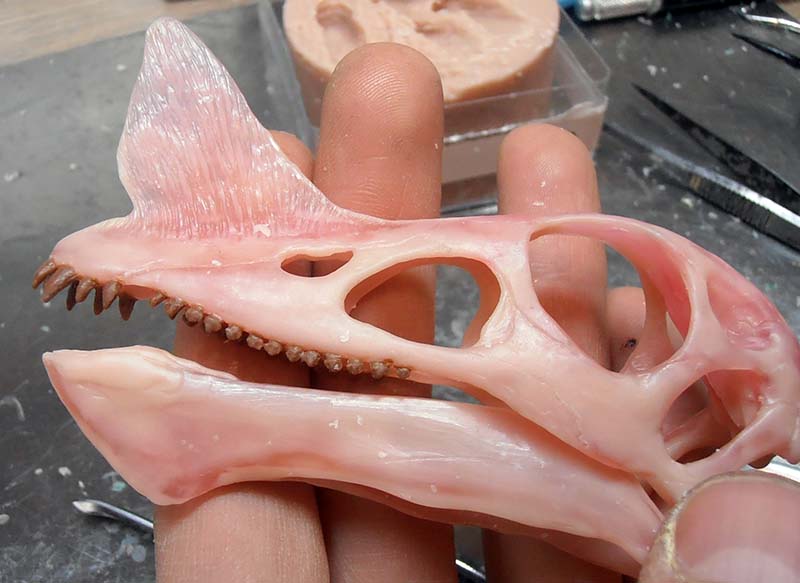
Here, you have everything you need to start a wax sculpture project...