Biology of Trompettosaurus
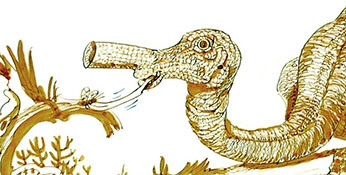
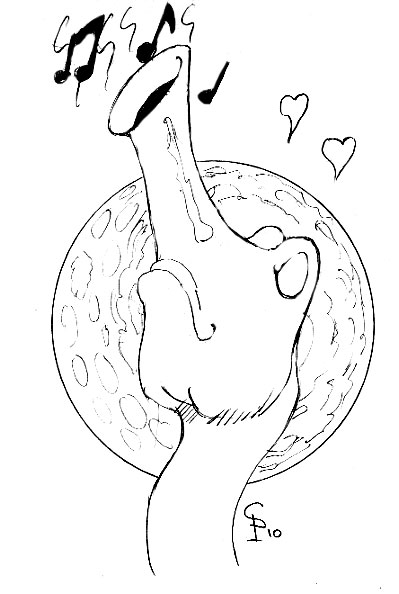
An ornithischian reptile fossil from the late Mesozoic Era (Upper Cretaceous), also known as a trumpet-snouted dinosaur. In fact, the air drawn in through its mouth was expelled forcefully through its nose, creating a sort of wind instrument that likely served to amplify its cries.
But this trumpet-shaped protrusion also helped it blow away dead leaves to uncover crawling and, occasionally, flying insects. Furthermore, thanks to a thin but long tongue—measuring about 40 centimeters and constantly coated with a sticky saliva—it was able to catch its daily food.
Measuring 10 to 12 meters in length, and exceptionally up to 16 meters (with the tail being roughly equal in length to the body), Trompettosaurs had forelimbs that were much shorter than their very robust hind limbs. They used both their front and hind limbs for walking, but relied solely on their hind legs for running. Their long, stiff tail served as a counterweight to their imposing bodies...
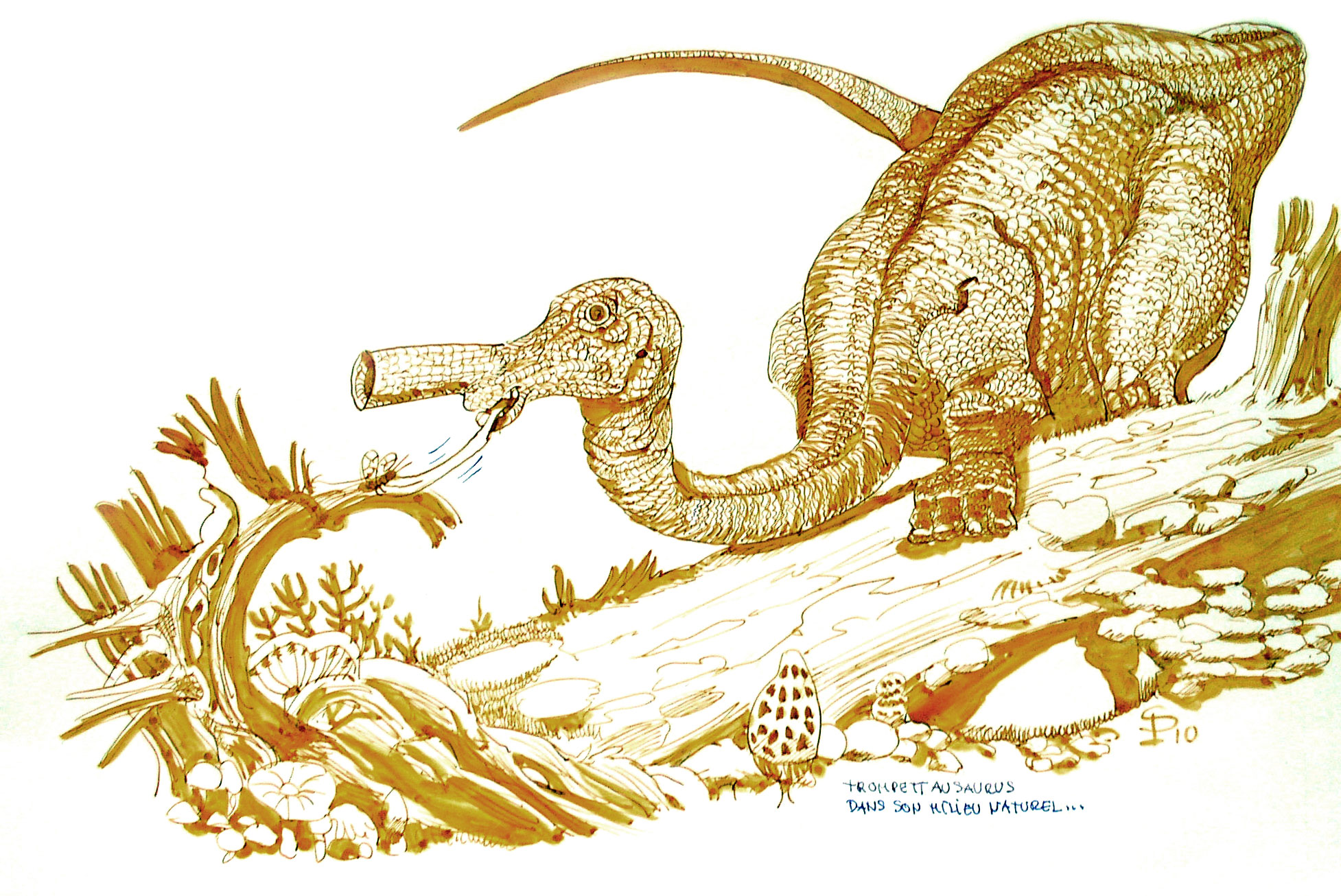
The Trompettosaurus in its natural habitat (here, a young specimen), just as it lived millions of years ago... Or even longer!!!
MAJOR PALEONTOLOGICAL DISCOVERY IN VIERZON (CHER)
What a surprise yesterday morning for these two paleontology enthusiasts—Nicolas Cormier and Adèle Robinet—who, keeping a watchful eye on all ongoing construction sites in the Vierzonnais region, came to explore the area during work on the future “L’Orée de la Sologne” shopping center. While looking near the excavator, they spotted a petrified animal skull in excellent condition... After initial analyses, it appears to be a reptile—more specifically, a dinosaur!
This raises some major questions for our two knowledgeable enthusiasts:
How did this land-dwelling reptile end up at the bottom of the sea? And how did it survive to reach us in such good condition?
Admittedly, the Cenomanian period was marked by major marine transgressions, so it’s a plausible hypothesis that ocean currents carried its remains from the coast out to the shallows. But that alone isn’t enough to explain its preservation or its exact origin. We’ll have to let the experts study this further...
Discovery
Discovery
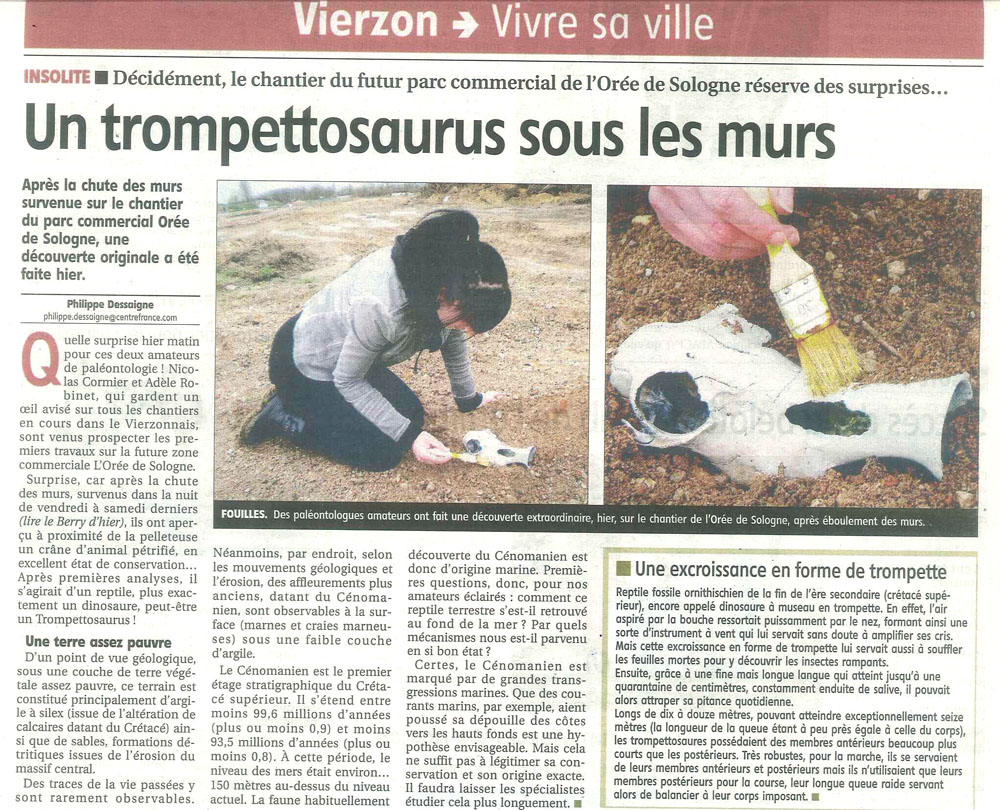
A portrait of the Trompettosaurus in all its glory...
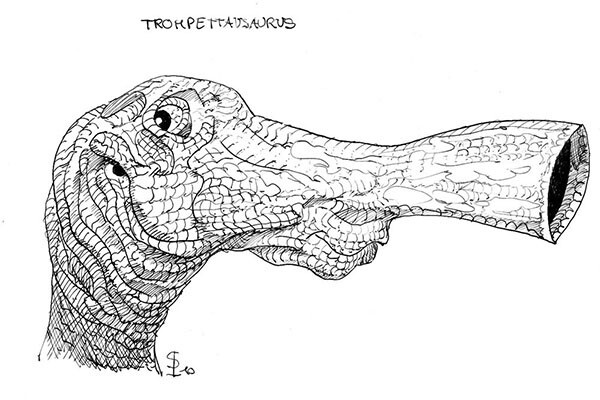
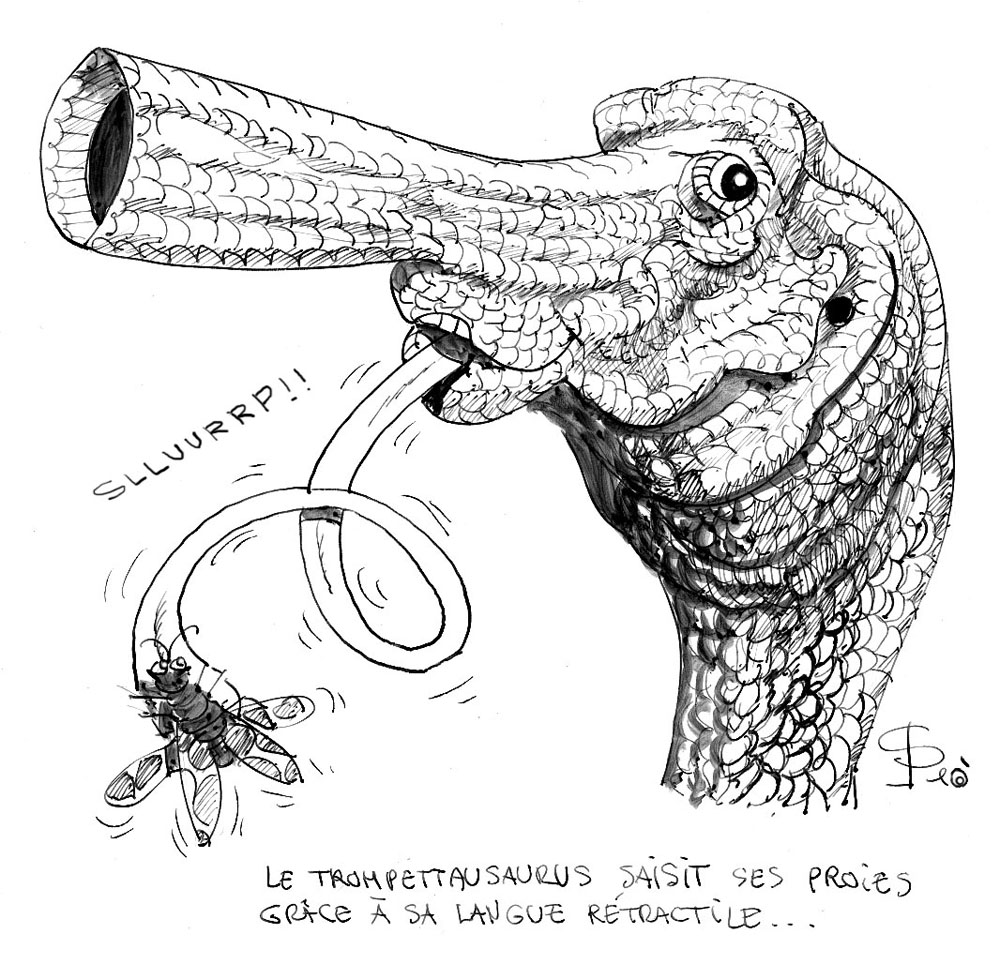
The Trompettosaurus blows fallen leaves away with its trumpet-shaped nose, and at the same time emits ultrasonic sounds that scare away small animals, which are then snatched up by its retractable tongue...
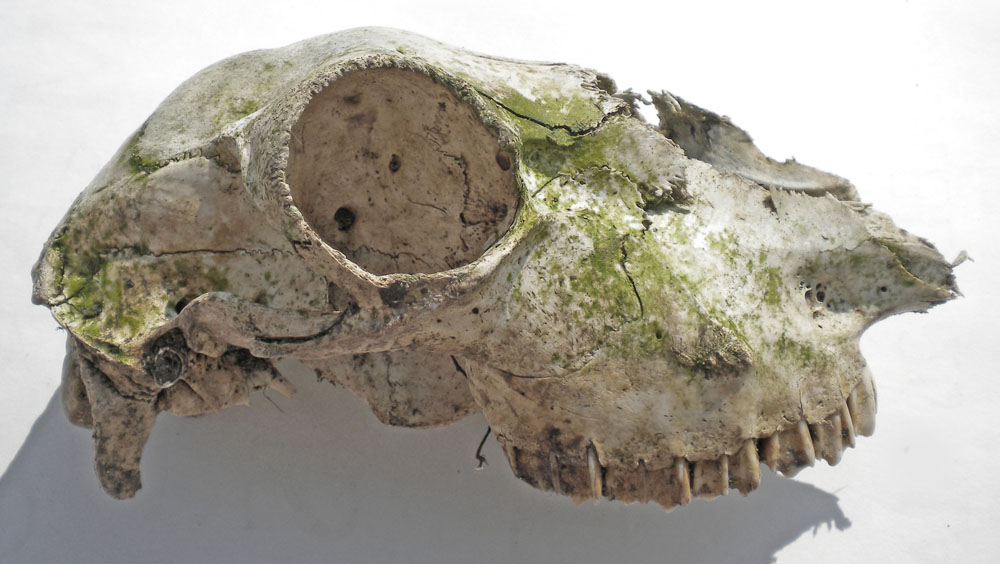
The idea for the Trompettosaurus took root in LapinBaulGarou's mind following a discovery... of a sheep's skull!...
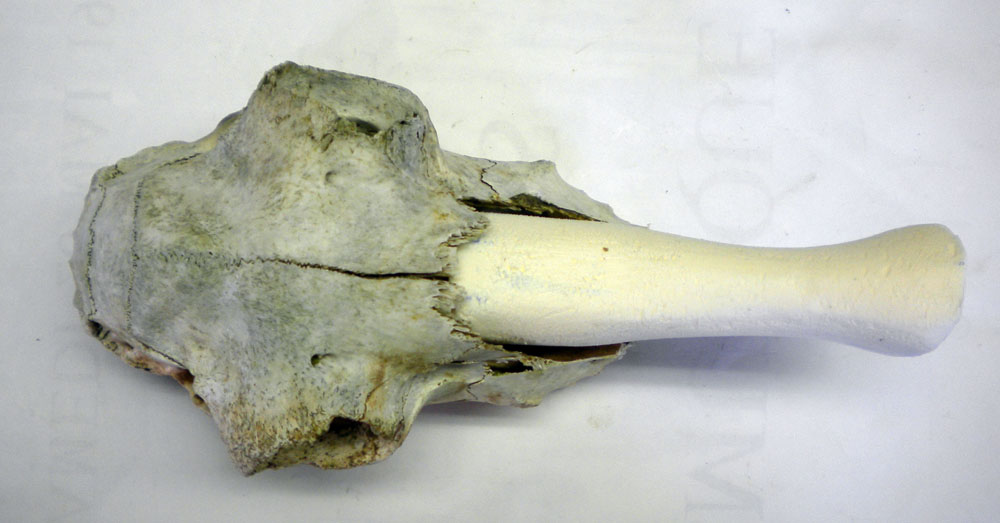
It was a chance to pull off a good April Fools' Day prank while creating something truly original and showcasing another example of how to work with extruded polystyrene...
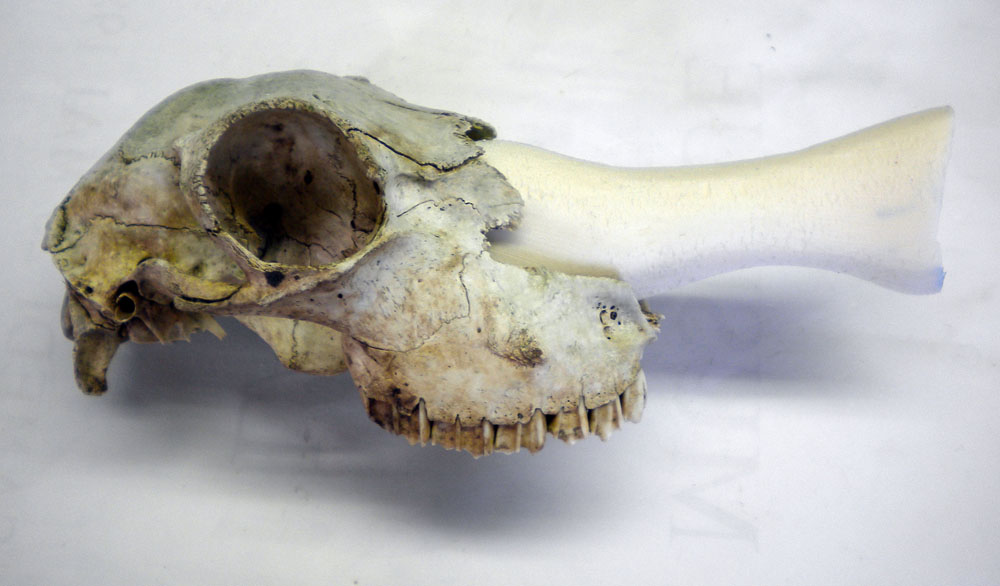
In fact, the nose is sculpted from this material. Then this preform is covered with a plaster-based filler...
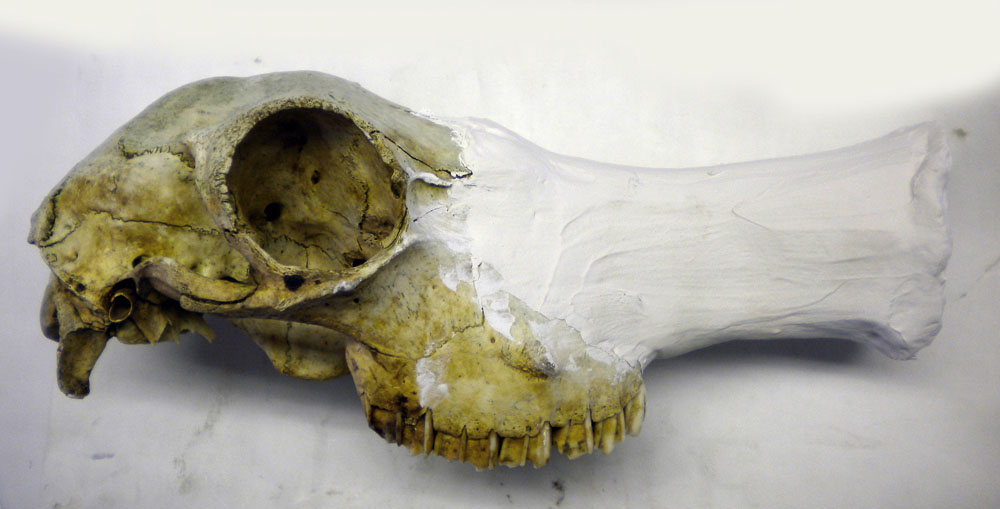
Once it has hardened, sand this coating with increasingly fine-grit sandpaper, paying special attention to the junction between the original skull and the added section. After the final sanding, drill a small hole in the center of the "trumpet." Pour acetone into the hole to dissolve the extruded polystyrene. Then, if necessary, perform some touch-up sanding...
Painting
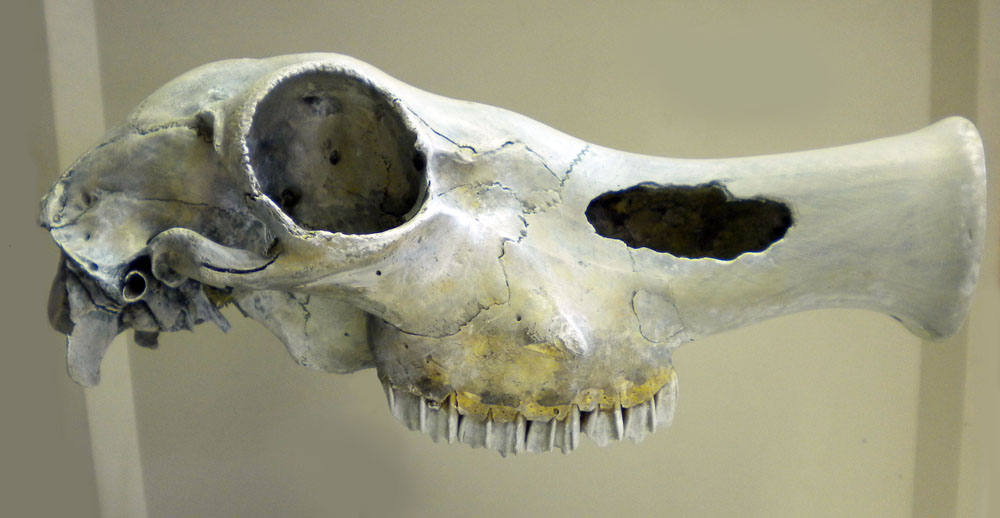
We carve the joints of the bones to make them fit together and add some "damage," such as the missing section on the side caused by wear and tear over time. The entire piece is then painted and weathered with Liquitex acrylic paint to give it the appearance of old bones...
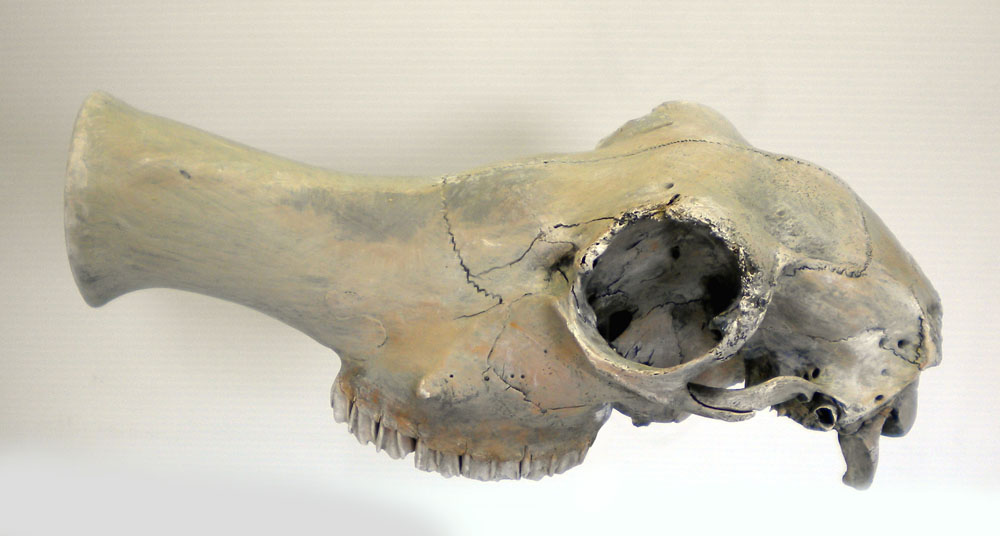
Left-side view of the subject...
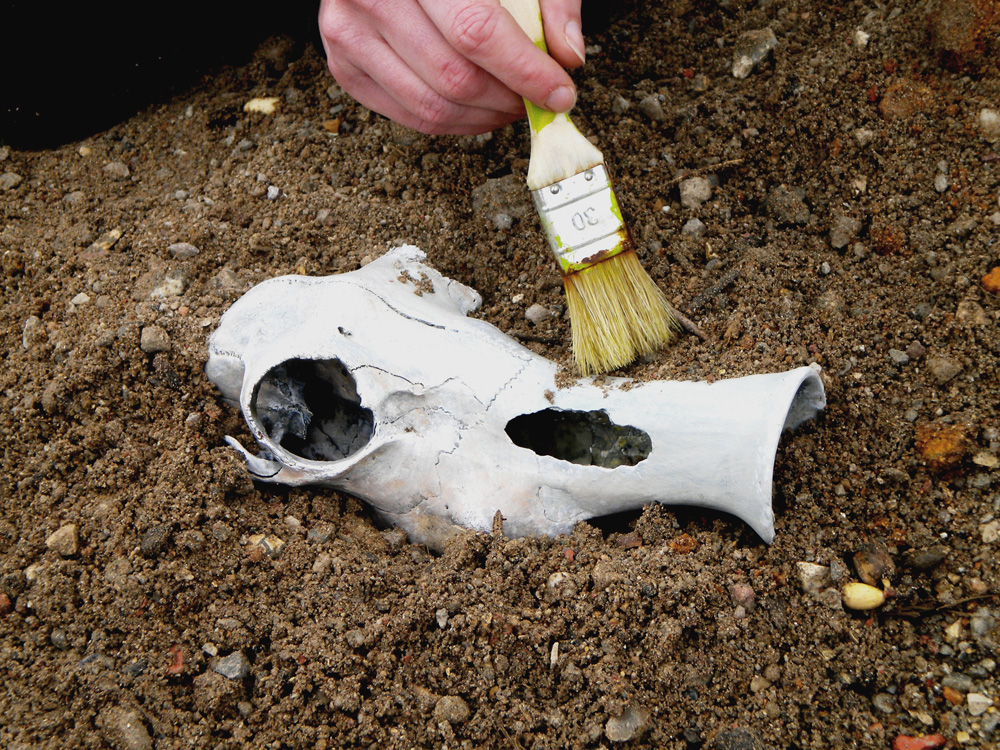
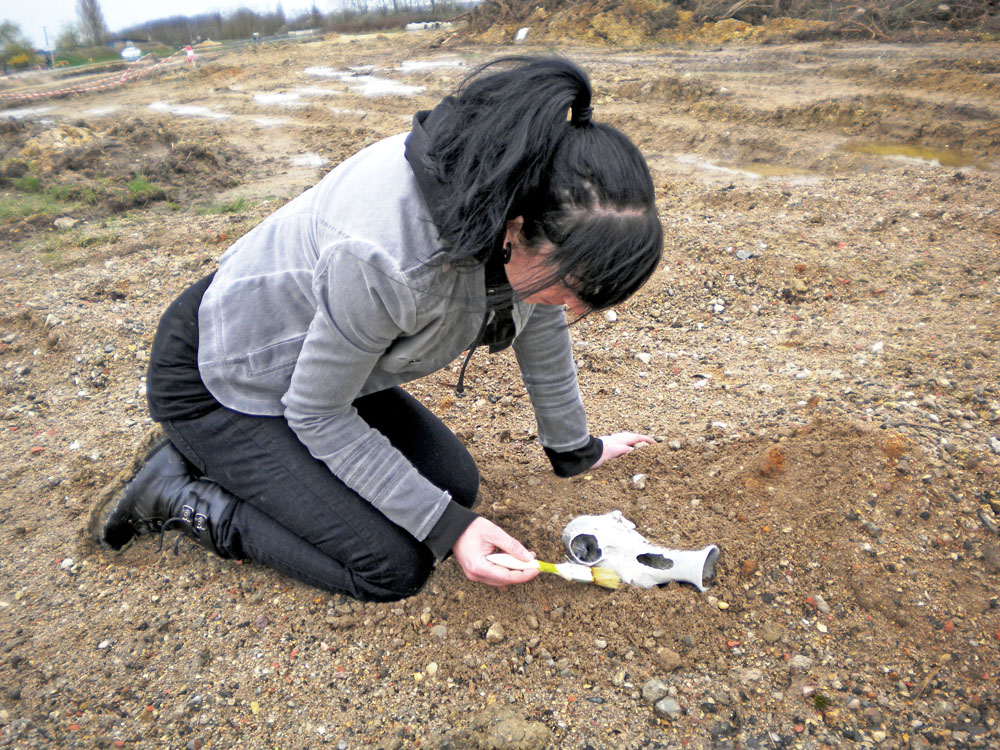
There you go—all that's left is some good staging to make the whole thing believable...
Thanks to Adèle for her performance—it was more lifelike than life itself!!!