Roman Camp - 1/32 scale

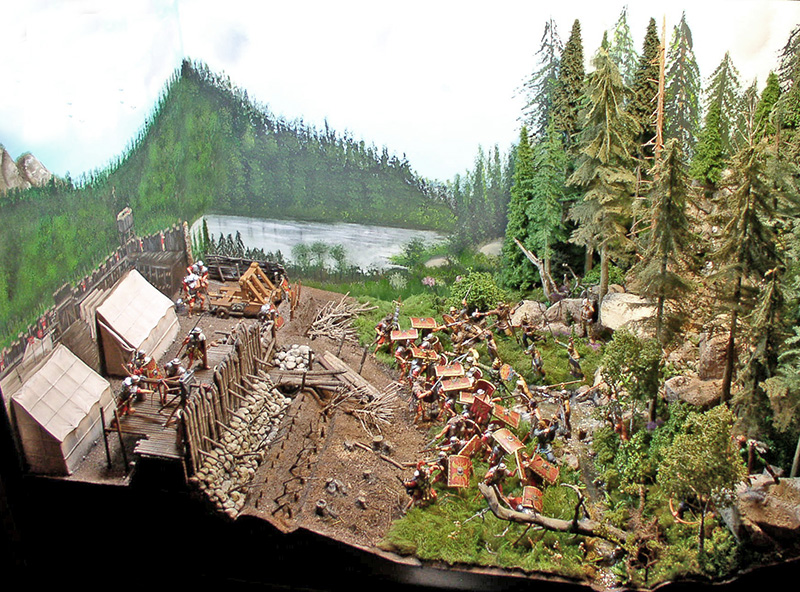
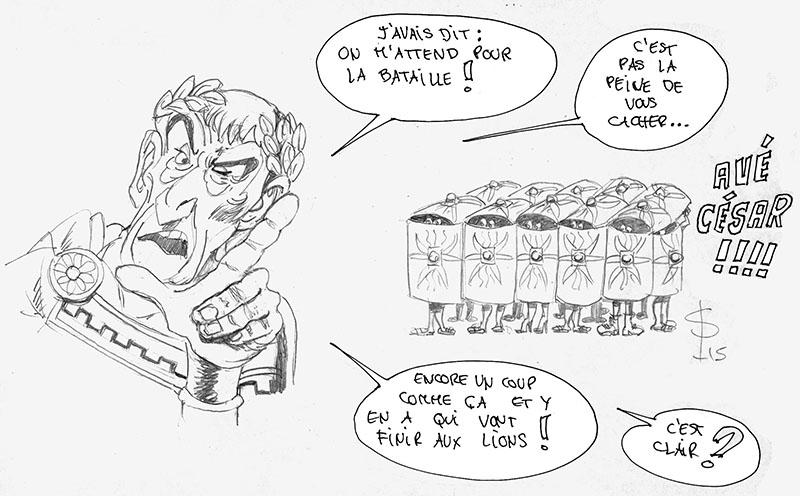
Diorama of a fortified Roman camp under siege by soldiers near a forest lakeA cartoon depicting a furious Caesar facing legionnaires hiding behind their shields

Attack on a temporary Roman camp...

Following the Roman invasion, the Celtic peoples surrounded a Roman army encampment somewhere in northern France around 50 B.C. Where and how can you create a forest scene with realistic trees without breaking the bank...


THE BASICS
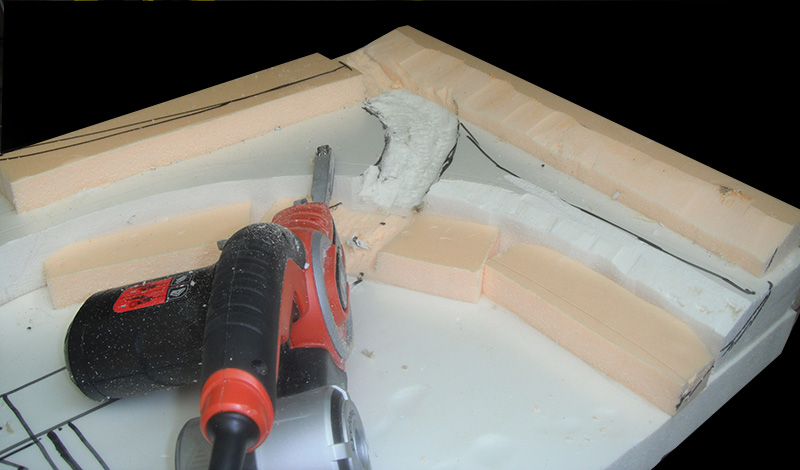
Cutting the foam relief with a mini rotary tool for the Roman camp display

We start with the base of the set, made of cut pieces of extruded polystyrene...
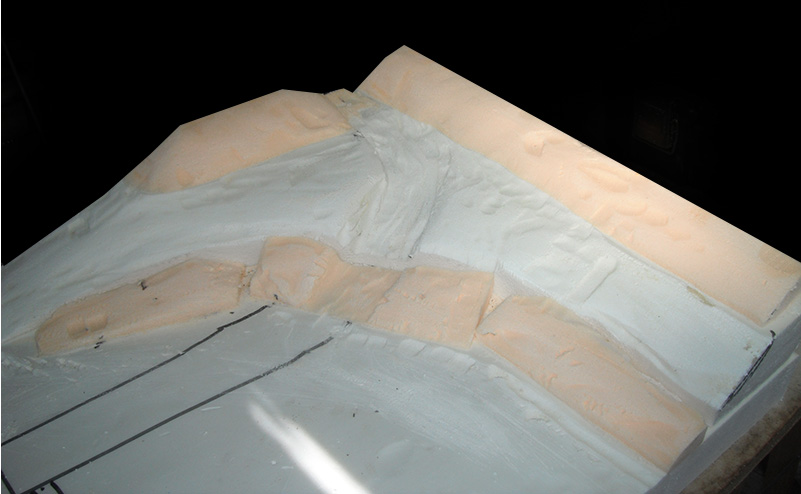
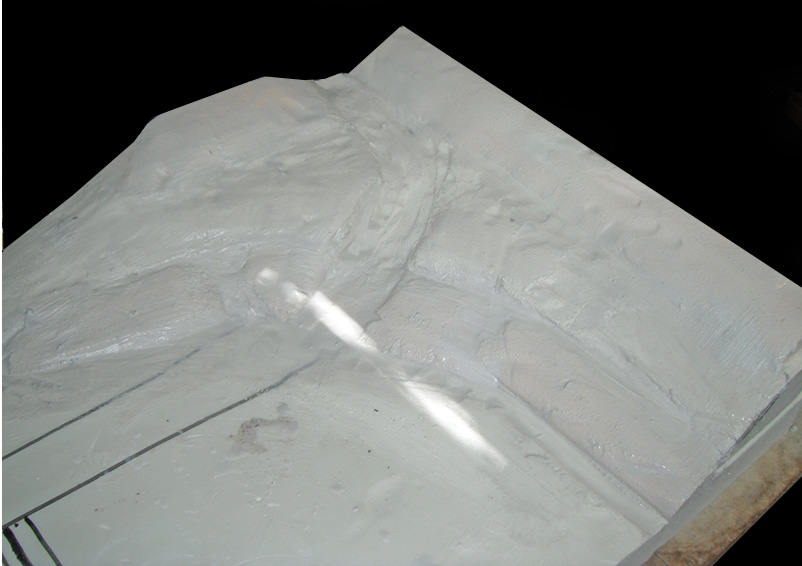
A model made of sculpted polystyrene depicting the sloping terrain of the Roman camp... and joined together to form the elevation changes...

A relief model carved from white plaster depicting the site of the Roman camp under constructionThe contours of the terrain are created using a sander...

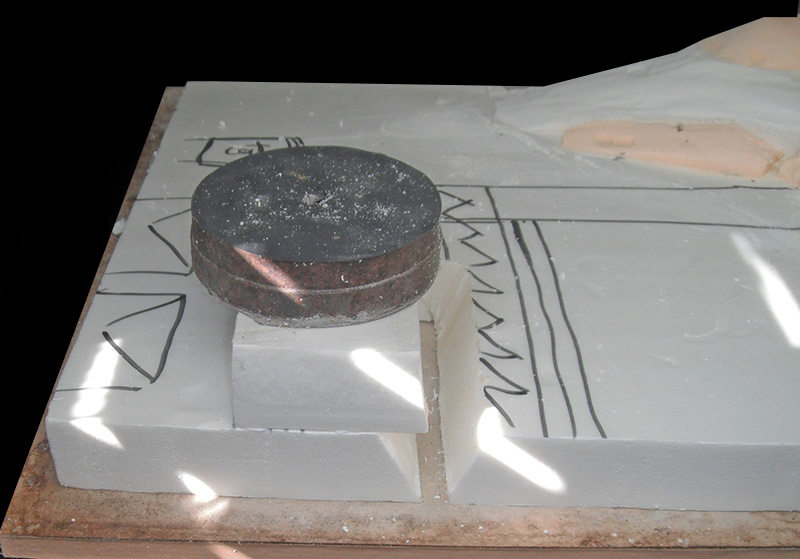
A metal weight holding down a block of polystyrene glued to the model of the Roman camp under constructionGlue the panels together using wood glue only. Weights are used to ensure proper alignment...

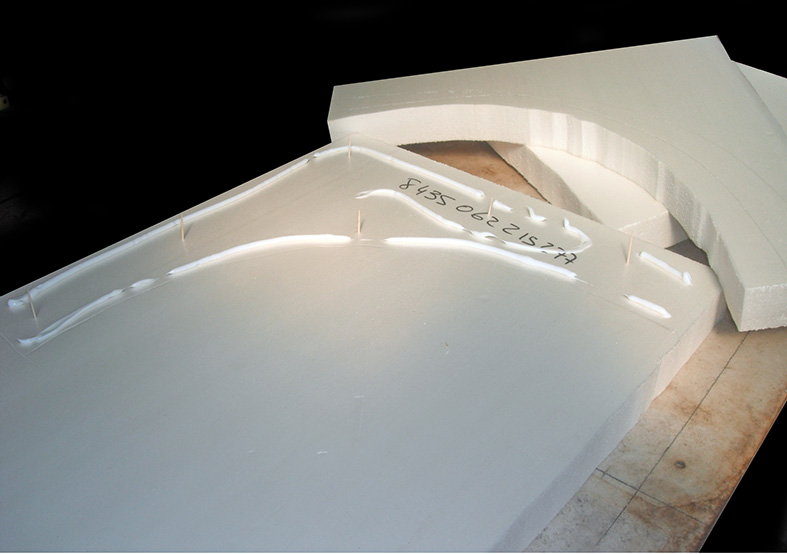
Cut and numbered polystyrene panels forming the basic layout of the Roman campWhen applying the glue, insert toothpicks into the sheets to keep them from shifting. Let them sit for 24 hours...

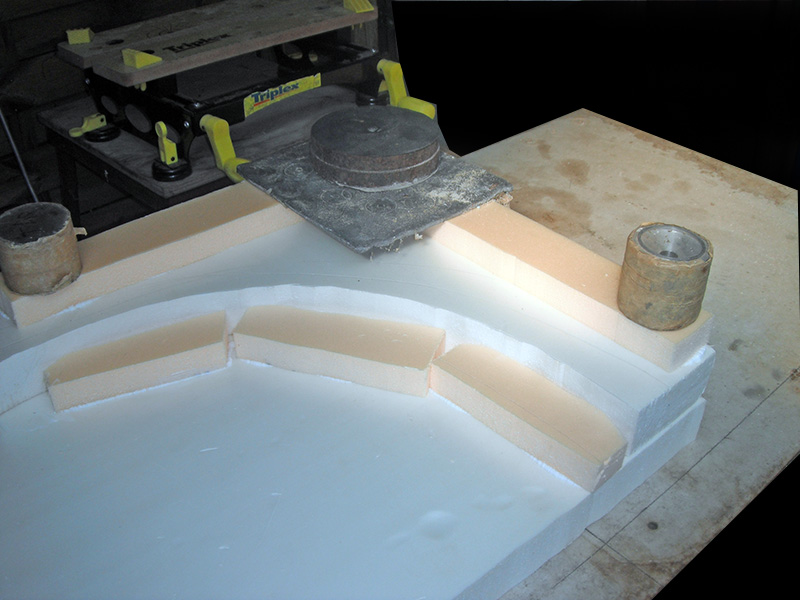
Polystyrene model of a Roman amphitheater under construction, with clamps and weightsAnother view of the setup...

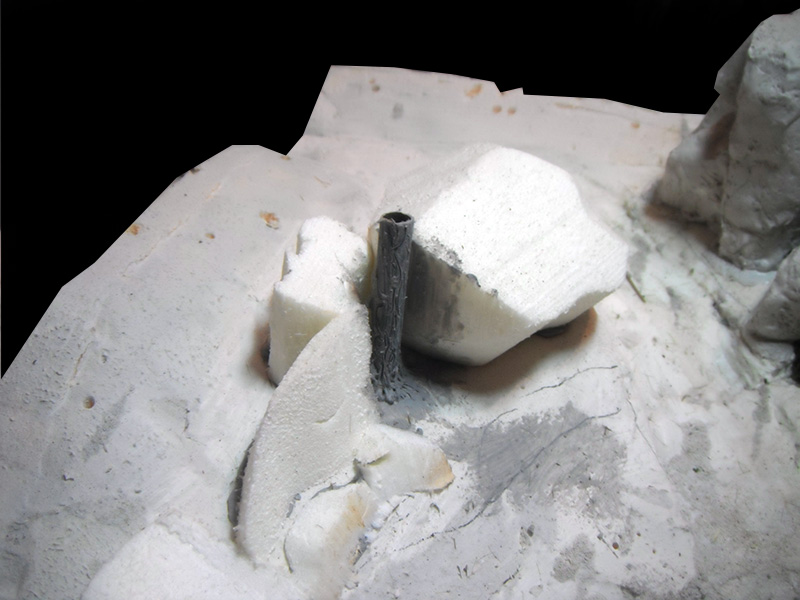
Construction of a model diorama made of white polystyrene with a gray tree trunk for a Roman campSupports for the future trees are attached in certain places and will not only hold them securely in place but also allow them to grow taller...

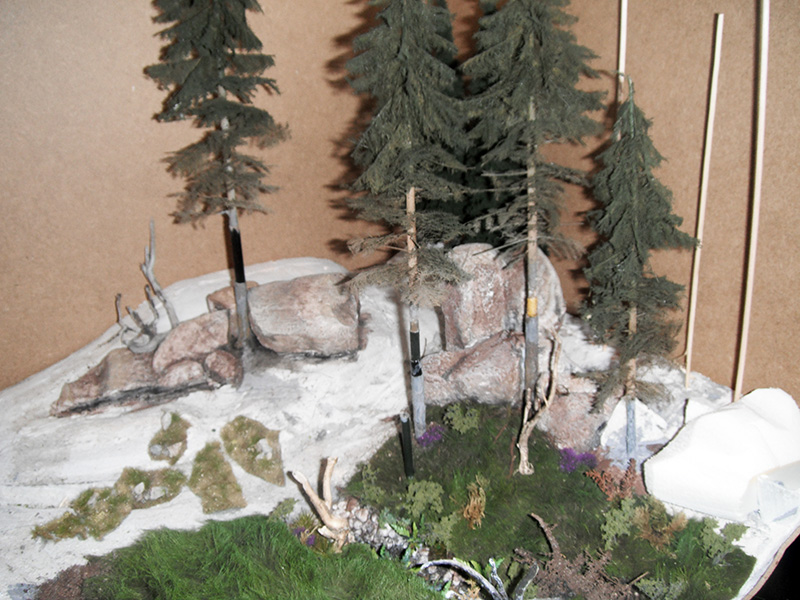
Model diorama with miniature fir trees and rocks on rocky terrain—currently under constructionA view of the conifers after they were built and placed on their bases...


THE FORT

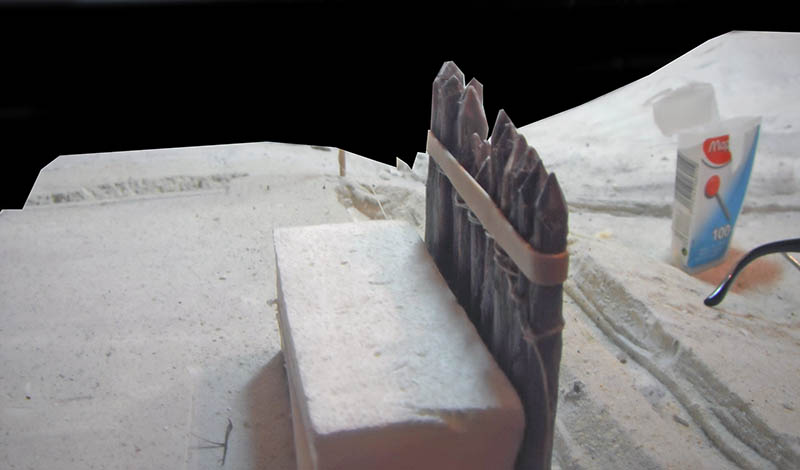
Wooden palisade posts, trimmed and held together with a rubber band, on a scale model of the site Construction of the Roman camp palisade. Wooden sticks gathered in the forest, bound together, and glued with cellulose-based adhesive from a cartridge...

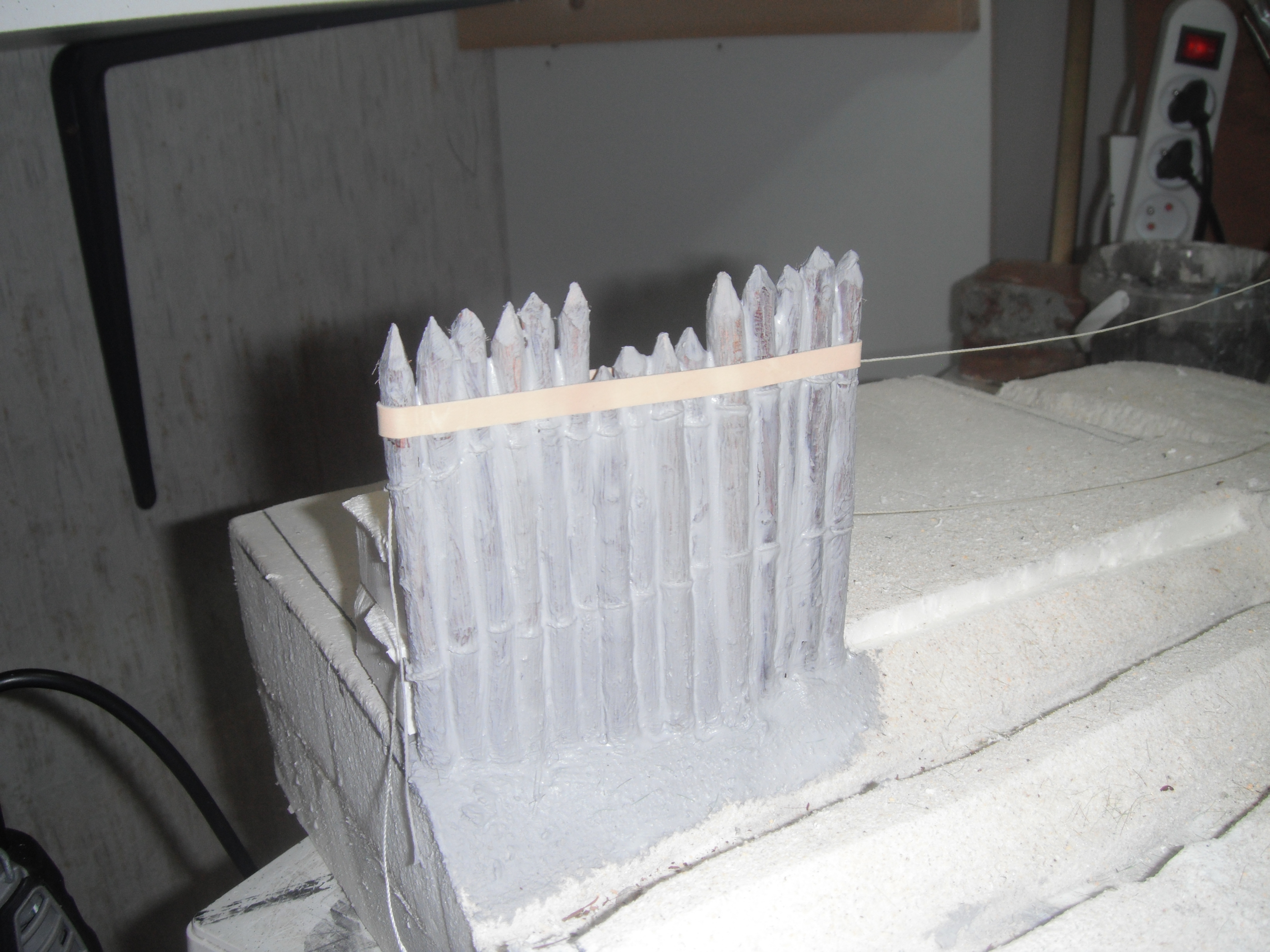
A fence made of pointed stakes currently being built, held in place on the workbench with a rubber band

The entire surface is coated with primer. You can use white acrylic spray paint...
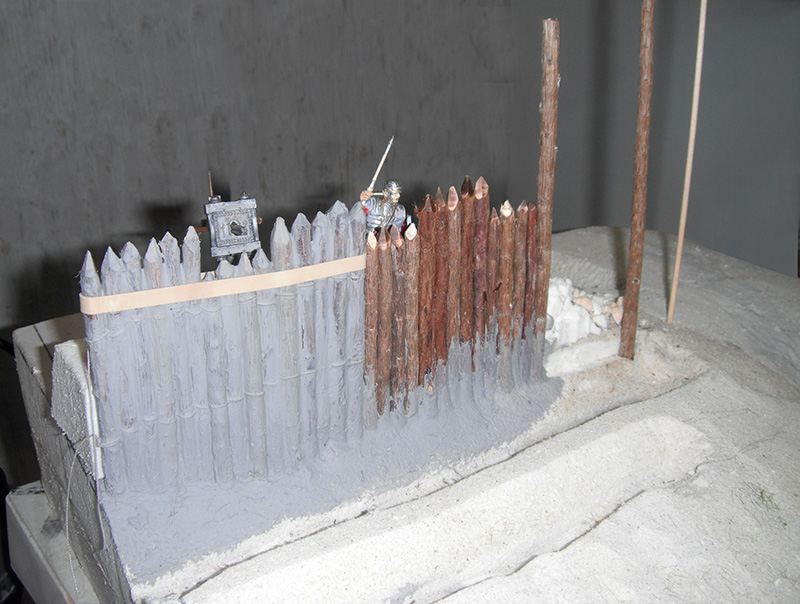
Model of a Roman camp palisade with a legionnaire figure and a standard under construction

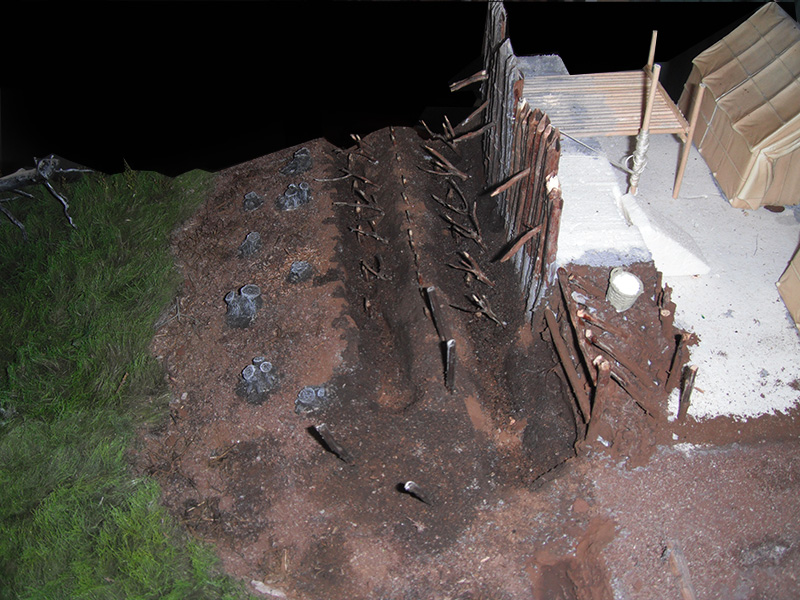
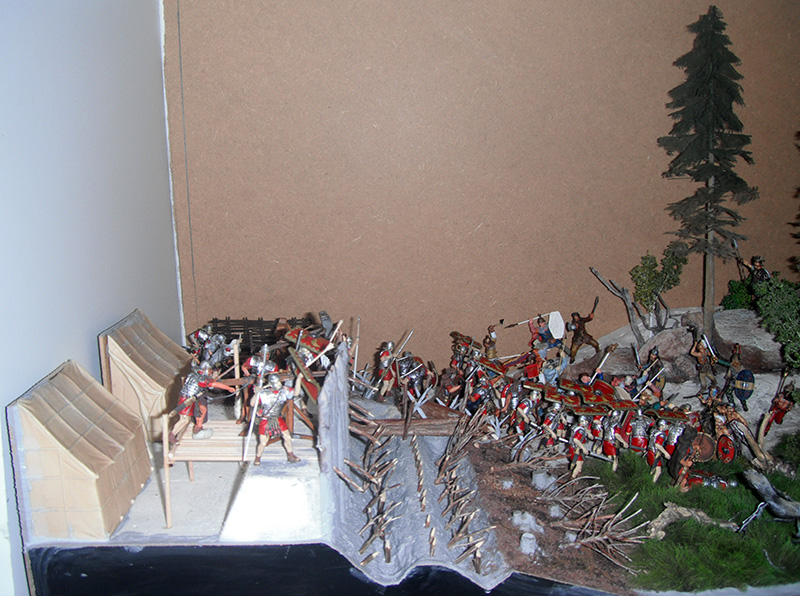
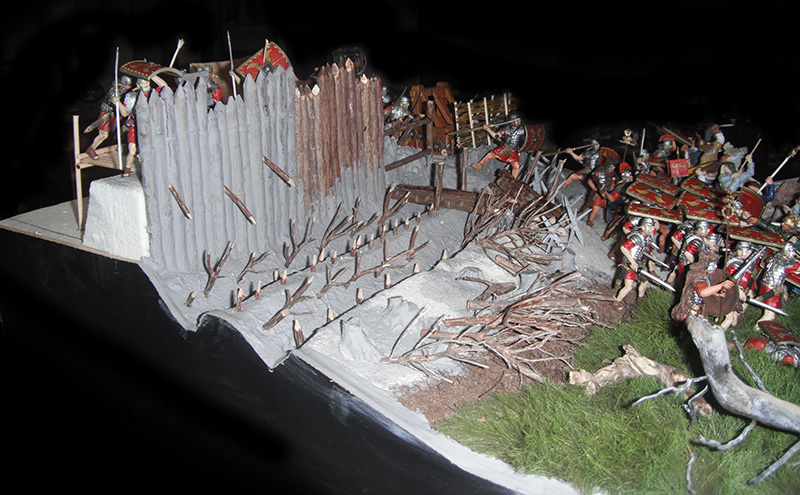
Model of a Roman fortification with a slope, defensive stakes, and a wooden palisade protecting the rampartMore views...

Other views...


THE TORRENT

Mountain stream
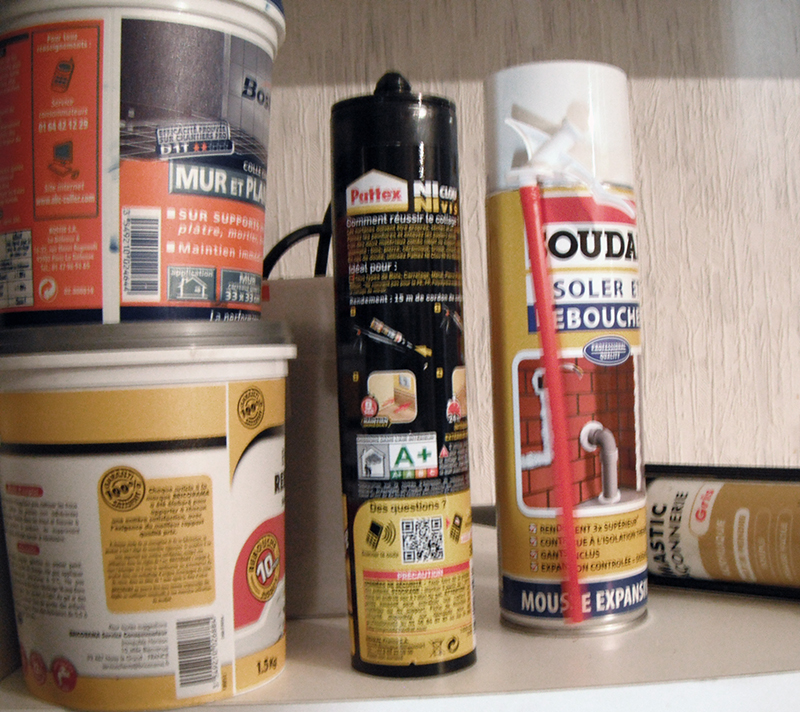
Jars of glue, tubes of sealant, and cans of expanding foam used in model makingThe products used were purchased at a home improvement store...

Used products purchased at home improvement stores...
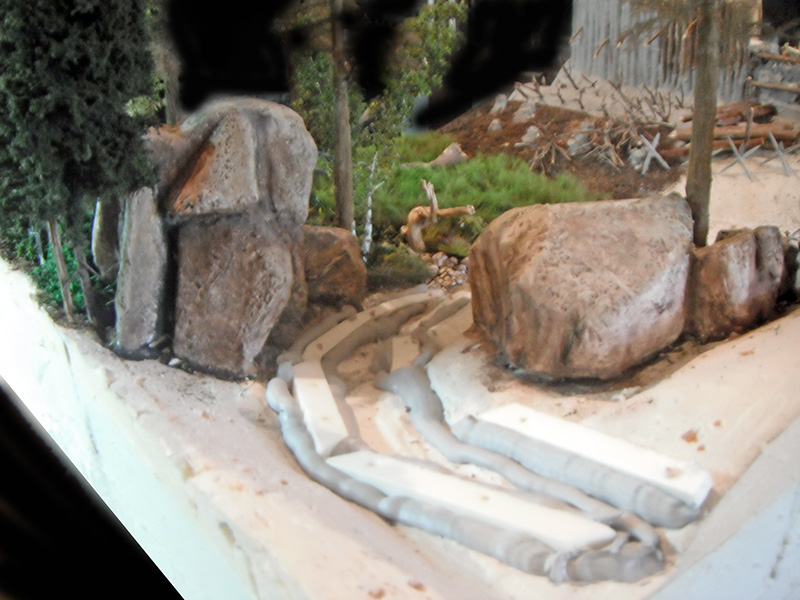
Model of a Roman camp featuring large boulders, a winding path, and miniature vegetationTorrent Manufacturing, cellulose-based cartridge sealant for wall cracks...

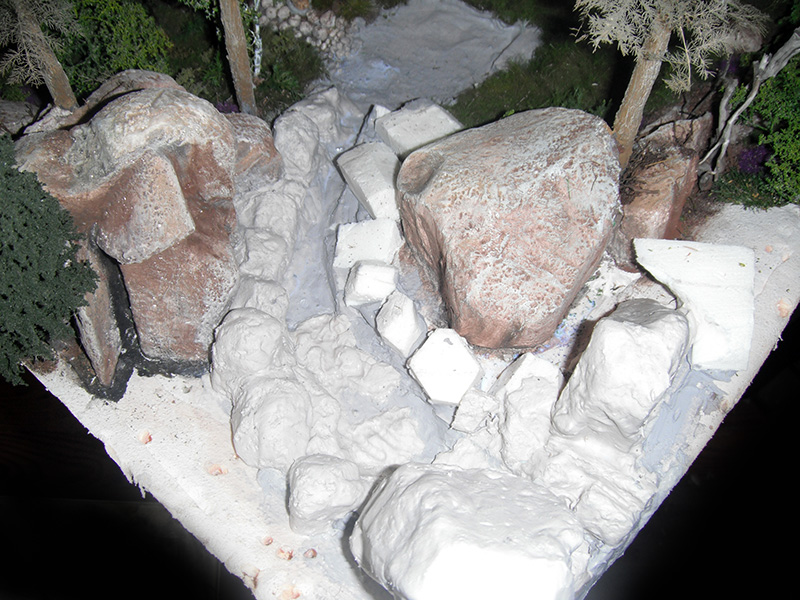
Currently sculpting a rocky ravine using plaster, rocks, and trees from the set

The rocks are also made of polystyrene and Fimo modeling clay (which hardens in the air)...
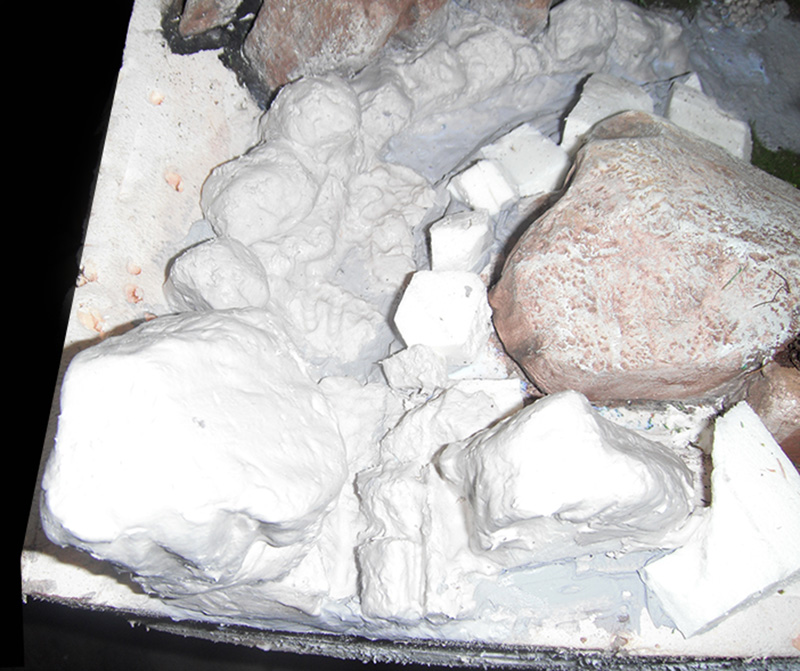
Relief modeling using white plaster on a base, polystyrene blocks, and rocks

Polystyrene blocks covered with modeling clay and then painted...
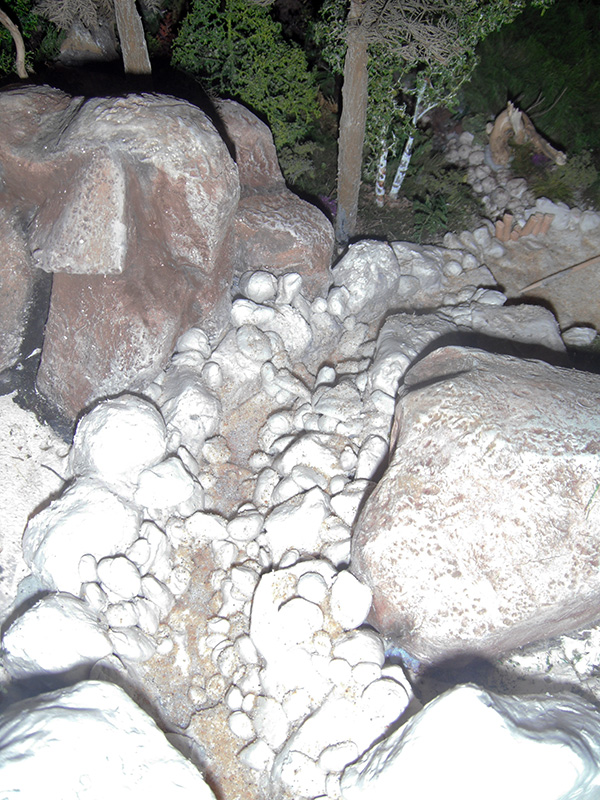
Model of a rocky trail winding between boulders and pebbles, lined with trees in the background

The stream bed is finished. A layer of cellulose-based coating is applied to the entire surface with a brush using water to seal it before applying the resin to simulate water...
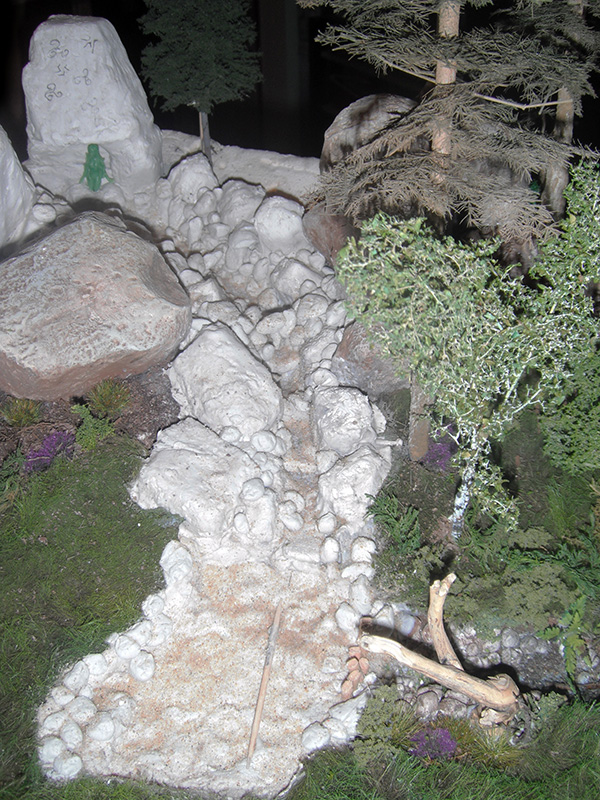
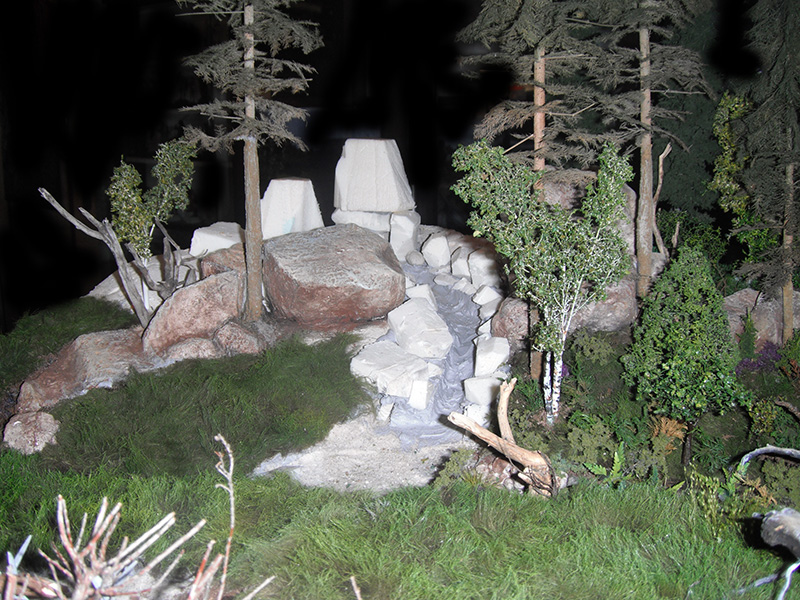
Model of a white rocky path winding through miniature trees and vegetation, depicting a Roman campThe set is ready for painting. At the top, the plaster has been applied to the rocks. At the bottom, you can see the polystyrene covered with modeling clay...

Forest diorama model with rocks, miniature trees, and a stream currently under construction for Camp Romain

View of the smoothing process using a brush. The same process is used to create a waterfall...
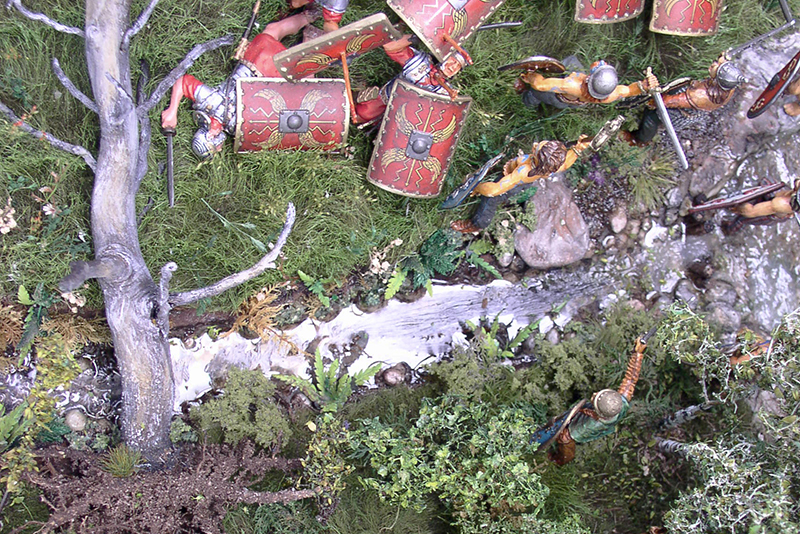
Miniature Roman legionnaires with red shields advancing near a tree in a diorama with vegetationNext, pour in some Crystal Clear resin, which is sold at art supply stores...


GRASS

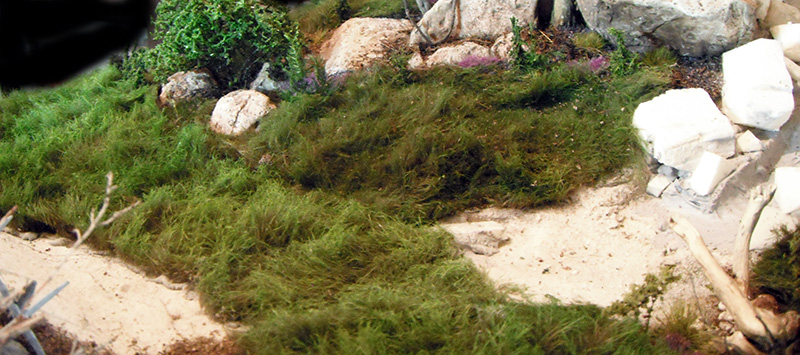
Model of a grassy landscape with rocks, a sandy path, and miniature vegetation for the Roman CampThe lawn is made of looped carpet that has been trimmed with a clipper. It is then spray-painted with acrylic spray paint in yellow and medium green...

 It is then glued with wood glue and secured with pins while it dries...
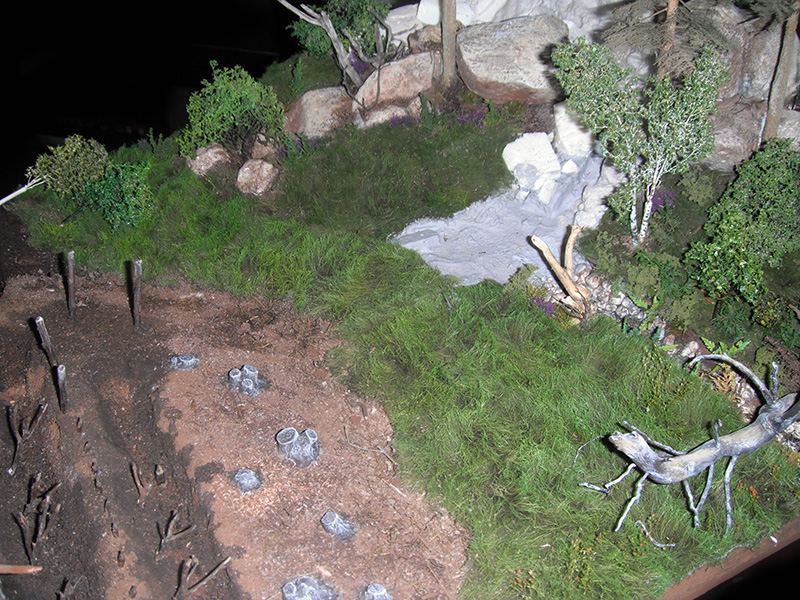
Diorama of a Roman camp featuring an earthen embankment, defensive stakes, grass, rocks, and miniature treesAnother view...

Another perspective...


VARIOUS TREES

Miscellaneous Trees
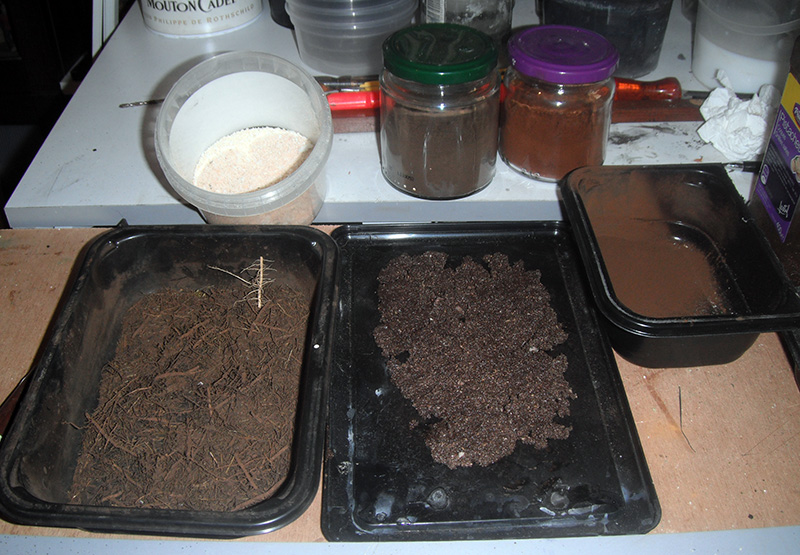
Trays of soil, sand, and decorative materials for creating the model's ground surfaceThe stage set, the tray on the far right...

The roots in the left container are ground in a coffee grinder before being dyed with decorative earth...

Middle bin: polystyrene dust that will also be dyed...

 The soil and twigs are mixed together and glued to the backdrop using wood glue...

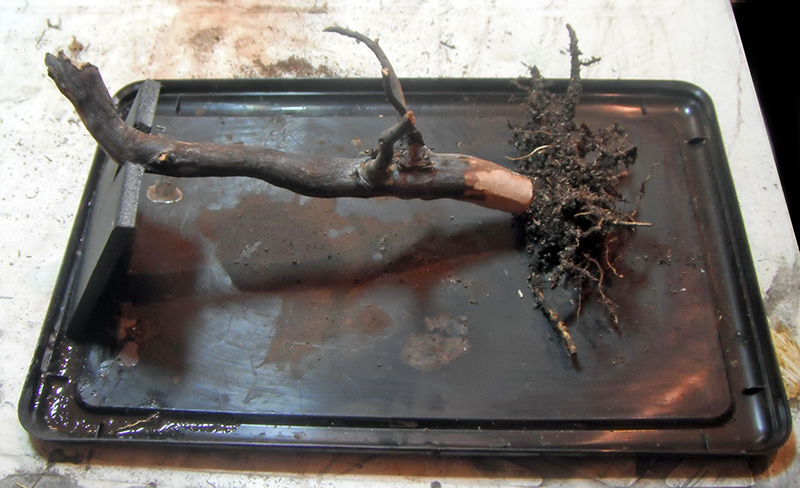
 Construction of the dead tree. Bamboo root...
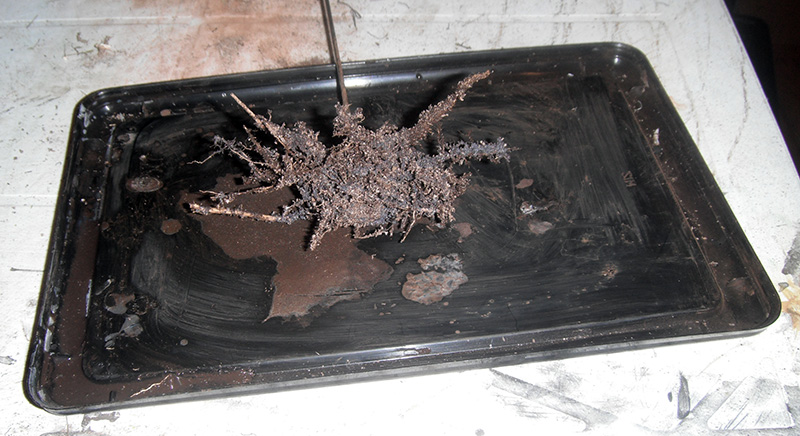
Model tree currently being made, with brown flock coating on a black baseOnce the root has been treated with decorative clay...

A gnarled branch with roots and soil, placed on a black model-making tray

The dried bamboo root is then fitted onto a tree trunk (heather root)...
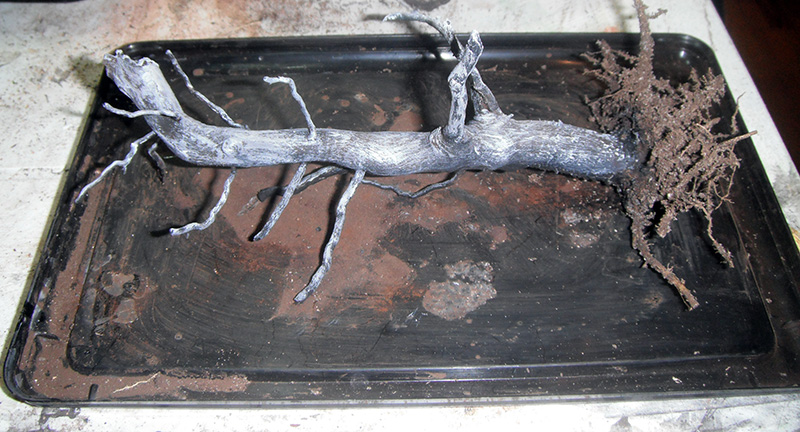
A miniature tree branch painted gray with roots, placed on a black tray

A few branches are added, and then the whole thing is primed...
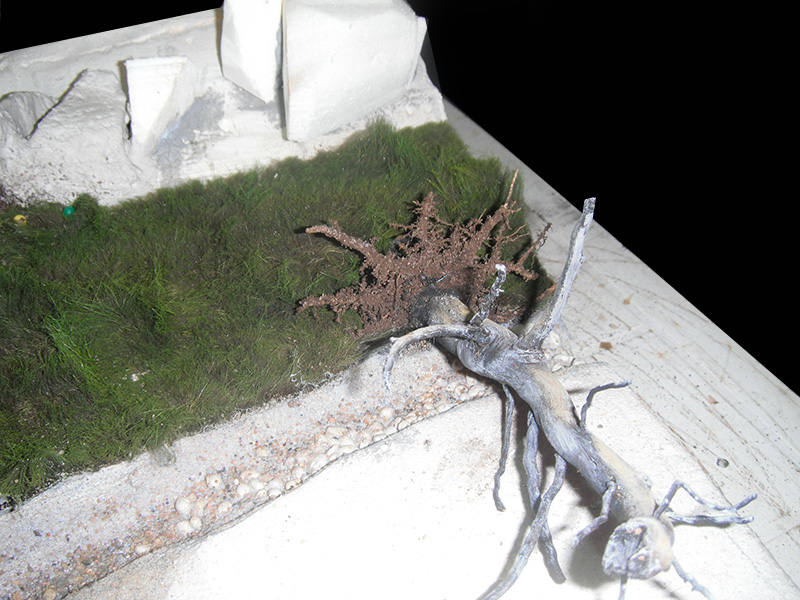
Model of a Roman camp under construction, featuring a grassy embankment, a miniature tree, and a gravel pathThe dead tree is placed in the set...

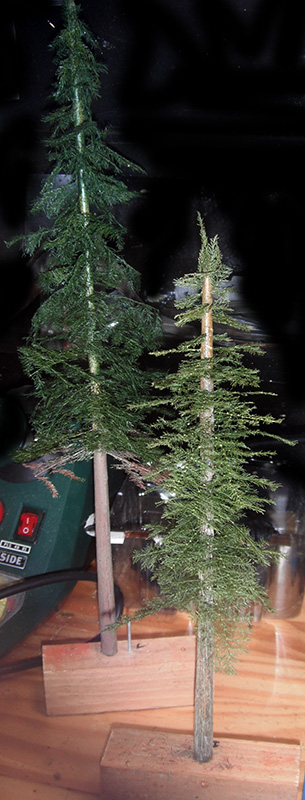
Two miniature fir trees currently being made on wooden bases for a modelMaking Christmas trees...

Tree building...

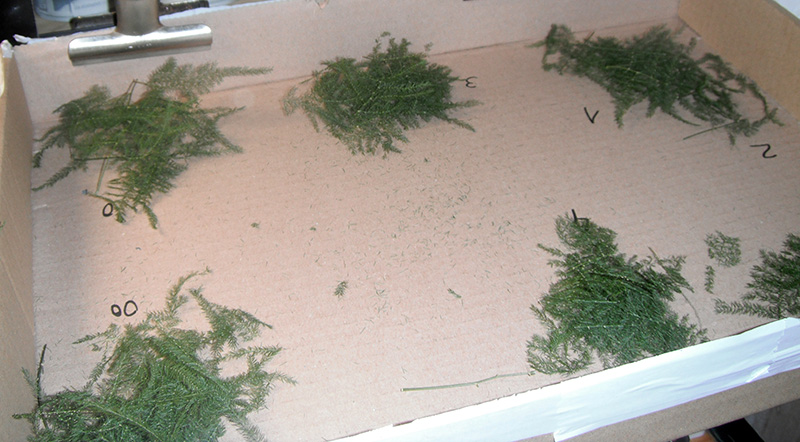
Numbered green twigs drying in a cardboard box for a modelWe collect asparagus (from flower shops). The stalks are cut, sprayed with white spray glue, and then airbrushed with basic green...

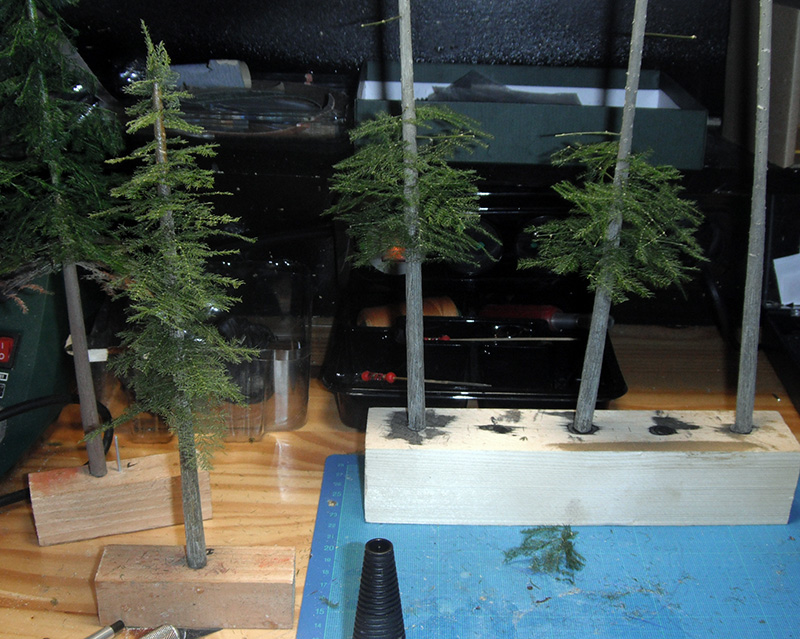
Miniature fir trees currently being made and mounted on wooden basesThe trunks. Store-bought wooden rods are sanded down with a belt sander and drilled with small holes, into which asparagus stalks are glued one by one. Start gluing the stalks from the bottom (the longest ones)...

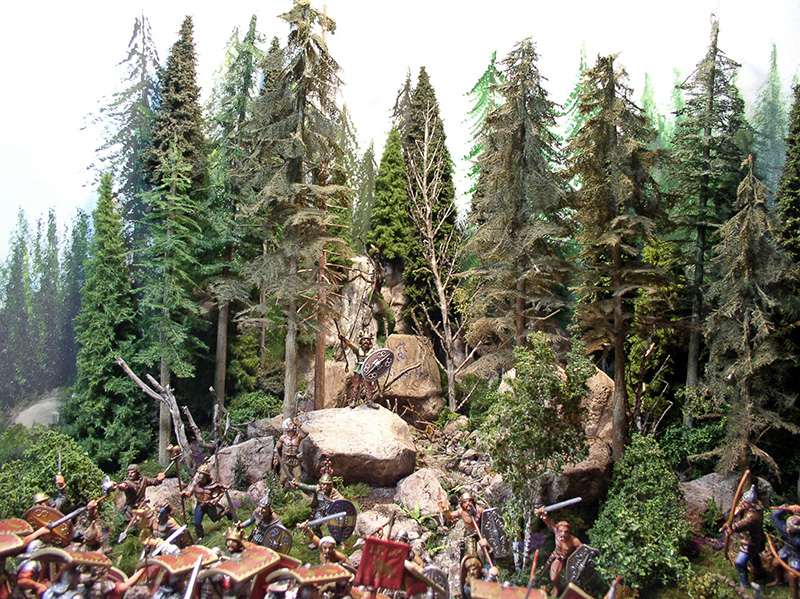
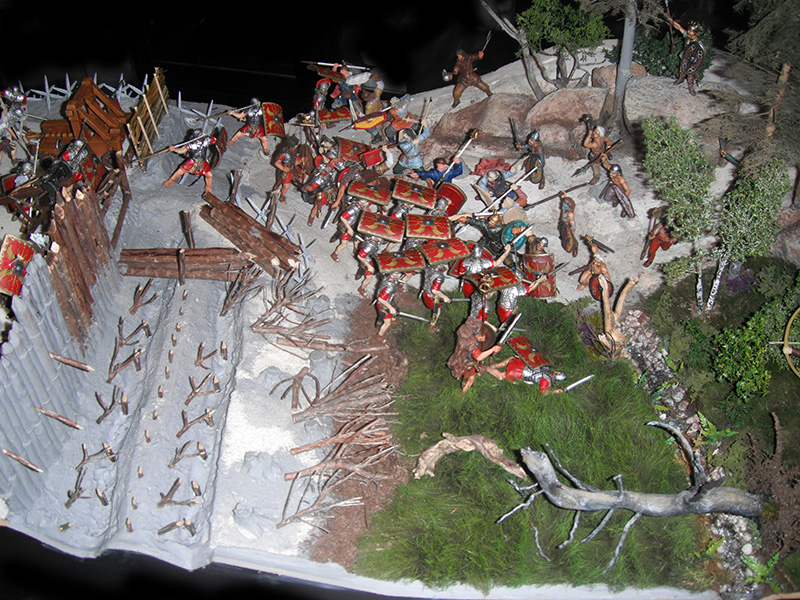
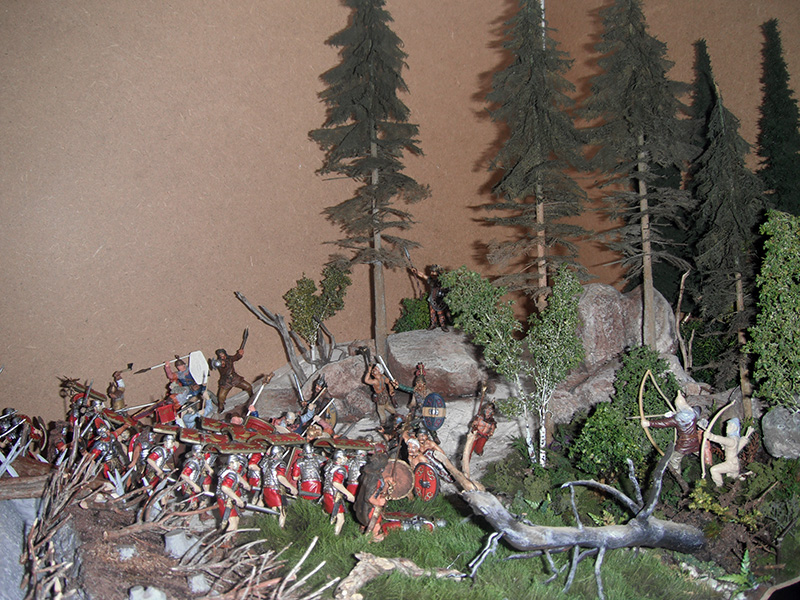
Diorama of Roman soldiers attacking in a fir forest among rocksA view of the trees in place in the completed set. It is recommended that you document the trees...

THE FIGURINES

The figurines

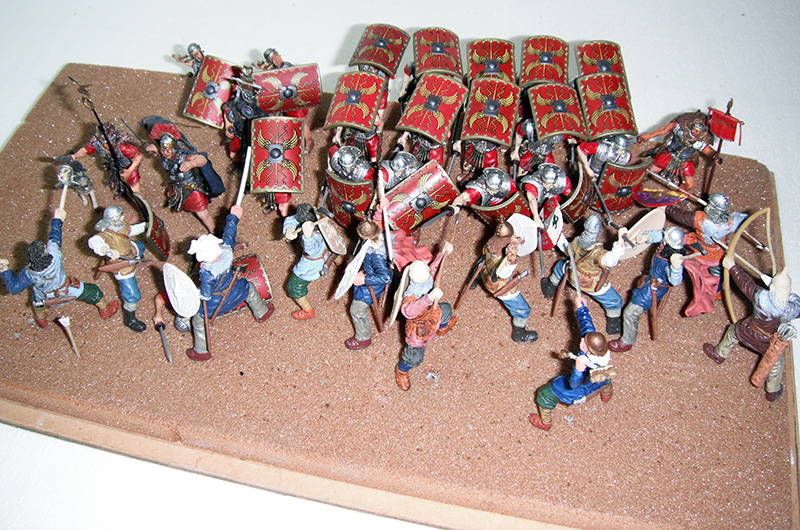
Diorama featuring Roman legionnaires in a "turtle" formation facing off against barbarian warriors

The Romans: Scale approximately 54 mm (1/32). Soft plastic toys from the Force of Valor brand.

All of them have been modified (only four models exist) and repainted with Rembrandt artists' oil paint; the shields have simply been aged...

 The Gauls: Italeri brand, 1/32 scale—some are also modified and then painted with oil paints...
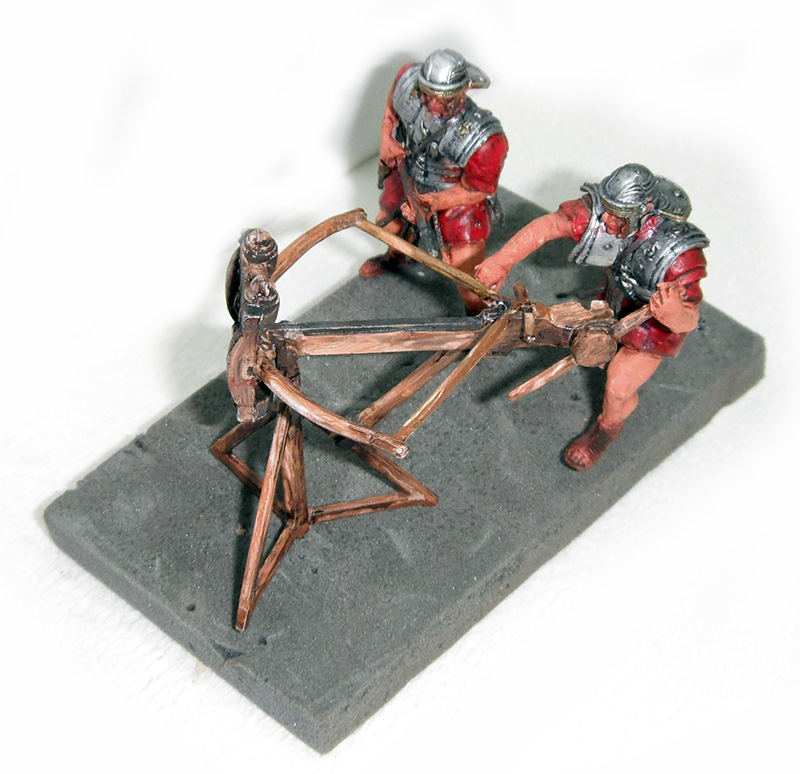
Painted figurines of Roman legionnaires operating a ballista on a gray base

Camp props: various Andreas accessories and a surplus box...
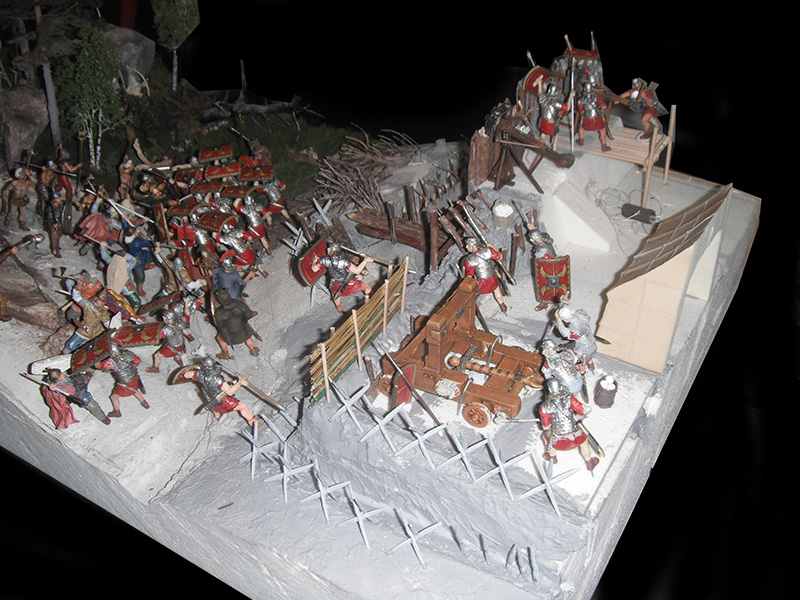
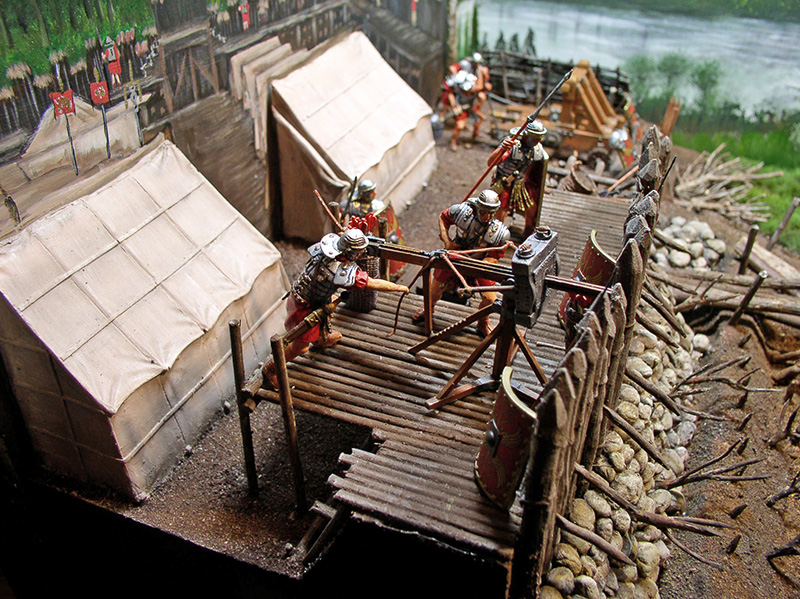
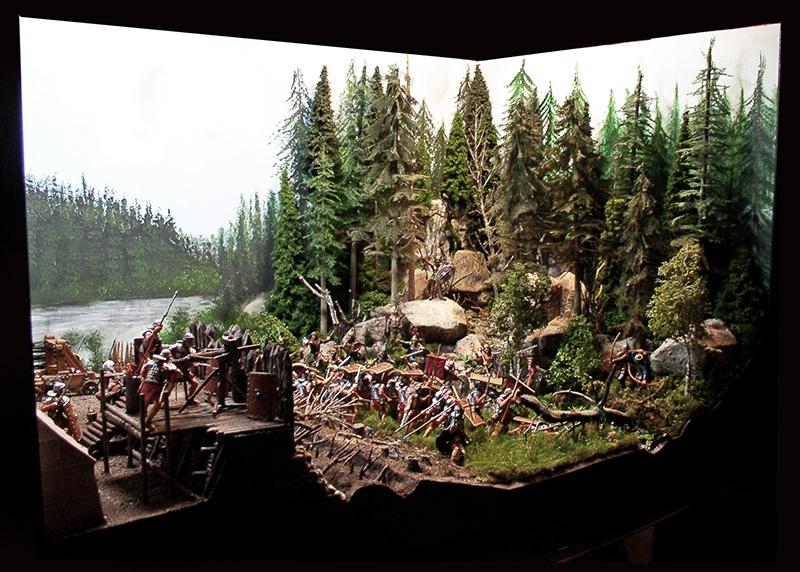
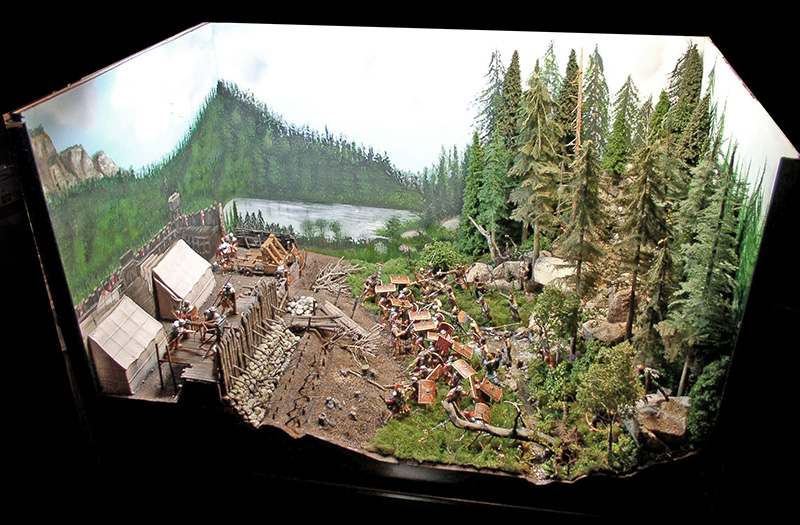
Diorama featuring figurines of Roman legionaries defending a fortified camp under siege by the Gauls A diorama depicting a battle between Roman legionnaires and Gallic warriors in front of a fortified campModel of a Roman camp with a wooden defensive palisade and figurines of legionnaires storming the rampartA diorama depicting a battle between Roman legionnaires and the Red Shields and barbarian warriors in front of a fortified rampartA diorama featuring figurines depicting a battle between Roman legionnaires and warriors in a pine forestPhotos above: views showing the progress of the fort and the placement of the figures in the landscape after they have been painted...

Model of a Roman camp showing legionnaires operating a ballista on the fortified palisade

The Scorpion, or ballista, is also from the Andreas brand. The stone wall is made of modeling clay covered with cellulose-based plaster and painted...

 Another view...

Another perspective...

Backdrop
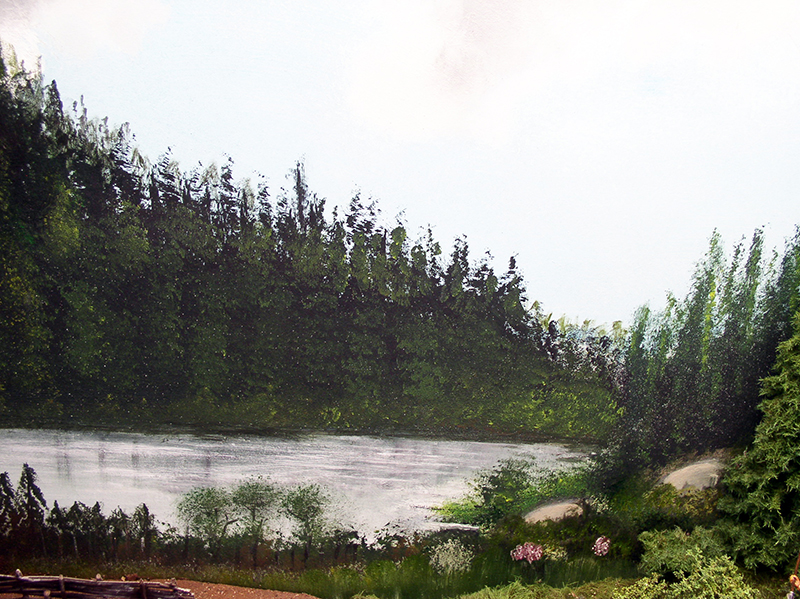
Model scenery depicting a river lined with trees and vegetation under a clear skyThe background of the diorama is painted on three sides using trompe-l'oeil techniques with oil paint...

Diorama of Roman soldiers defending a fortified outpost in a fir forest near a riverDiorama of a Roman camp under siege near a lake, with soldiers attacking a palisade in the forest

For this type of historical diorama, it is strongly recommended that you consult existing reference materials, which will help you better understand the subject and avoid major mistakes...