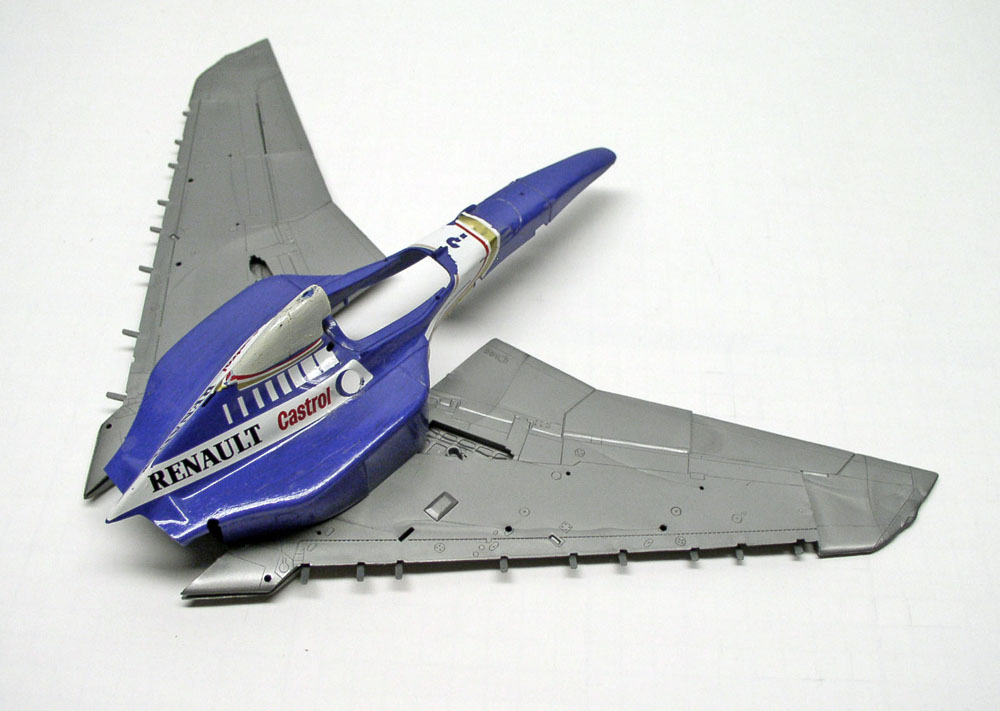
A simple basic design: jet wings and a Formula 1 car body make it easy to imagine a futuristic flying machine...
What is "Kitbash" or "Kitbashing"?
To define this English word, which has no equivalent in French, one could say that it is the art of combining different parts from all kinds of existing plastic model kits—regardless of scale—to create a brand-new, original model...
In short, it's an attempt to piece together something plausible from parts that are more or less incompatible with one another...
Once you understand the concept, the modeler's artistic side will come into play in the creative process, or he'll "play" at being a designer. It’s not about—even though you can do whatever you want—(and I’ve often seen ships that looked more like hair dryers and other “oddities”!)—doing just anything, but rather doing it the right way!
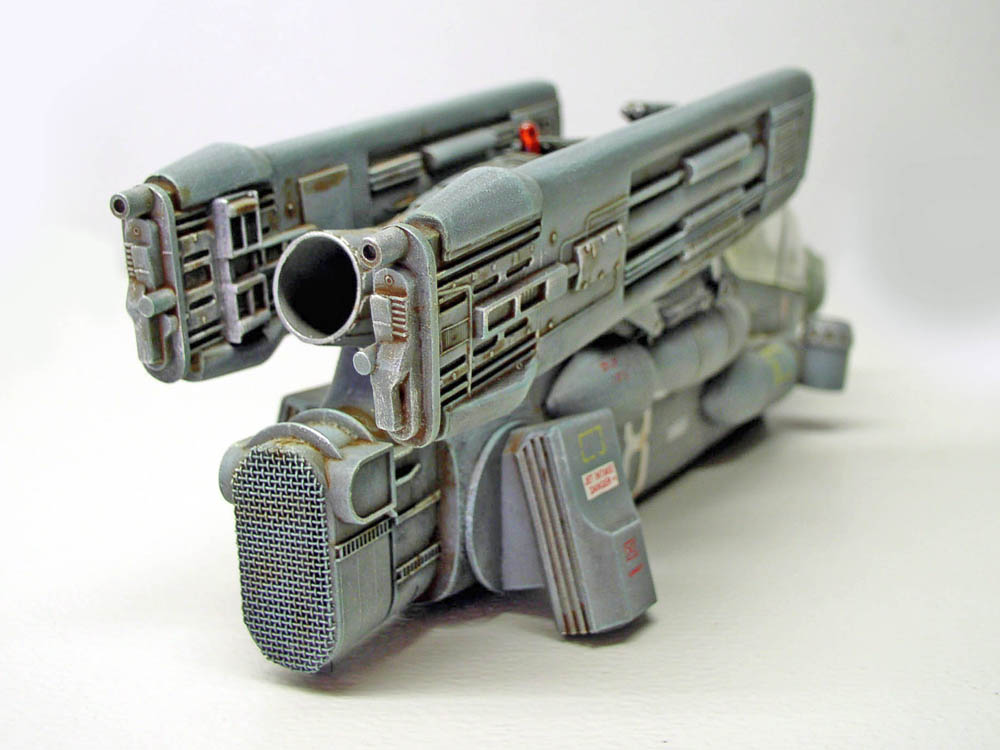
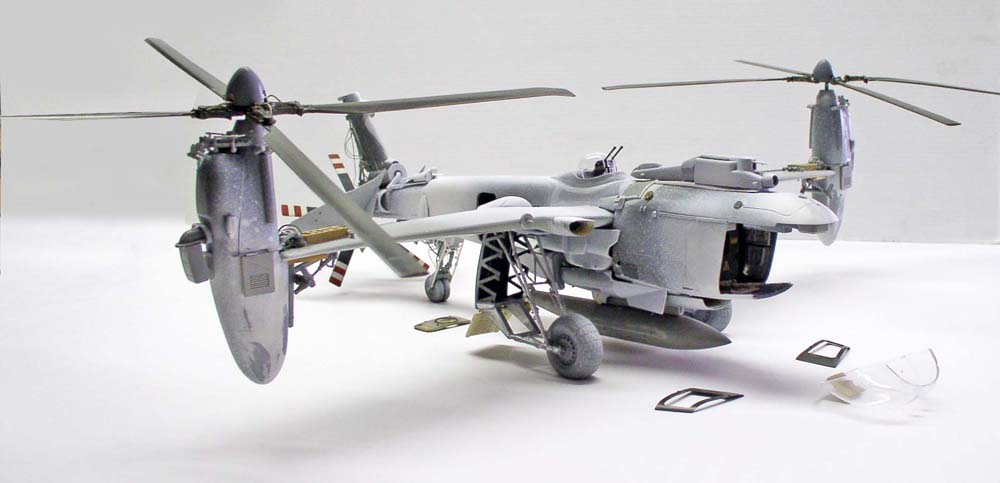
A vehicle folded into transport mode. The side nozzles at the bottom of the hull are actually... shaving foam can nozzles!
It is essential to focus solely on the shape and set aside its original purpose. A tail section can be used as armor on a vehicle. Ornamental wheels on a building, robot parts to “dress up” an airplane, and so on...
The pieces should "fit" together as closely as possible. Avoid overly familiar elements, such as immediately recognizable Panzer wheels...
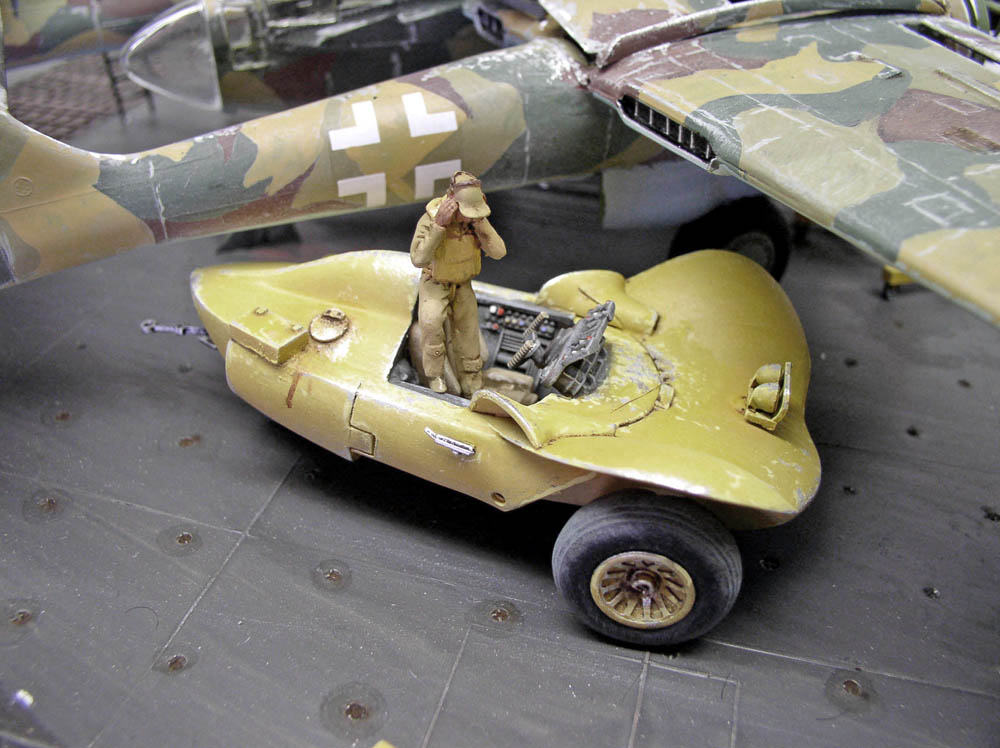
The goal is to give an object a new identity. A slight modification to an existing model won't make it look original, because people will immediately recognize the old kit...
These parts can also be used to “dress up” a model. The technique isn’t new. In 1978, the model makers for the movie *Star Wars* used this idea to finish their models. But here we’re getting closer to “Full-Scratch,” where the ships are created from blueprints and built on a metal and plastic frame. Dozens of boxes of plastic model kits were then used to add detail to the whole thing. The same goes for some of the sets...
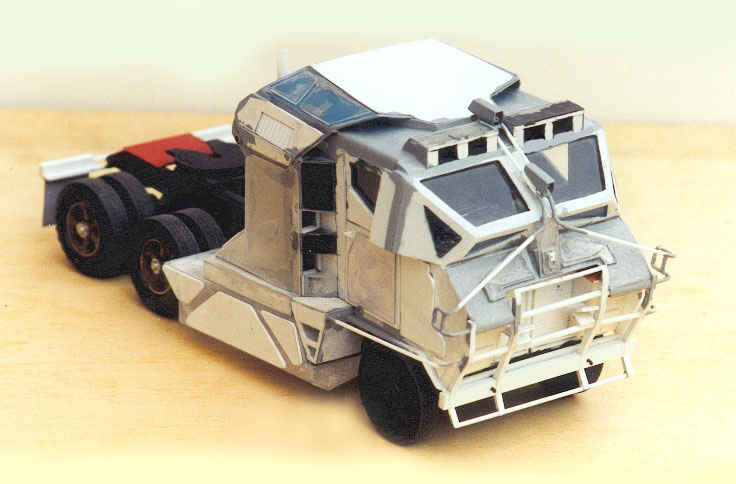
A word about “Scratch-building”… Which is the art of building a model or a kit part from… nothing! Or even using a drawing or blueprints. For major parts, we used to use wood, metal, and plastic card—before the advent of photo-etched sprues and ready-made resin parts, which allow us to add detailed features—at the expense of our wallets—to models at various scales.
Whenever I needed to modify or create a missing part for my model, I would build it from scratch. Long before Verlinden’s first builds, I was already adding details to almost all of my kits...
Anything goes when it comes to creativity. Some people even use parts from televisions, cameras, and phones. Caps from toothpaste tubes or household cleaning products can serve as nozzles. Plastic bottles can be used as the bodies of vessels...
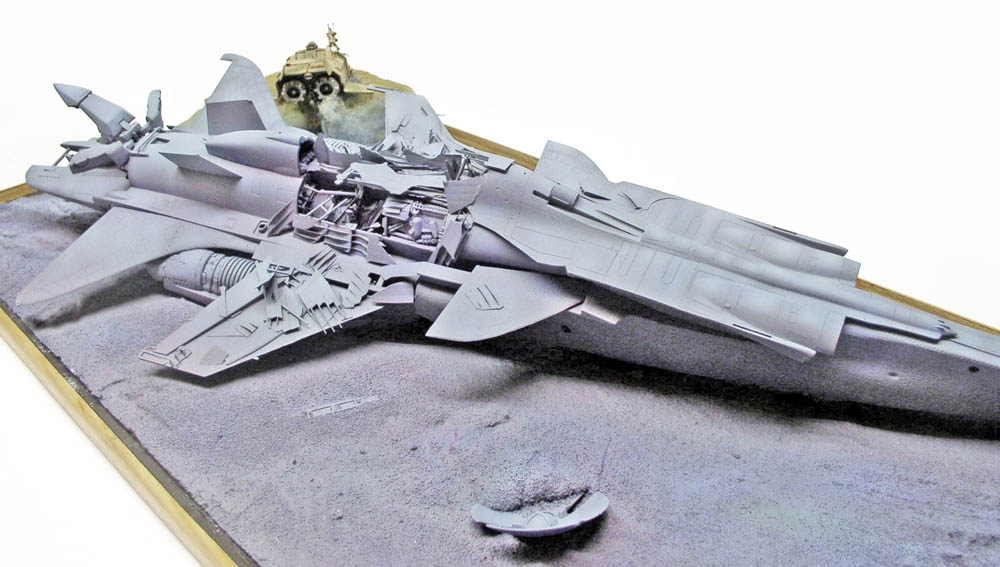
Once the model's overall structure is in place, you've won the bet... you must never lose sight of the finished project... the rest is just details. Hence the "designer" aspect mentioned earlier...
There’s no point in overloading a kit. And often, once you get started—when you can practically see the final shape right before your eyes—it can be hard to know when to stop adding details. You always want to add that cable or that little part with an interesting shape that will make it even better...
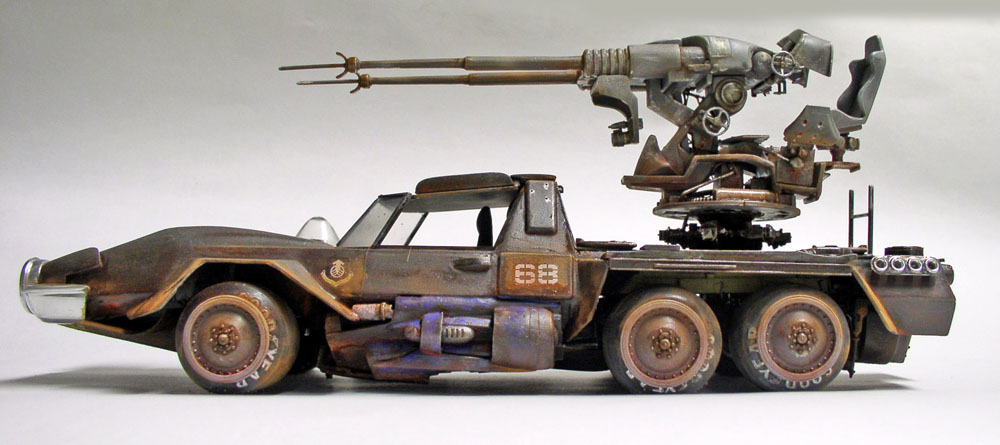
An essential step before painting, the primer coat is very important here. Not only does it reveal flaws in the bonding and putty work, but it also provides a general, uniform view of the piece that allows you to identify the many flaws that can appear—and there are plenty!—in the design. Excess material or imbalances are revealed. From there, you can remove certain parts and refine the whole to give the object a smoother, more fluid appearance, which will ultimately look better (though beauty is in the eye of the beholder—one person might find it ugly, while another might find it beautiful!)...
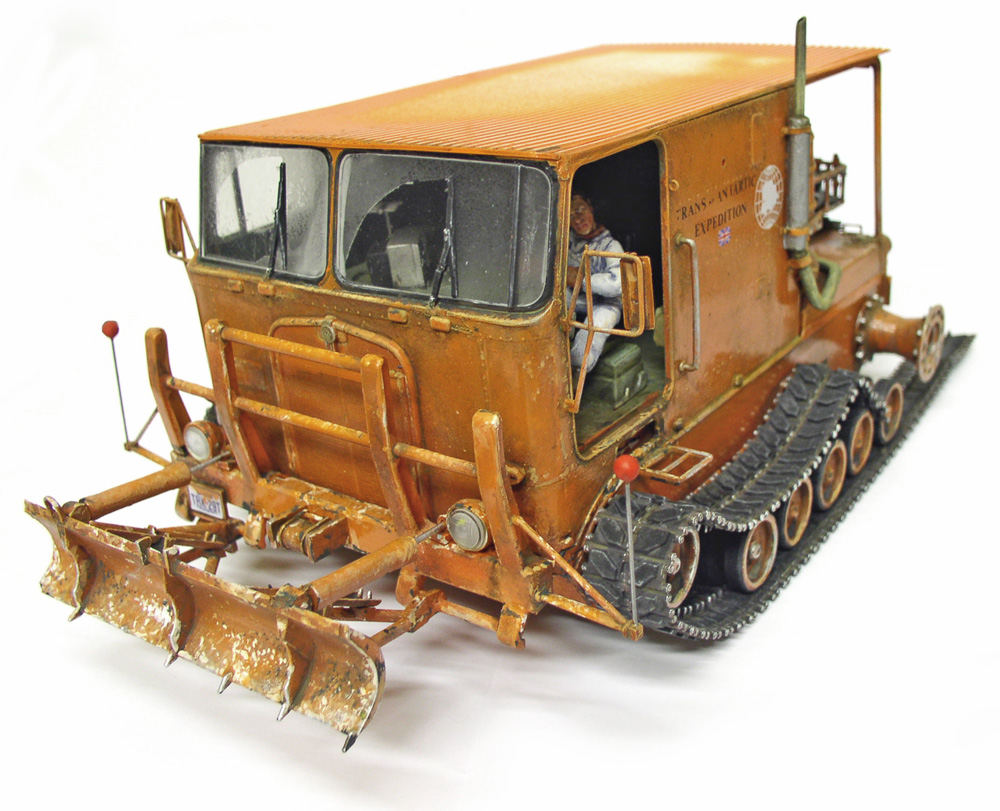
This technique offers great design freedom and the joy of creation, which is an art form in and of itself...
It lets you refresh your model collection with completely new and original kits!