 | 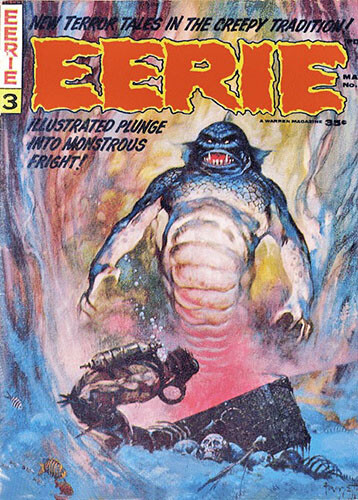 |
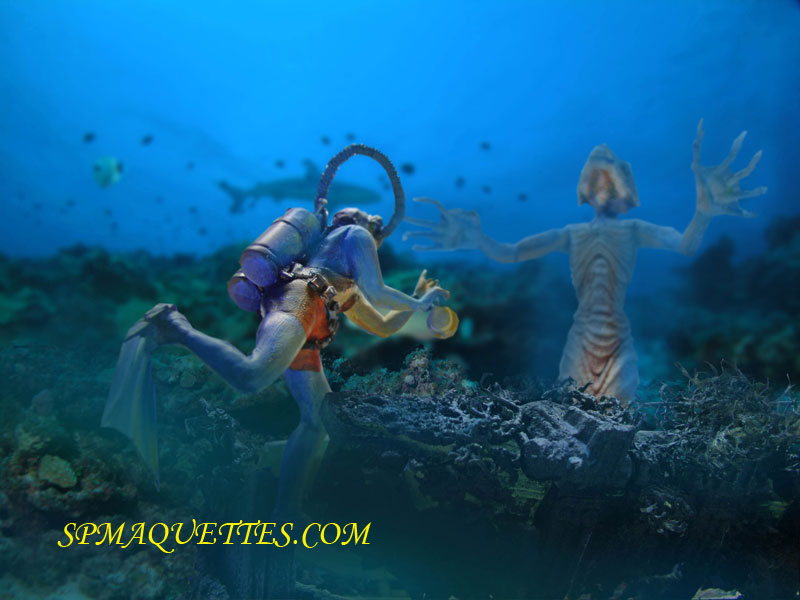
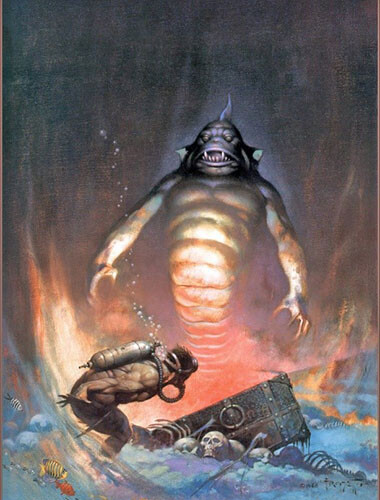
Inspiré d'une peinture de Frank FRAZETTA pour la couverture du magazine mensuel d'épouvante EERIE...
The story, which appeared in Issue 3 in May 1964, is inspired by a werewolf tale... set under the sea! Two men set out by boat in search of underwater treasure. But a sea demon is guarding the chest; it attacks the diver as he surfaces onto the boat’s deck, and… the diver, in turn, transforms into a monster…
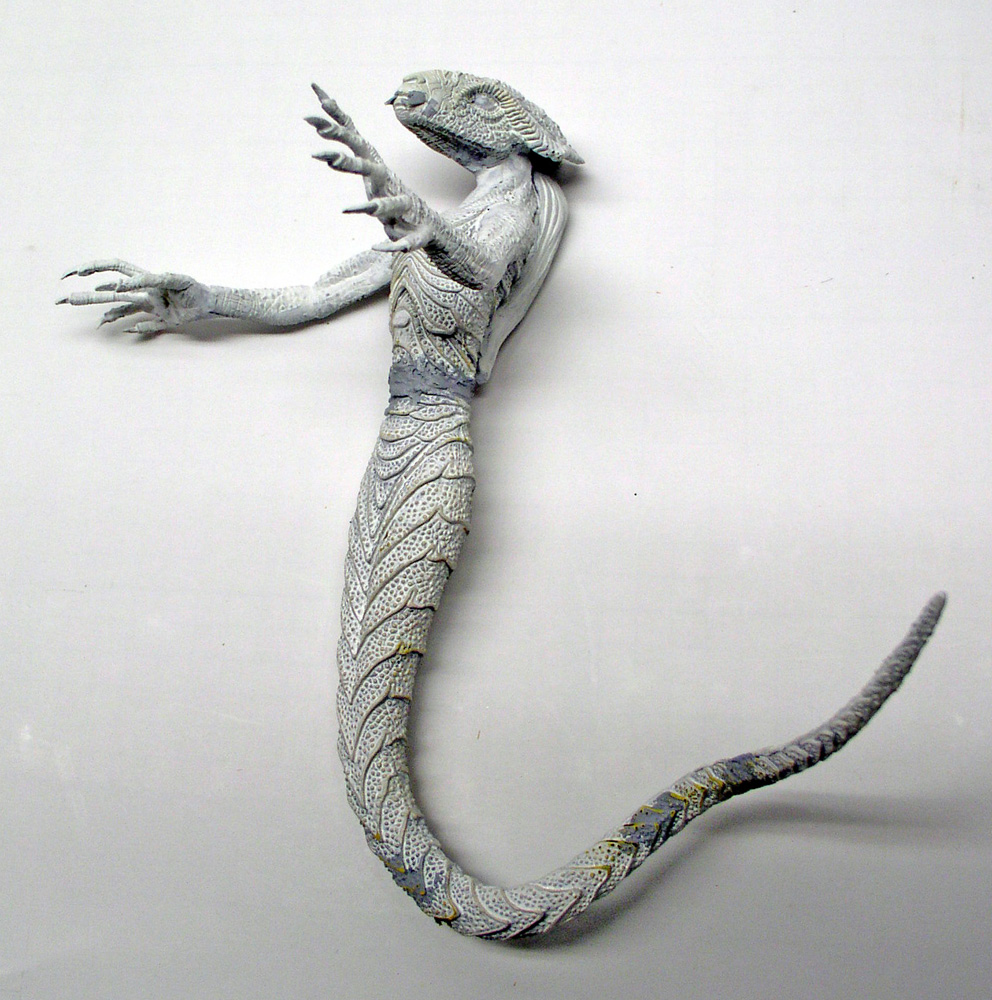
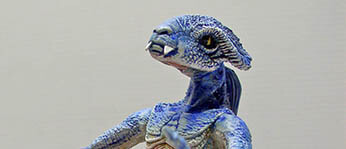
The “monster” used for our diorama is actually a McFarlane figure released for the movie *Beowulf*...
Its size matches the diver’s scale—1/20th—very well...
The moving parts are glued with Super Glue, and the seams are sanded and filled. Two plastic fangs are added...
The Diver
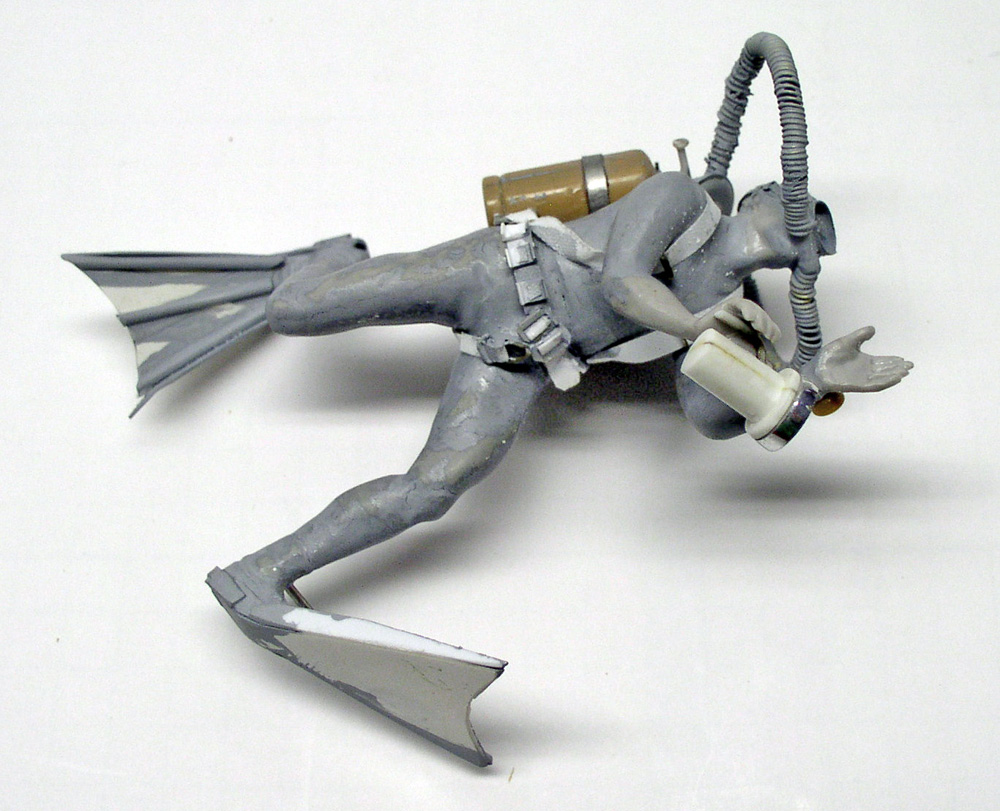 | 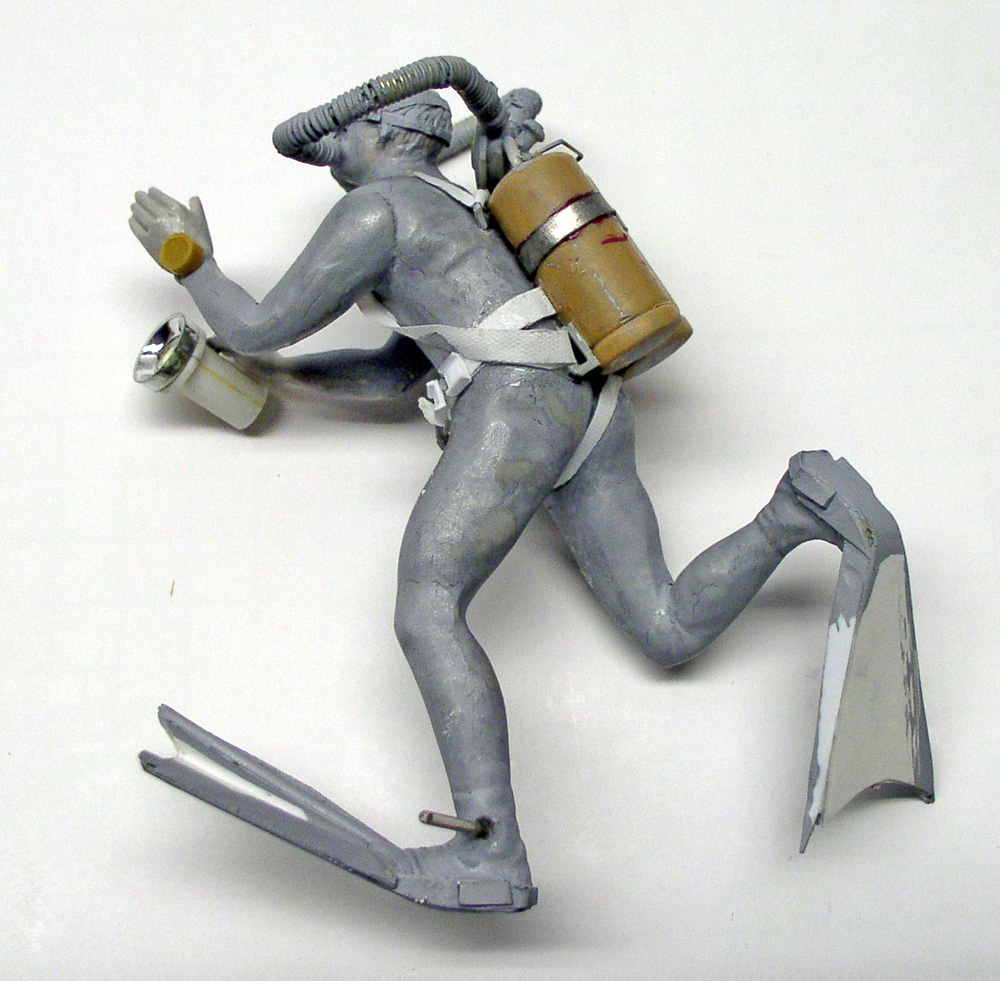 |
Le plongeur est conçu à partir d'une figurine Tamiya. Ill est poncé pour éliminer les vêtements. L'équipement est créé en carte plastique. Les bouteilles sont des bonbonnes de gaz de la boîte à surplus. Le tuyau annelé est fabriqué avec du fil de cuivre fin. Les sangles sont en tissu...
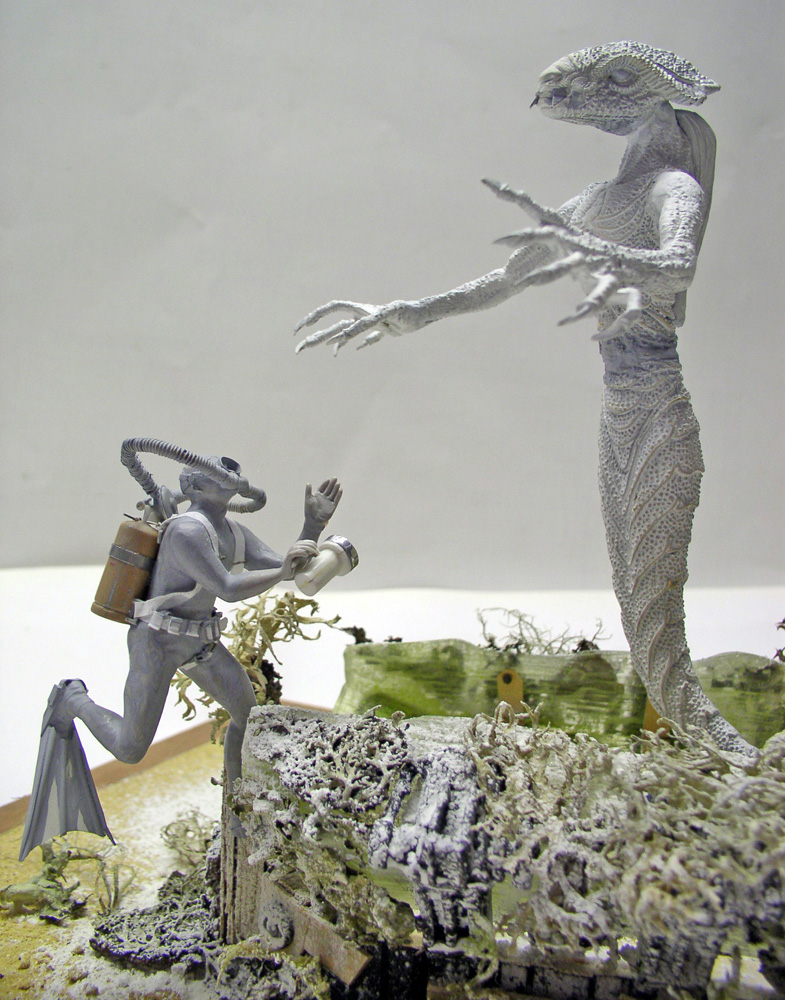
The Setting
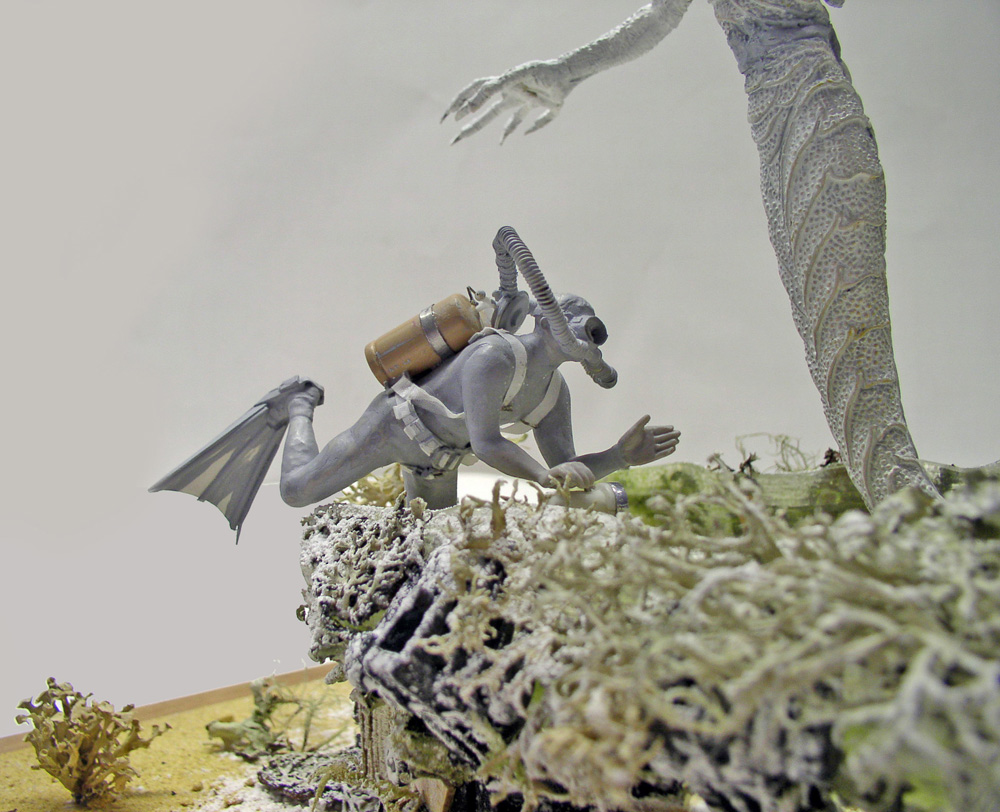
The set. The treasure chest is from the X-Files series and is actually a sarcophagus...
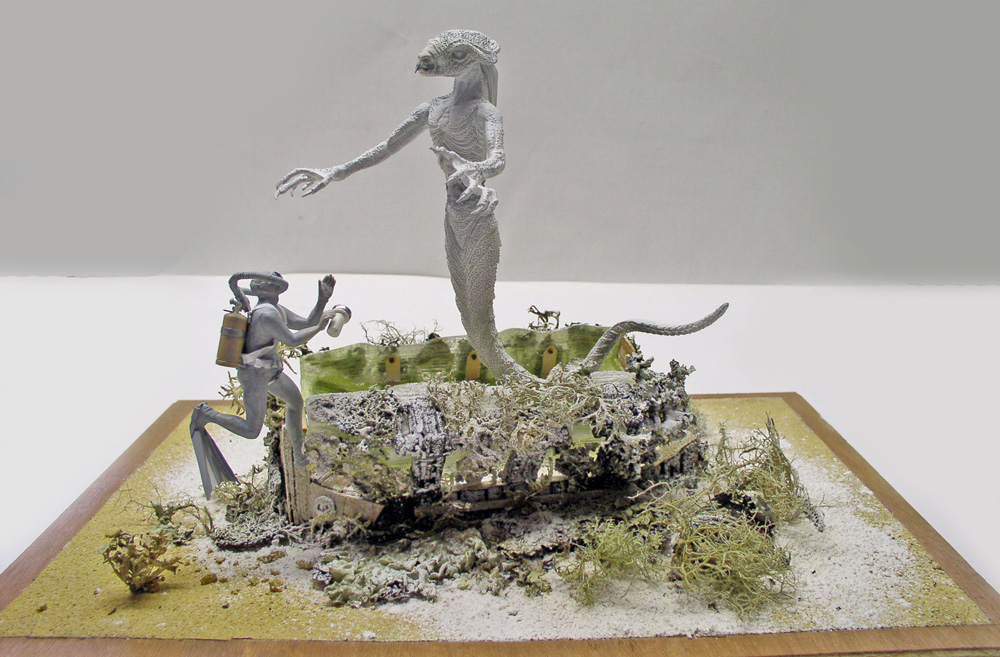
The chest is reinforced with balsa wood and plastic nails. Beads and a treasure are added inside. Bones are arranged on the right side in the sand. The whole scene is covered with lichens to simulate the marine concretions encrusted on the chest and the ground. Sand is added by sprinkling dry plaster onto the wet surface...
Painting
The diorama will be painted entirely with Liquitex acrylic paint, as will the figures. The first layers will be applied with an airbrush using black, with the addition of thinned emerald green for the subsequent layers...
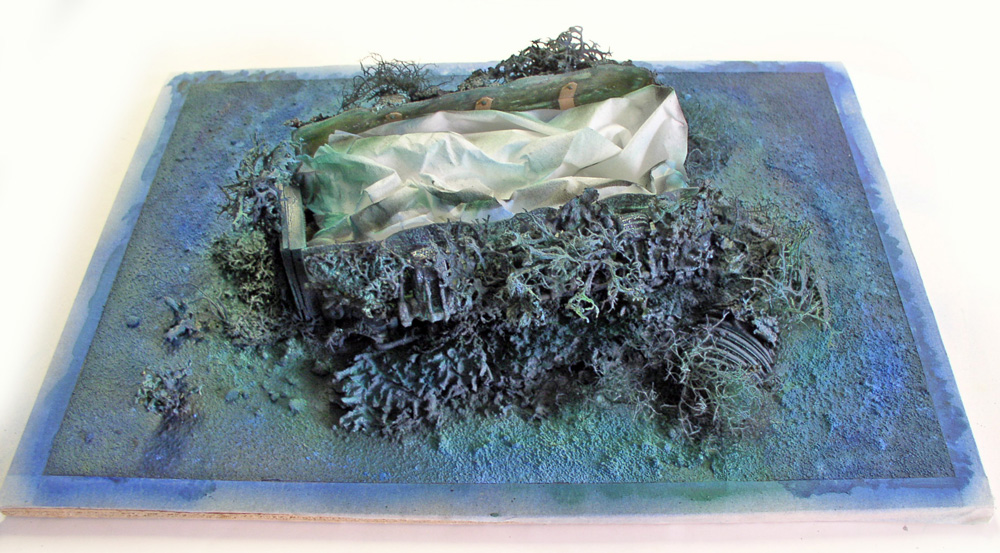
We’ll continue with phthalocyanine blue and coeruleum. Use a brush to highlight the upper concretions (that famous overhead lighting!)—be careful not to use pure white, but always mix it with the surrounding color...
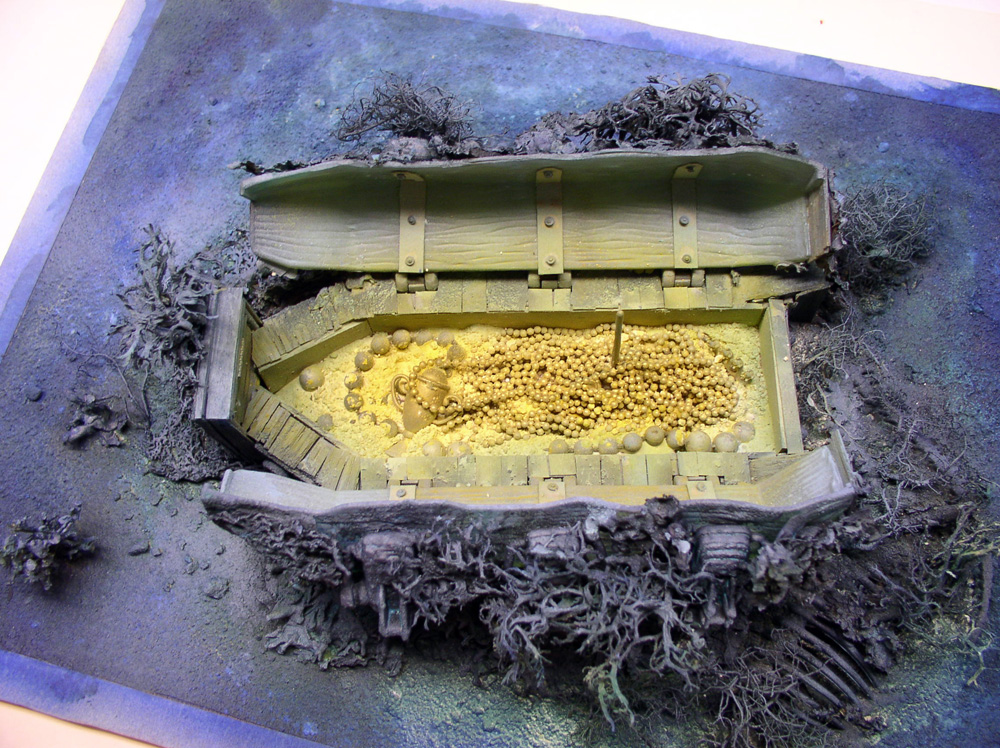
Next, we move on to the inside of the trunk. The goal is to create lighting. After priming the interior with matte white paint, we apply several shades of yellow, ranging from the darkest to the lightest...
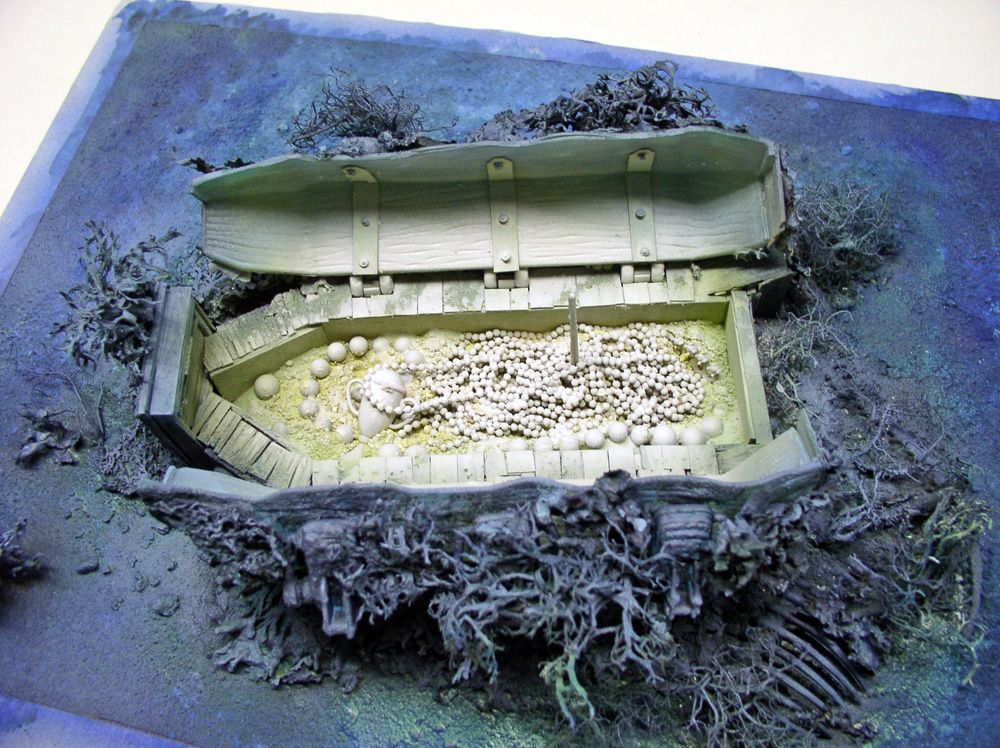
The yellows are then "bleached" to simulate strong lighting...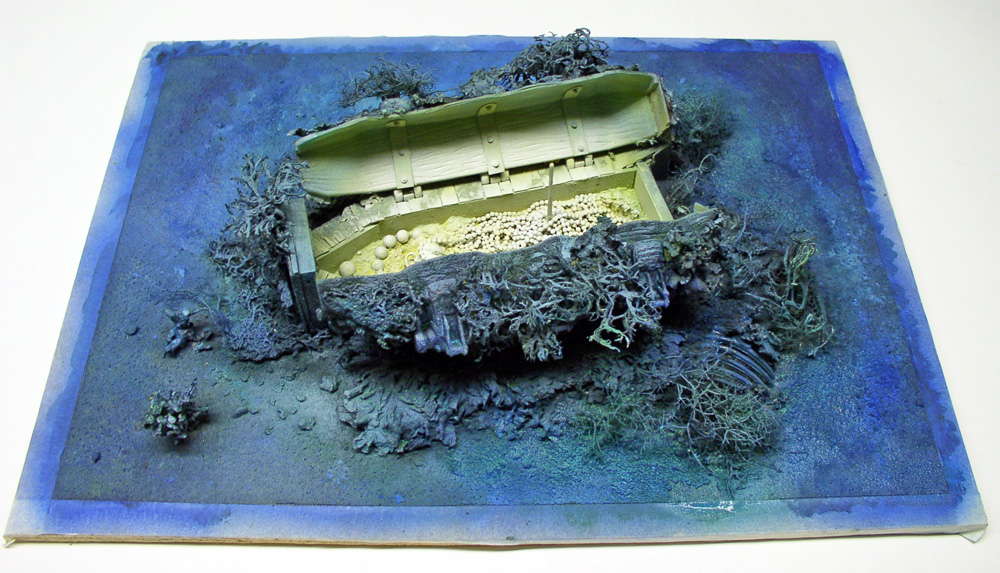
The first phase of the lighting project is complete...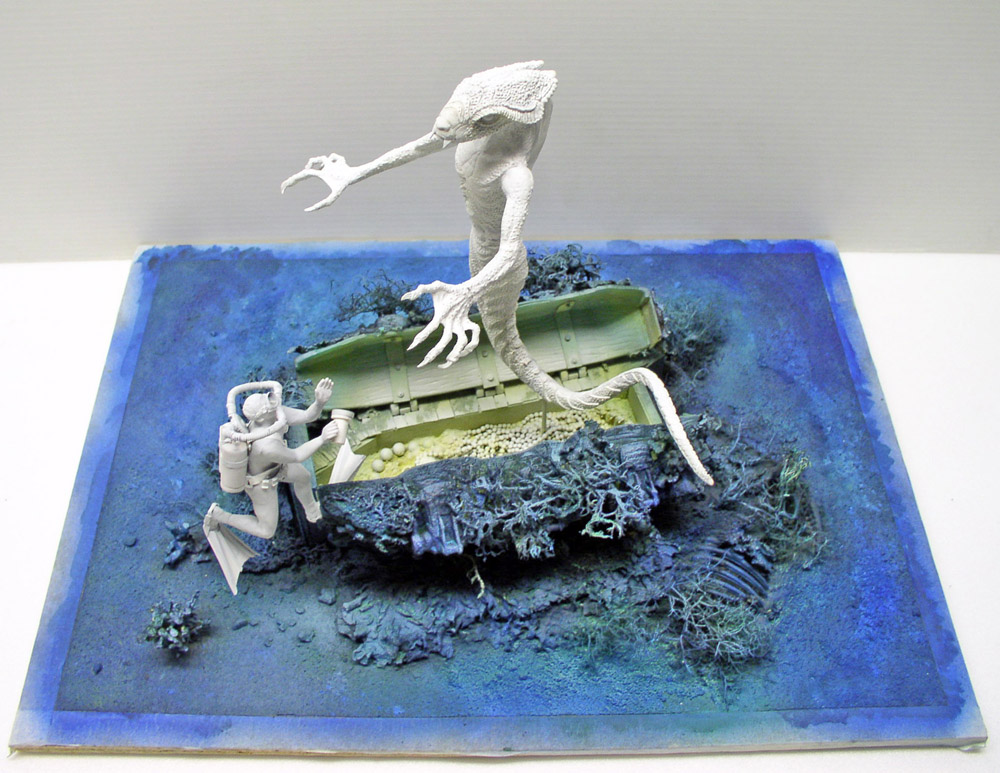
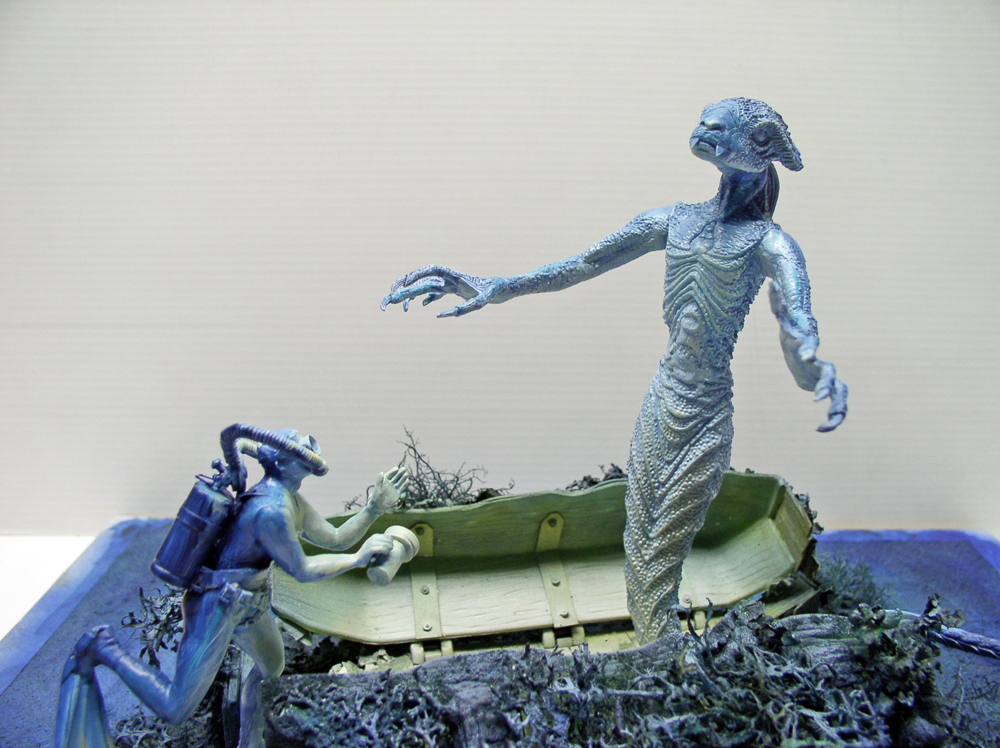
We start by brushing in the dark shadows of the bluish background to get an idea of the direction of the future lighting on the chest. The "little creature" gets some yellow, softened with white, on the lower part of its body...
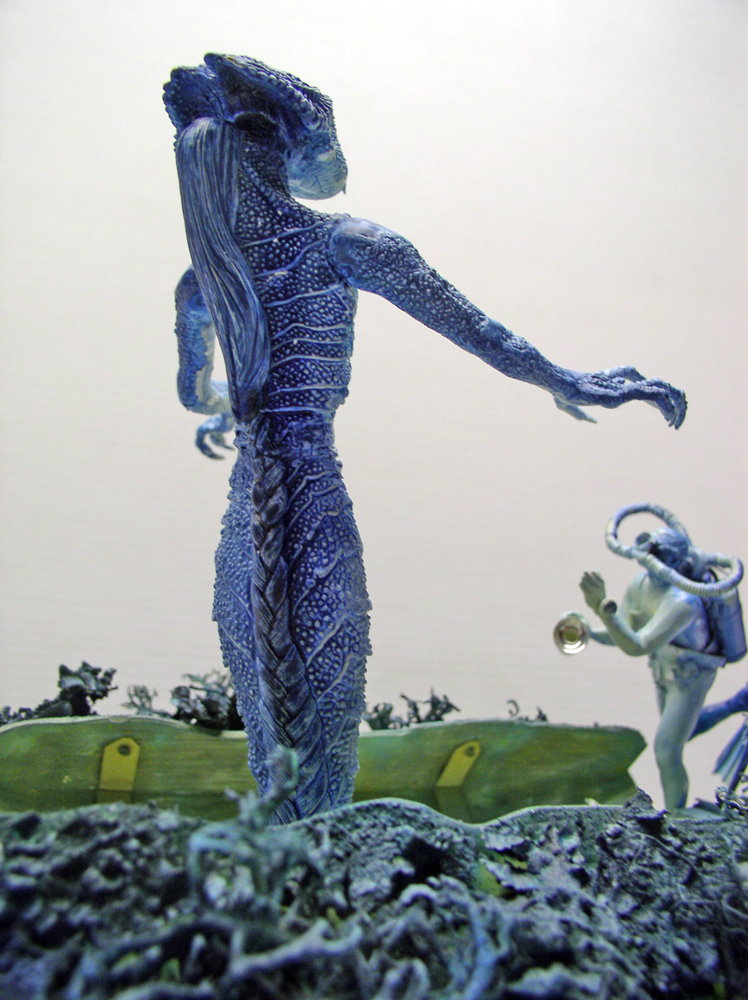 | 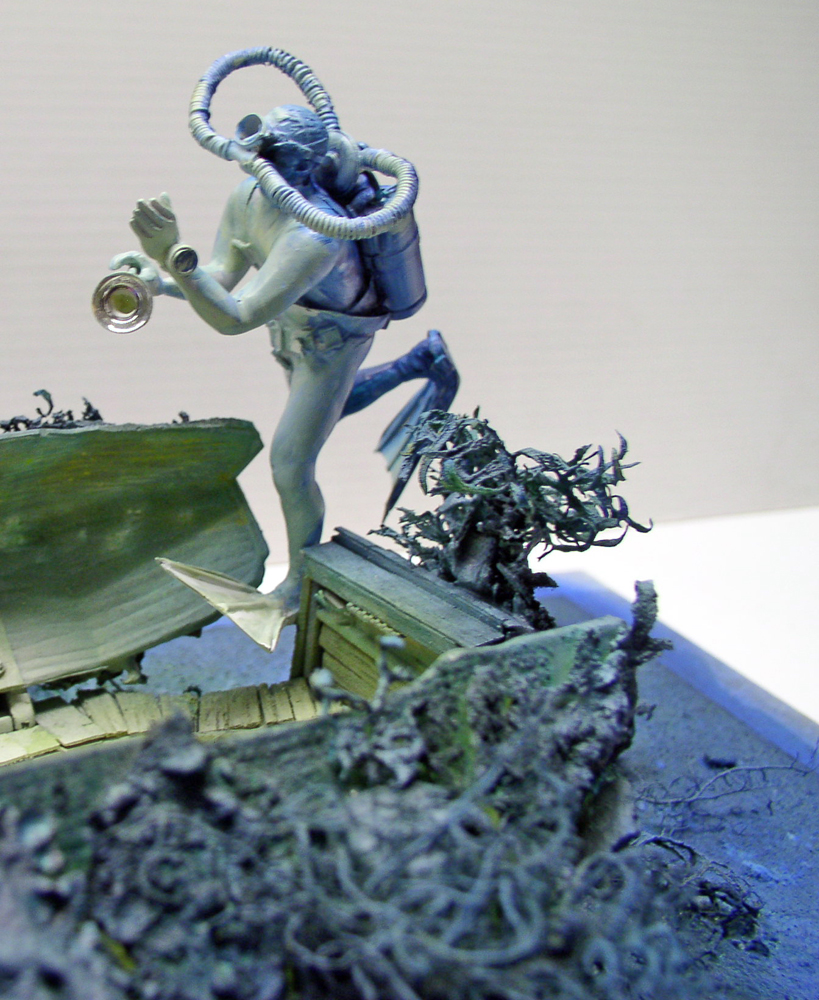 |
On accentue les ombres derrière les personnages - la luminosité sous l'eau étant souvent réduite...
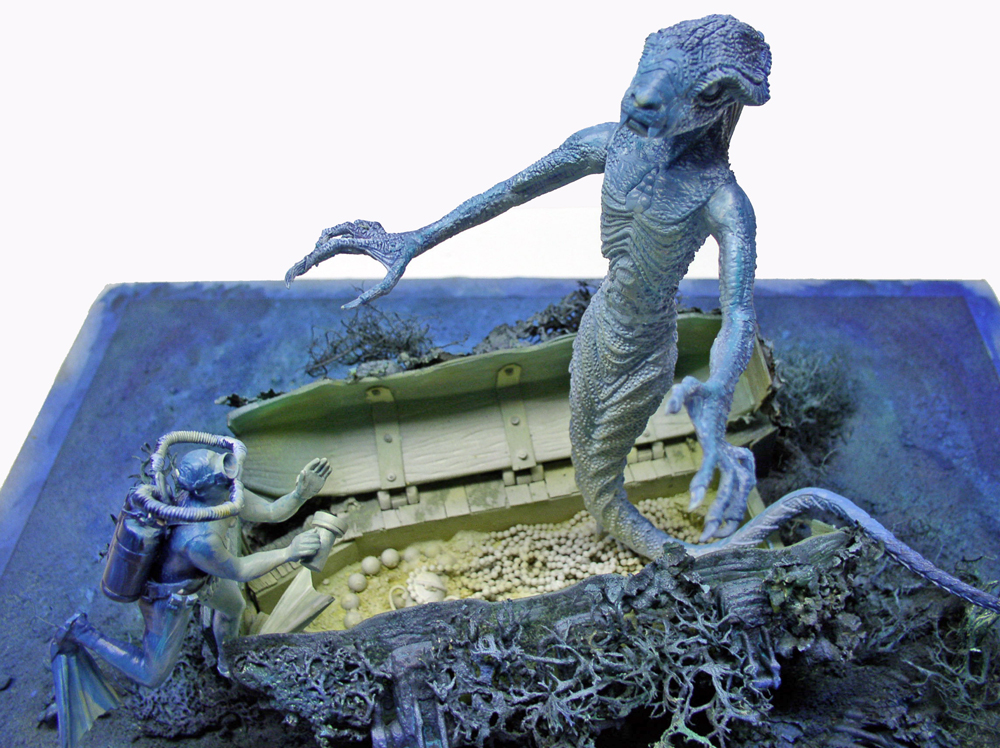
The blue lighting is complete. This is where each person's individual sensibility comes into play. It's hard to explain. You have to draw inspiration from photographs to give yourself a starting point and then accentuate the colors...
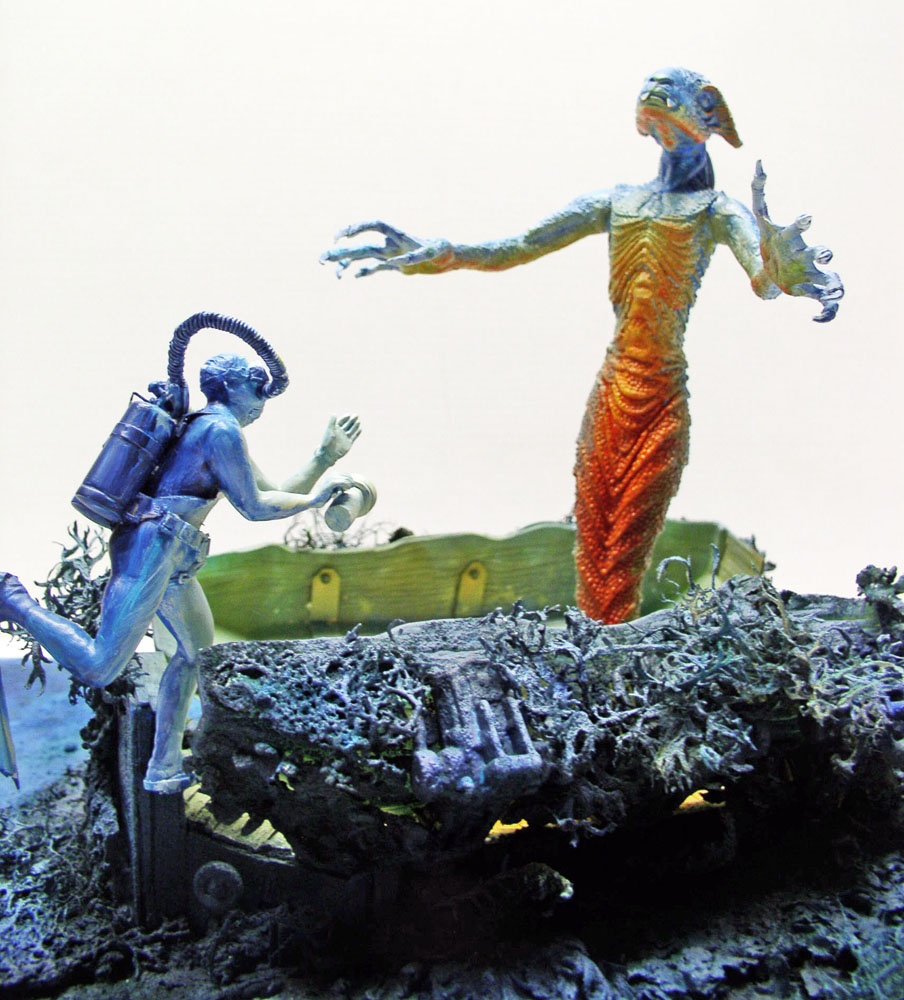
Here, a glowing effect is created using carmine red, vermilion, and an orange-yellow mixture, all toned down with white depending on the light source...
The diver is treated the same way. He drops his surprise flashlight...
The lighting is dimmed depending on the distance from the light source. The corals and concretions are also “illuminated” by all the gaps in the tank...