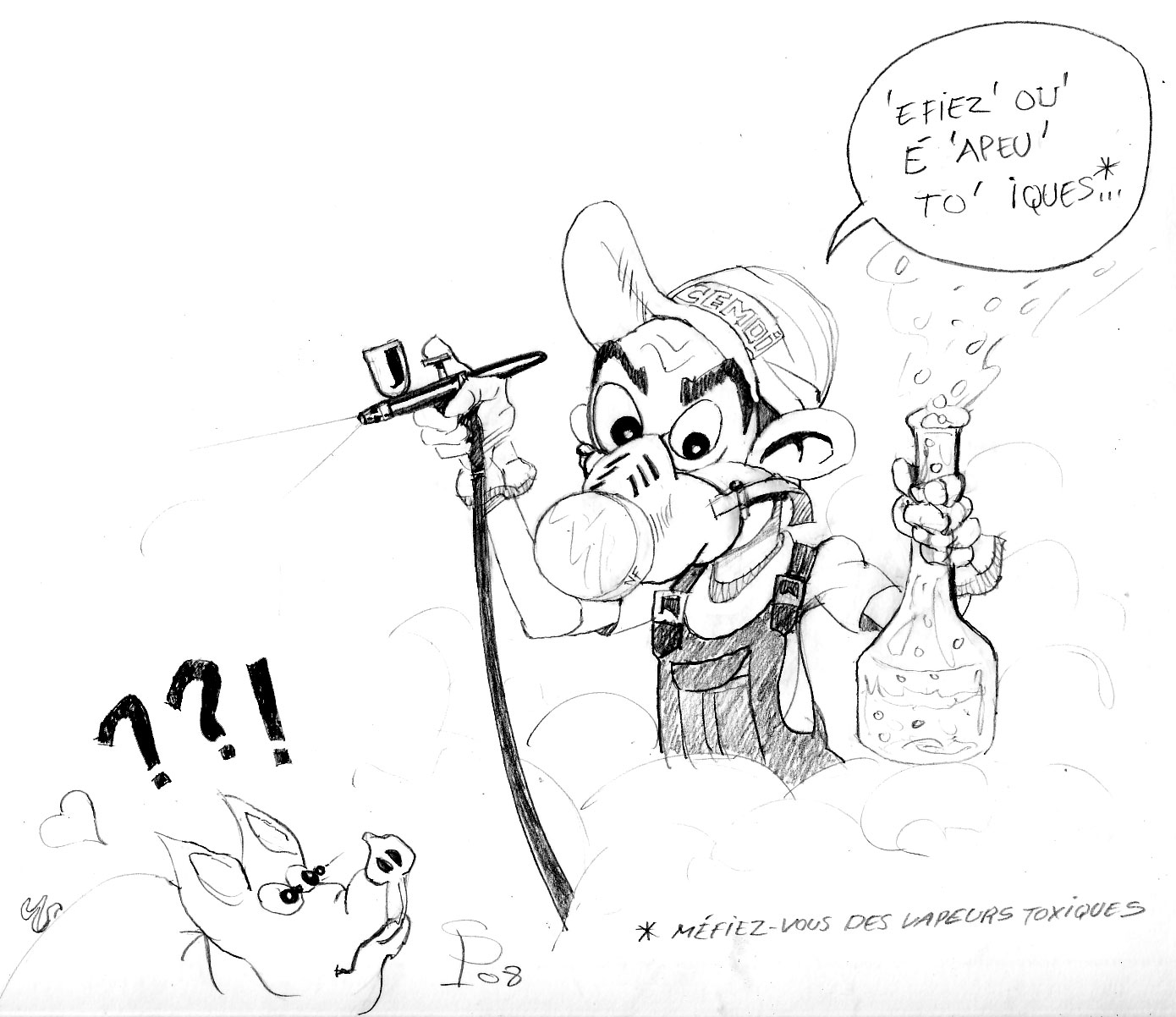
I would like to warn you about the dangers associated with the use of materials for sculpting, casting, painting, and collage; solvents; the machining of these materials; and, finally, various other materials used as a foundation for your work.
I am well-equipped to teach you about this subject and everything you need to know: I worked for five years in workshops specializing in composite materials. The companies — P.A.C. (Plastiques Armés Composites—Saint-Doulchard industrial park in the Cher department) and S.C. AERO (Stratifiés et Composites Aéronautiques)—located in the same area, where safety protocols were instilled in me from the moment I arrived and throughout my time there.
Previously, I received training at the AFPA in Laval, Mayenne, from the highly skilled instructors Jean-Pierre GAUTIER and Jean-Pierre BOLZER.
During this six-month accelerated training program, special attention—based on experience gained over many years in shipbuilding on the Atlantic coast—was given to understanding the materials used and their toxicity.
As a result, my training and the opportunity to have participated in a number of projects involving composite materials across a wide variety of fields have allowed me to verify the claims made about these products and assess their potential hazards.
Sculpting Clay
All modeling clays currently on the market—such as DURO, MILLIPUT, FIMO, etc.—especially the first two, harden through a "catalytic system" consisting of benzoyl peroxide and an "aromatic amine" accelerator.
Aromatic amines are among the most dangerous substances in modern industry today. Nothing can stop them. They pass through glass and lead (as seen at AFPA) via “chemical migration” and cause accelerated degeneration of the liver and kidneys!!!!!!!!!
What precautions should be taken?
DO NOT ALLOW CONTACT WITH THE SKIN...
First, dust your hands with talcum powder (this will prevent excessive sweating and thus slow down the deterioration of the gloves). Put on a first pair of vinyl gloves (clear and flexible), then a second pair of latex gloves (translucent, yellowish-beige).
Why two layers? The combination of two different materials ensures a more effective barrier against the products.
Next, while sculpting, avoid any contact with your mouth. When sculpting, spit into a cap and use it to “lubricate” your tools or other items. At the end, clean your equipment with acetone (and don’t inhale it either!).
MATERIALS & CASTINGS
Almost all of the casting materials most commonly used today in industry, automotive bodywork, aircraft manufacturing, shipbuilding, arts and crafts, and model-making are composed of:
- A "base" called "resin" (similar to concrete).
- A hardening agent called a "catalytic system" (similar to water in concrete).
- "Reinforcements" known as "armor," hence the term "reinforced plastics" (by analogy with rebar).
How harmful are these materials?
LET'S START BY TALKING ABOUT THE BASICS,
Resins
Polyester resin, polyurethane resin, methacrylate resin, acrylic resin, epoxy resin. All of these materials are highly toxic when inhaled, handled, stored, or disposed of. These materials continuously emit vapors, molecules, etc.; they are unstable and can be absorbed by our bodies as well as by the environment.
For example, the diluent contained in polyester resins—the “styrene monomer”—has a depressant effect on the human nervous system; it dries out the respiratory tract and causes drowsiness... Similarly, polyurethane and epoxy resins contain within them the “catalytic system” benzoyl peroxide and accelerators such as “aromatic amines”... (I repeat: aromatic amines are among the most DANGEROUS substances in modern industry today; nothing can stop them. They pass through glass and lead via “chemical migration” and cause accelerated degeneration of the liver and kidneys!!!).
NOW LET'S TALK ABOUT HARDENERS.
Among the best known are: cobalt octoate, aromatic amines, benzoyl peroxide, methyl ethyl ketone peroxide, and cyclohexanone peroxide.
All of these products are highly toxic, deadly, and explosive to boot... The body cannot tolerate them, and in some cases, has great difficulty eliminating them. You must strictly follow all instructions for use, handling, DOSAGE (explosive!), and disposal (generally, absorption using wood shavings or sawdust). Wear gloves, a mask, and all necessary protective gear; discard contaminated clothing after use, just to be safe.
AND FINALLY, LET'S TALK ABOUT REINFORCEMENTS.
Although not widely used in our various casting projects—aside from a few laminates for masks and/or costumes or the outer layers of stamped molds—the most common reinforcing materials are fiberglass (in bulk form, such as glass mat or woven fabric) and carbon fiber.
Never inhale fiberglass; wear a high-quality fabric respirator (specifically designed for cutting work, available at auto body supply stores—avoid the cheap “pig-nose” masks for one euro at your local “Superbrico”... Vacuum very thoroughly; do not sweep, as this will spread the fibers further, or spray water on the area and then sweep it up. Wash these clothes separately from the rest of the laundry.
As for carbon fiber, in theory, you should never use it because of its exorbitant cost. If you ever find yourself in that situation, though—since studies on carbon fiber are somewhat contradictory, with some suggesting it can be naturally broken down by the body—it’s best to err on the side of caution...
What precautions should be taken when handling all of this?
NO SKIN CONTACT / DO NOT INHALE VAPORS / PROPER VENTILATION / SPECIFIC HYGIENE AND CLOTHING REQUIREMENTS.
As a result, wearing cotton undergloves (which are more practical than talcum powder) will prevent excessive sweating and, consequently, the accelerated deterioration of the gloves. Put on a first pair of vinyl gloves, then a second pair of latex gloves.
Wear respirator masks with cartridges specifically designed for this work (the only approved masks are strictly the same as those used by auto body painters; the cartridge provides the highest level of protection available; beyond that, you enter the biological hazard category). Please note: The masks contain activated carbon, which has a limited lifespan, reaches a maximum toxic load capacity (weigh them regularly—see instructions), and must be stored away from direct sunlight.
Ventilate constantly, AND DO NOT DIRECT THE AIR INWARD toward the premises or dwellings.
Wear clothes reserved solely for this job, and wash them separately from the rest of your laundry. Clean everything with acetone, and if resin accidentally comes into contact with your skin, never clean it off with acetone!!! This causes the toxic chemicals to enter the bloodstream!! You must wash your hands with laundry detergent (it’s a bit harsh but less dangerous).
The Paintings
Under no circumstances should any type of paint be inhaled. In particular, polyurethane, glycerophthalic, and oil-based paints are among the most hazardous when applied with a paint spray gun or airbrush.
Quite simply, they dry out the trachea, pollute the lungs, and gradually and permanently block them—leading to respiratory tract cancer around the age of 45 to 55.
Furthermore, polyurethane paints still contain the well-known catalysts, etc., used in polyurethane resins and similar products.
Skin contact is therefore prohibited, as is failing to fully protect your body and head... When entering the paint booth, be sure to wear your paint mask properly.
Adhesives
Like any chemical, our bodies cannot tolerate most of the adhesives used in model-making, scale modeling, and artistic casting...
Here is a list of the most common ones, along with the associated risks for each.
Cyanoacrylate
adhesive
As its name suggests, this glue contains cyanide derivatives... Breathing it in daily will lead, in the long term—that is, by the time you should be teaching your grandchildren how to build model airplanes, around age 50–60—to respiratory tract cancers, allergies, and other degenerative conditions of the body that are absolutely incurable...
Yes, that’s the sad reality, and I hear many people saying, “Yeah, but this guy’s paranoid!” No, just like asbestos in its day, the highly toxic effects of this adhesive and its derivatives are well known, but there’s little emphasis (from the government through regulations, industrial “lobbies,” etc.) on prevention at the moment. There’s simply too much money to be made with this product right now (just consider that the few lawsuits filed—and yet to be filed—on behalf of asbestos victims pale in comparison to the total damages awarded, relative to the colossal profits that have been made since then, this had been “calculated” long ago… That is the sad and very cynical reality…
Precautions for use: As always, ensure proper ventilation first. Next—and this is very important—most glue splashes into the eyes occur when opening the various glue tubes. Wear safety goggles when performing this task or when performing forceful or risky gluing operations. If glue splashes into your eyes, do not panic; rinse them immediately and thoroughly with water, then go either to the emergency room or see an ophthalmologist...
If it gets on your skin or sticks to your fingers, very hot water can often remove it, and any remaining glue will come off over time.
Model
glue
It is much less harmful, and proper ventilation to prevent drowsiness and possible dizziness is all that is needed to use this glue safely.
Neoprene Adhesive
The fumes are unpleasant and tend to cause drowsiness and dizziness in enclosed spaces that are not properly ventilated. Protect your respiratory tract with the same masks used for working with resin or paint, or ensure adequate ventilation.
Wood Glue
There's no danger, at least not with the glues sold at supermarkets. However, some professional-grade glues contain chemical compounds whose effects and composition can be quite unpredictable; if in doubt, take effective precautions.
Solvents
All solvents derived from the petrochemical industry—acetone - White Spirit - Gasoline C or F - cellulose-based thinners - synthetic thinners - Trichloroethylene - must all be used sparingly and in accordance with health and safety regulations.
Their main drawbacks and risks are as follows: drowsiness and dizziness if inhaled; drying of the trachea and airways; and the migration into the bloodstream of substances removed and/or used by these products. Consequently, the use of a respiratory mask is recommended.
VERY IMPORTANT: Trichloroethylene is a substance that is deadly and/or causes irreversible damage to the body, including irreversible brain damage, simply through inhalation...
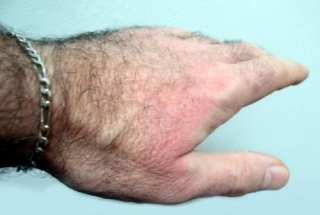
Inflammation caused by sanding and trimming five 120-mm resin figurines with an electric grinder. When heated, resin particles migrate under the skin, which is why gloves must be worn when handling them...