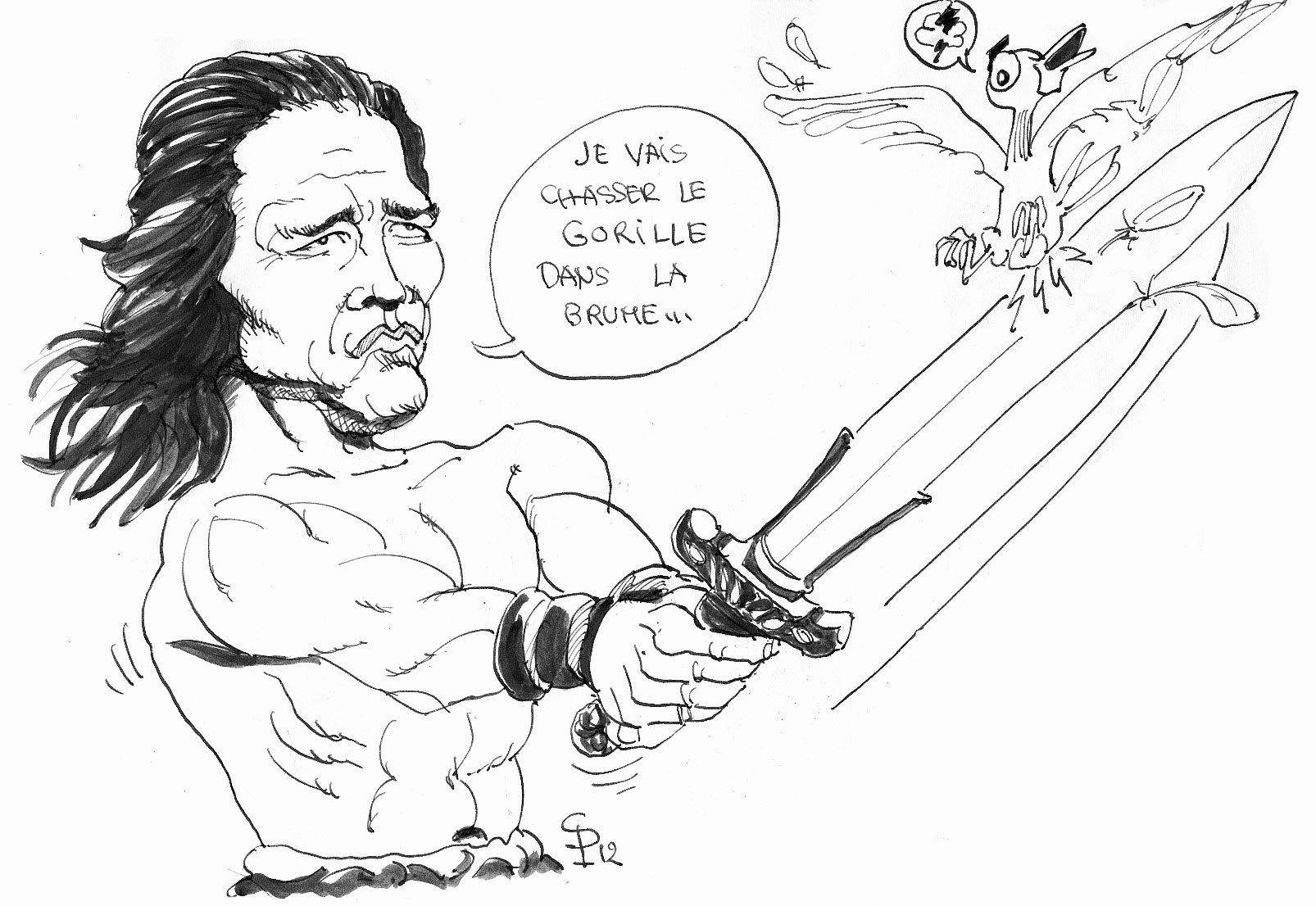
As a lifelong fan of Frank FRAZETTA—who revolutionized the art world with his direct, minimalist style and masterful use of lighting—I felt compelled to pay tribute to him (in my own small way). There are no fussy little details in Frazetta’s work—unlike all those imitators who have copied and recopied him...
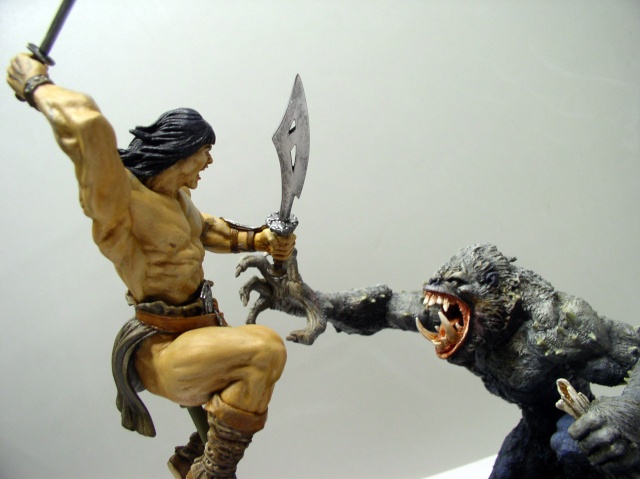
In his paintings, Frank Frazetta often captures the moment after or just before a blow is struck, which lends much more impact and realism to certain scenes in his paintings—more so than if he were to depict the final action...
The release of the McFarlane figures from the Conan series gave me the opportunity to create a little diorama and experiment more extensively with lighting the figures, much like an oil painting...
Step 1: Sand all visible seams, glue all moving parts in place, and apply putty. Sand again and finish with liquid putty...
Conan Painting
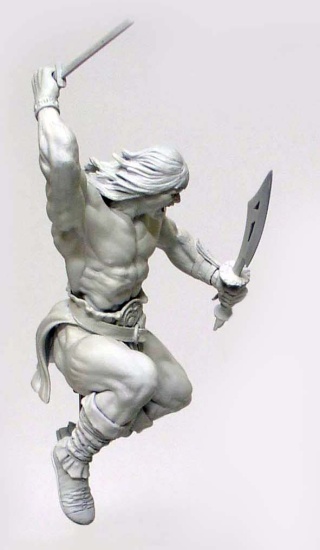
After gluing the joints, filling them, and sanding the seams, we apply a white primer. Only the eyes were protected with Maskol (liquid rubber)...
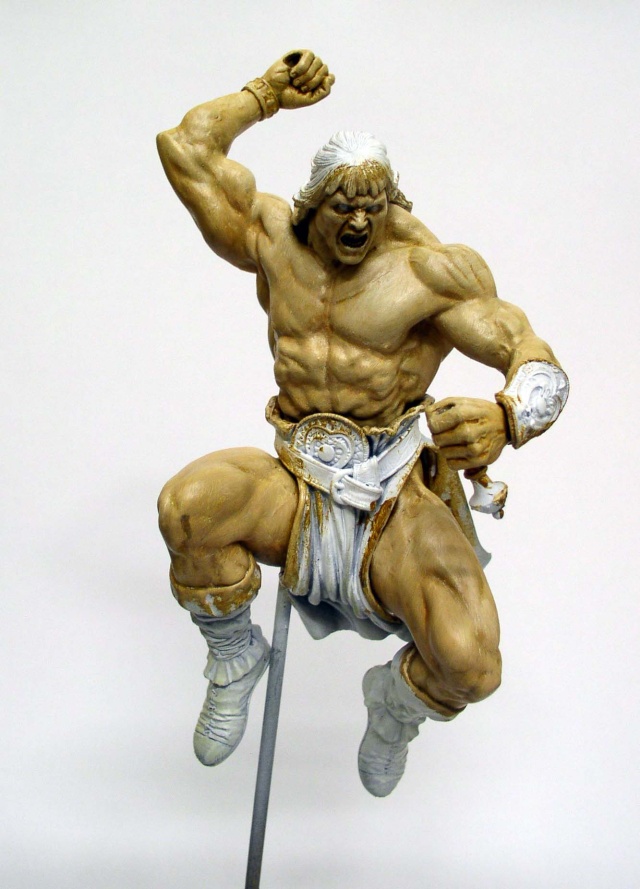
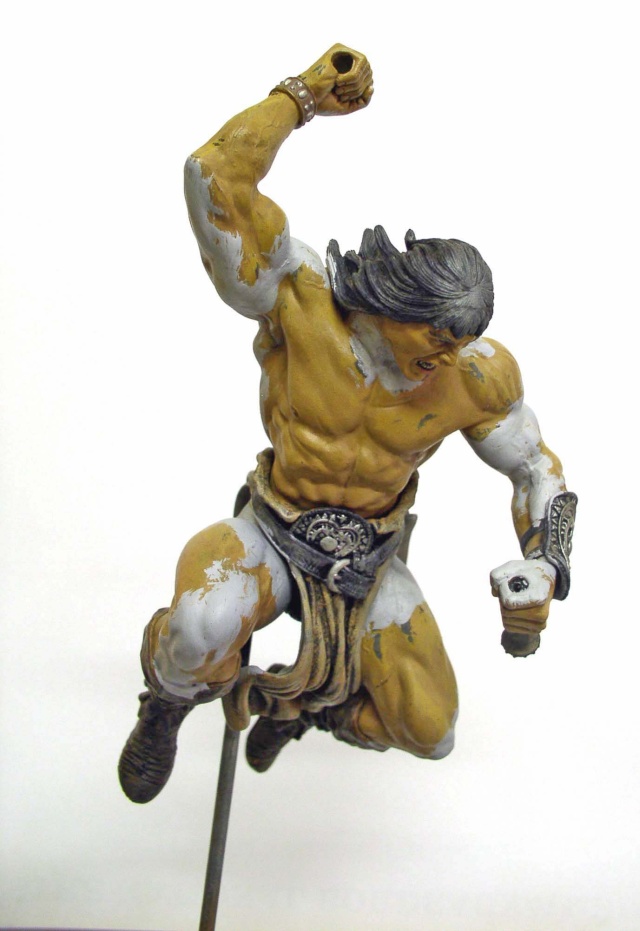
When painting a figurine, the skin is always painted first. WINSOR & NEWTON alkyd oils—base colors: Umber, Sienna, Naples Yellow, white...
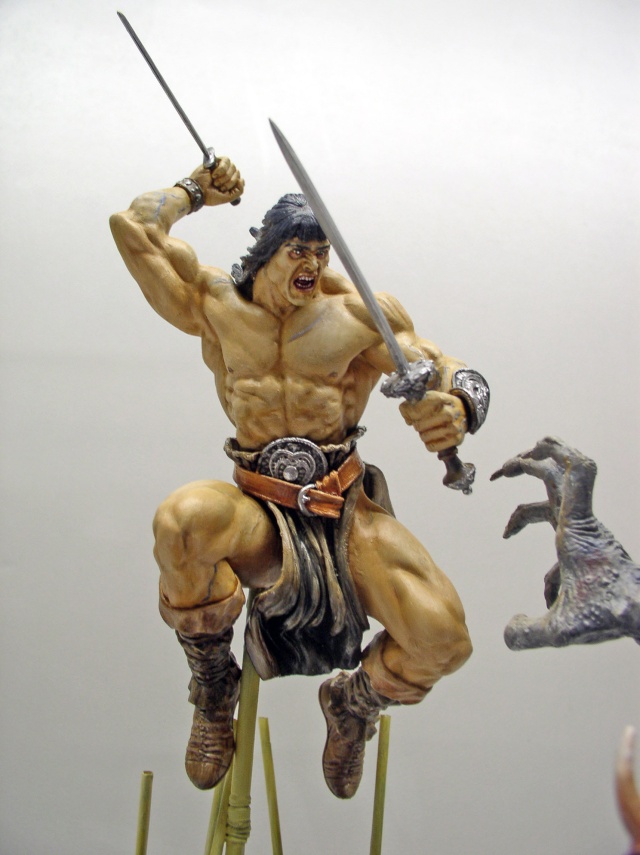
The finished figurine. The bluish veins are highlighted with a translucent coat of Payne's Gray (I skipped the other detailing steps, since they didn't add anything)...
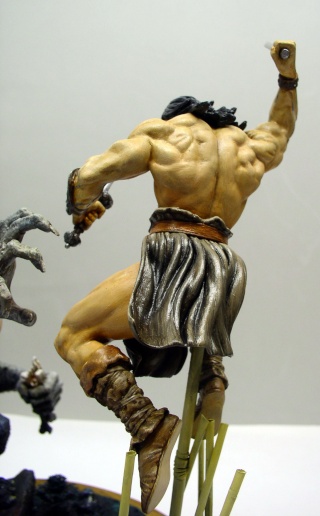
On the figurine, which is bathed in bright light, a subtle shadow effect is accentuated toward the lower part of the body—it's very noticeable on the lower torso and thigh...
On the McFarlane figures, a glossy sheen sometimes appears on them, despite the paint and matte varnish... Hence the shiny loincloth. I conclude that in the future, if you choose to repaint them, it’s better to use acrylic paint...
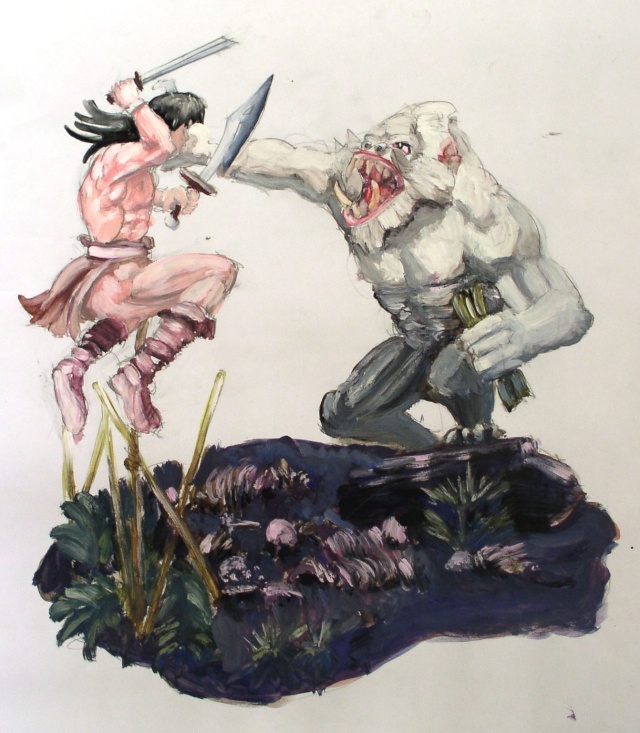
The scene of Conan pouncing on a man-eating monkey was supposed to be lit from top to bottom. I did a quick gouache sketch on paper to get an idea of what it would look like. Conan is the brightest, followed by the top of the monkey, and then it fades into shadow. The monkey was originally supposed to be white, but I decided to make it gray, as in the original, which fits better with the jungle setting...
Monster Painting
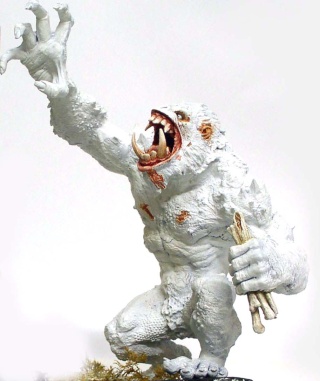
Let's move on to the creature: same steps as for Conan, but you'll need to re-sculpt the fur with putty around the joints to eliminate any trace of articulation...
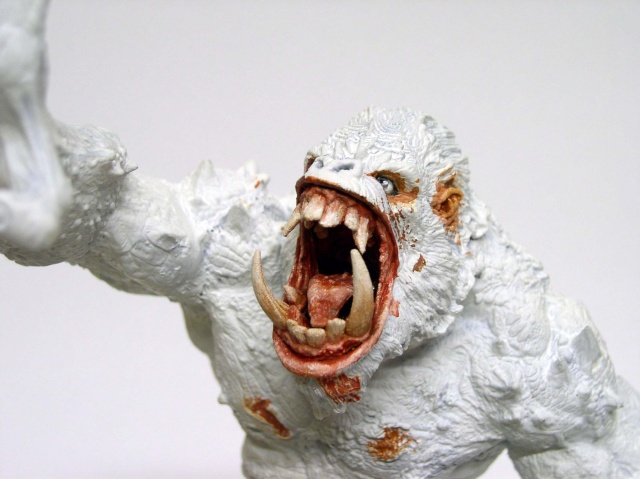
We paint the face first—it’s really interesting to work on—using Sienna, Alizarin Crimson, Indian red, red, and white. Ochre and white for the teeth...
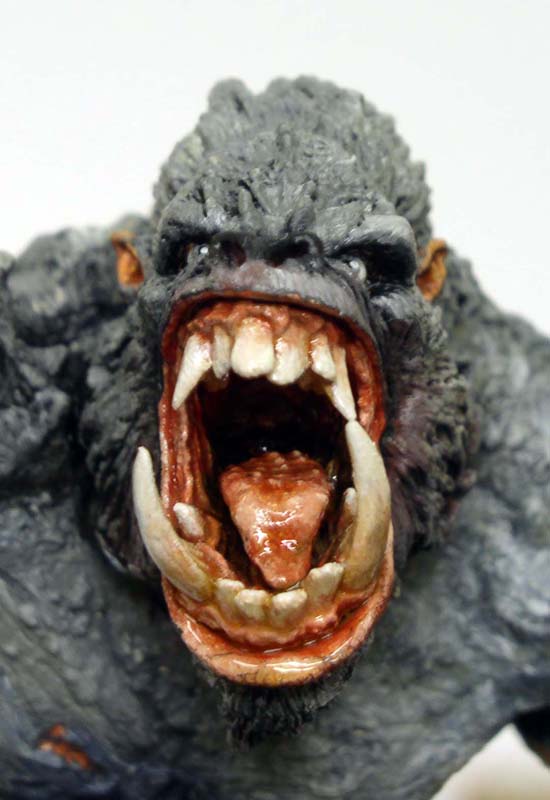
A charming portrait—but one you wouldn't want to run into one evening on the street! Several coats of glossy varnish will bring the whole thing to life, especially to simulate saliva...
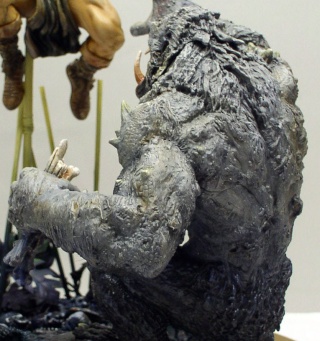
The engraving of the monkey lent itself to dry-brushing, which would have made my job easier, since the bristles would have caught only the highlights, leaving the shadows intact. But I preferred to work on it directly with a brush, just as I would have done for a painting. Among other things, this allowed me to add more detail and create a gradual fade of shadows toward the bottom...
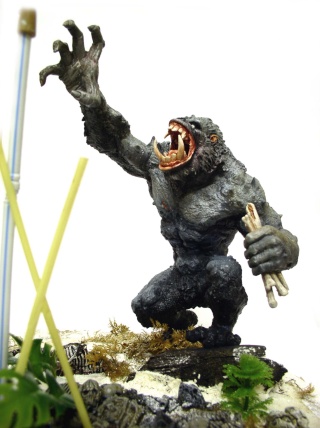
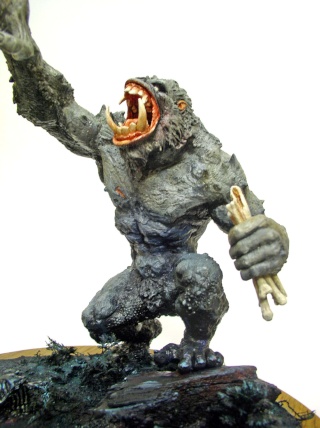
Two photos showing the transition into shadow. The color changes from gray to blue, then to deep blue, and finally to very dark blue-green. The first, overexposed photo shows the progression. The second shows the final color...
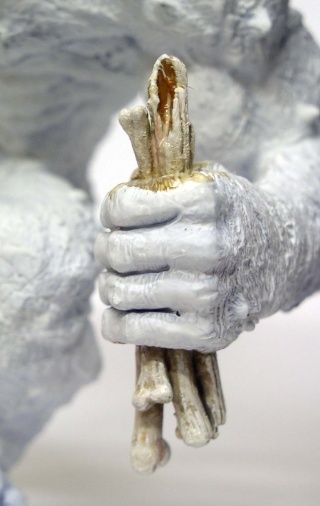
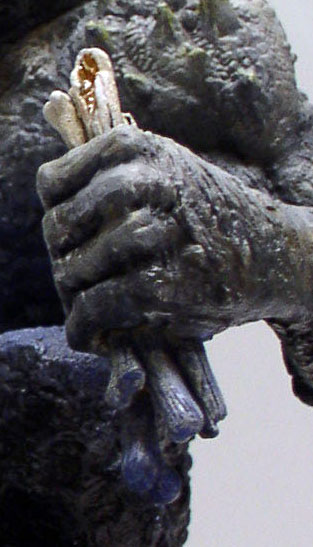
Another telling example: painting the bones in the animal's left hand and then shading from light to dark...
But the fur painting isn't finished yet. I still need to add bloodstains, dirt, and signs of wear—and brighten up the fur a bit more...
Lighting
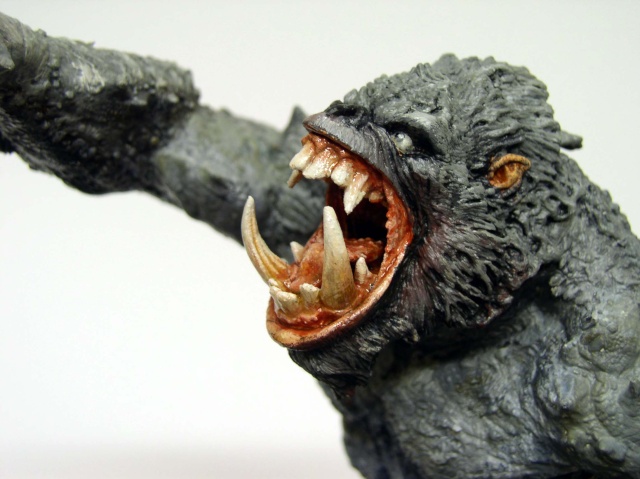
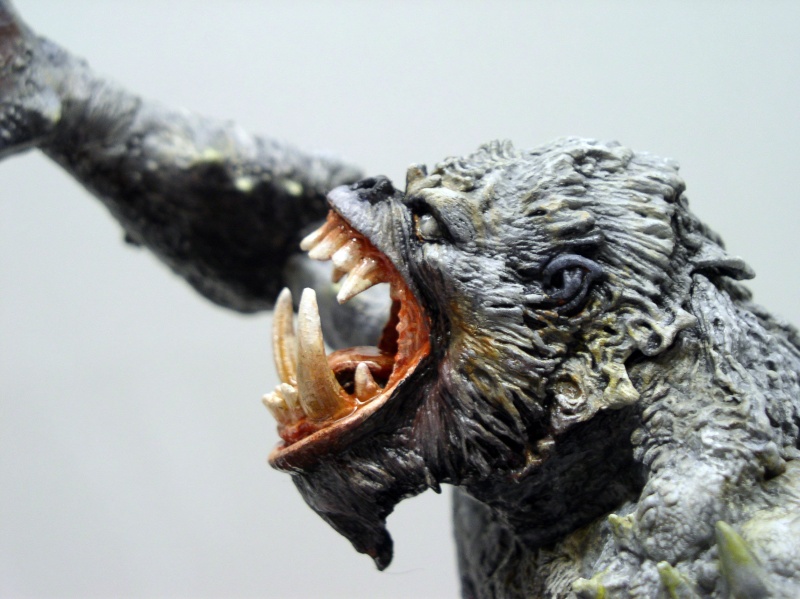
I further improved the shading on the fur; the eyes are glassy, and the teeth are highlighted once again... Since I wasn't satisfied with the orange ears, I decided to make them black, so they would blend in better with the overall look...
Notice the difference in the fur when you compare the first photo with the second...
The Setting
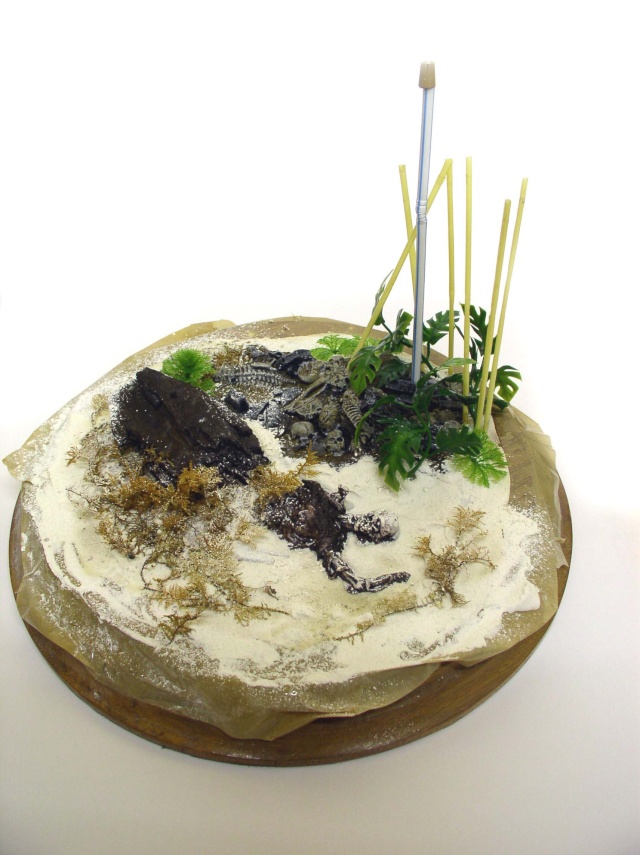
A heavy, round base was needed to support the whole thing. The base represents the entrance to the monkey's cave—hence the bones on the ground. The model is ready to be painted...
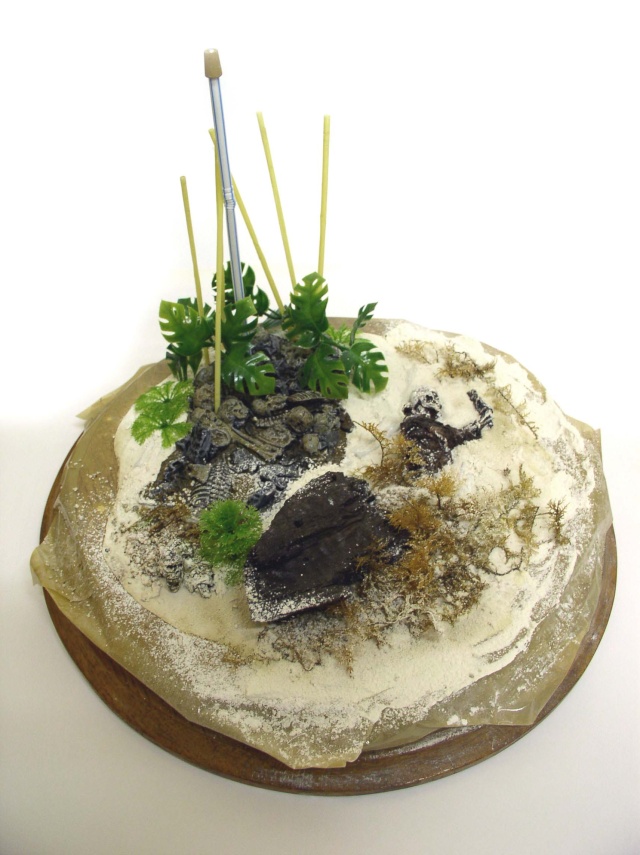
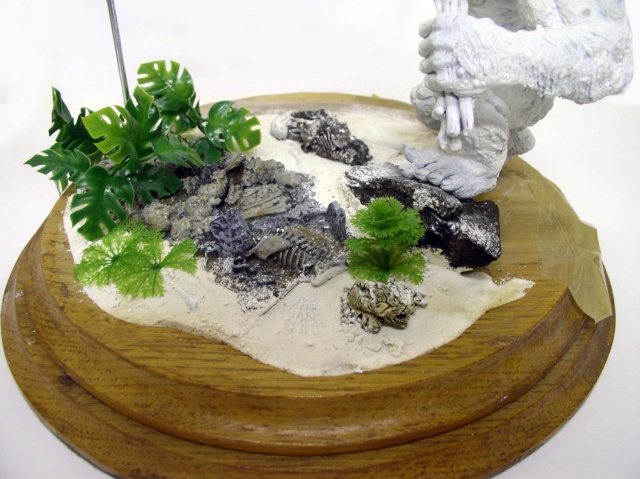
The base that comes with the monkey is removed, and a piece of tree bark will serve as a suitable replacement. The figurine—which is very heavy—is secured with two thick metal rods, one of which goes through the bark. Plastic aquarium plants and some dried lichen will provide the vegetation...
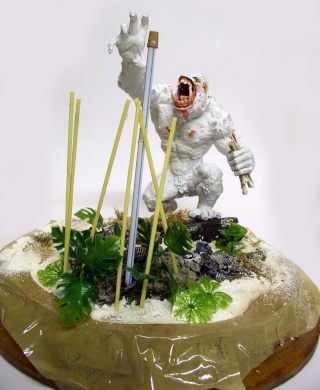
That metal rod holding Conan up in the air really bothered me—it was blocking the view. After some thought, the solution became clear!
I was going to create part of a bamboo forest. No sooner said than done... A single straw will hide the unsightly rod, while other thinner straws, arranged in various directions, will simulate the whole scene. Time for some color!!!
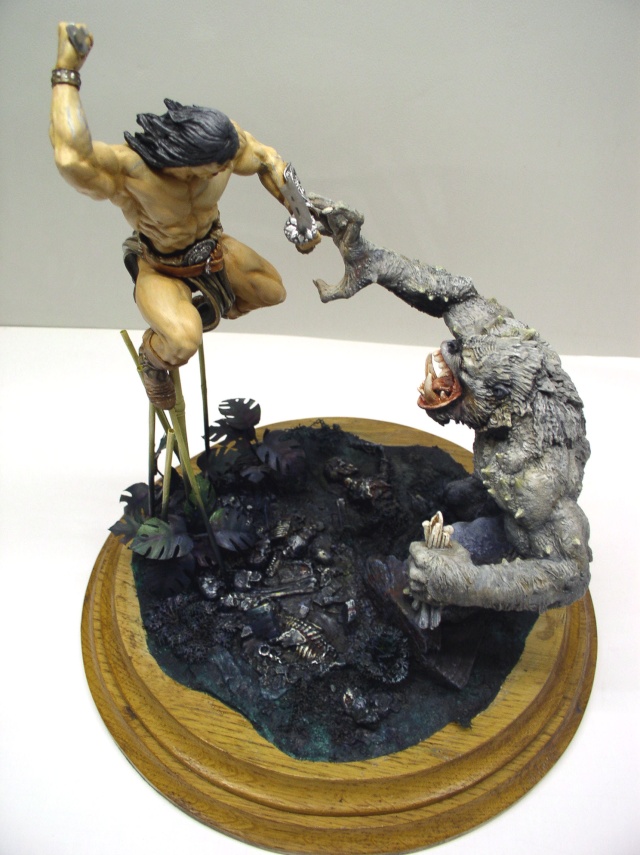
Decorative lighting
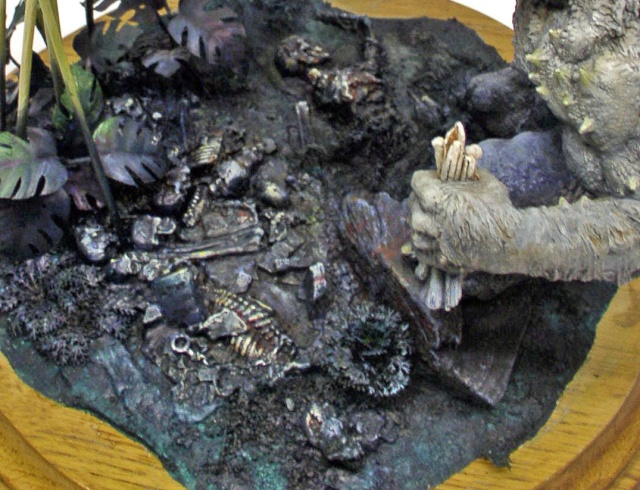
Details of the photo above:
The background is painted with LIQUITEX acrylic paint using a mixture of various shades of blue, green, pink, mauve, and black.
Once everything was completely dry, I used oil paint to add certain effects, such as making bones glisten in the shadows, or traces of blood, or vegetation...
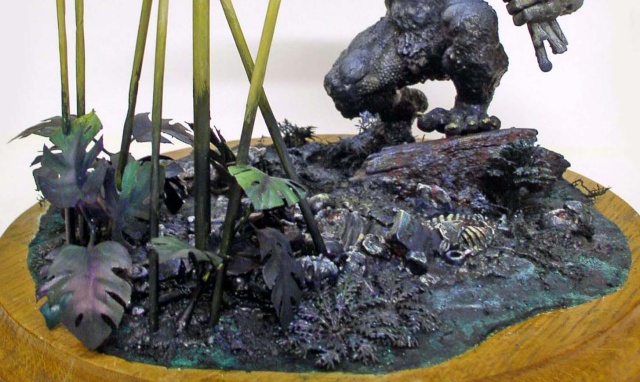
Notice how the leaves transition from light to shadow...

