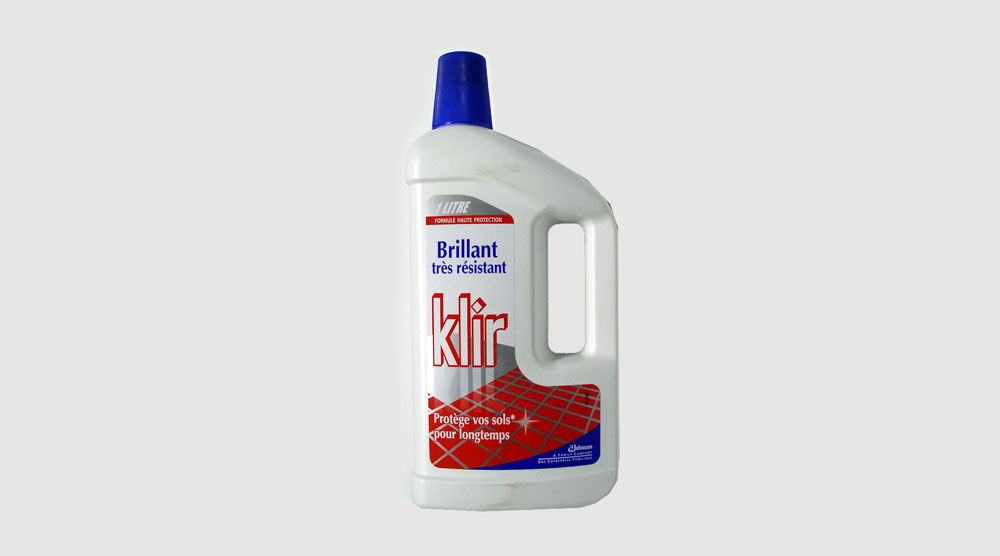
Tout maquettiste se doit de connaître ce produit qui améliore sensiblement l'aspect général de ses pièces...
Used to clean tiled floors in homes, it can be found in some supermarkets or at drugstores.
It's actually... an acrylic varnish!
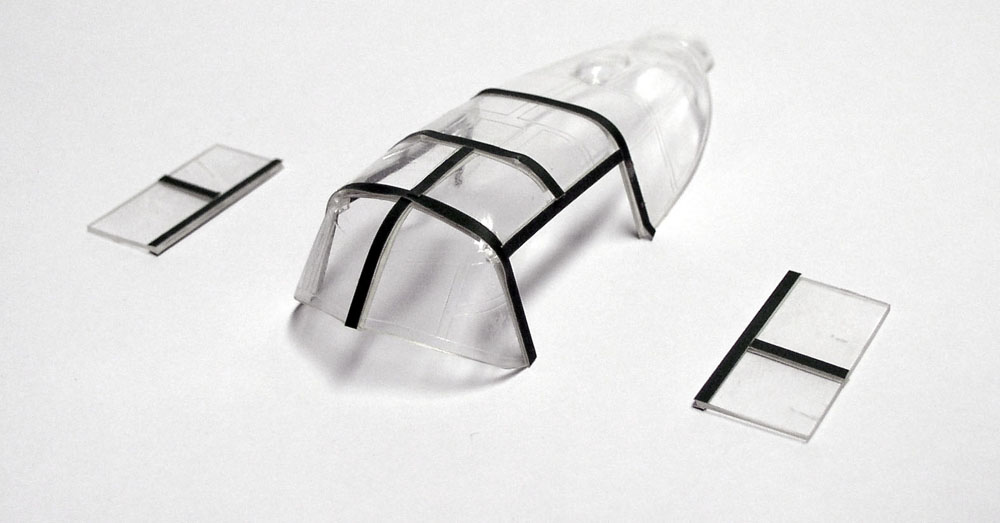
Airplane cockpits are the first to benefit from these advantages. Immersing the part in Klir makes it more transparent and thinner; the product eliminates imperfections and unwanted reflections and enhances the plastic's shine...
- First, you can remove micro-scratches using polishing compounds—such as MICRO MESH—or toothpaste (fluoride-free)...
- Clean the parts with alcohol (to remove fine dust and fingerprints). Let them dry thoroughly...
- Soak the item in Klir, drain it, and then place it on paper towels, being careful not to leave any large drops or thick pools of liquid. Cover it and let it dry for AT LEAST 48 hours...
- a product that removes imperfections and unwanted glare and enhances the shine of the plastic...
Various Effects
- Glass panels and windows are usually glued with wood glue because the toxic fumes from Super Glue cause the transparent parts to turn white. Klir counteracts this effect and therefore allows for stronger bonds. Apply a small amount of Klir to both surfaces, then let them dry...
- You can always clean a room again if you're not satisfied with the results. A solution of water and ammonia will allow you to repeat the process...
- Klir can be applied with an airbrush or a paintbrush. It is water-soluble before drying. Apply 2 or 3 thin coats, allowing a few minutes to dry between coats. It sets on its own or dries quickly. If an orange-peel effect occurs, apply another coat after it dries. And most importantly, reduce the compressor pressure for the next coat...
- Klir is used to secure decals and provide a glossy finish. It does not yellow over time. A drop under the decal secures it more firmly, and a drop on top perfects the mark. In any case: after spraying paint or applying MICROSOL for decals, always let it dry for 48 hours...
- Dry Klir remains an ideal surface for applying juices... oils, acrylics, which work very well...
- It forms a waterproof layer that serves as a base for thin coats of matte or satin varnish (Humbrol, Testors). There is a risk of white streaks forming in the summer during periods of extreme heat...
- Instrument dials (in airplanes and cars) can be treated with a drop of Klir to simulate glass...
Painting
Some people have tested various paints using Klir as a thinner. The results vary from brand to brand. So, proceed with caution...
You can make matte Klir by mixing Tamiya or Gunze flat base with Klir.
- 3 doses of Klir on a flat base create a matte finish.
- 10 doses of Klir on a flat base will give a matte finish.
- 15 doses of Klir on a flat base give a satin finish...
(Dosages to be verified)
You can dilute Tamiya Smoke with Klir or tint Klir with various colors to create smoke trails, exhaust marks, weathering effects, oil stains, etc.
Dioramas
- Klir mixed with pigments or pastel powder can simulate mud... it's also ideal for puddles or still water.
- When mixed with talc, it forms a fast-drying putty that is easy to sand. Smooth with water or Klir...
Molding
A coat of Klir on the inside of the resin mold would improve the quality of the casting...
Dilution/Stripping
For kits, airbrushes, and brushes:
Window cleaner, ammonia water, or alcohol. Wash your hands with soap.
Despite its pleasant scent, don’t forget that Klir is a chemical—insidious, like so many others that appear harmless... If you’re spraying, remember to wear a mask...