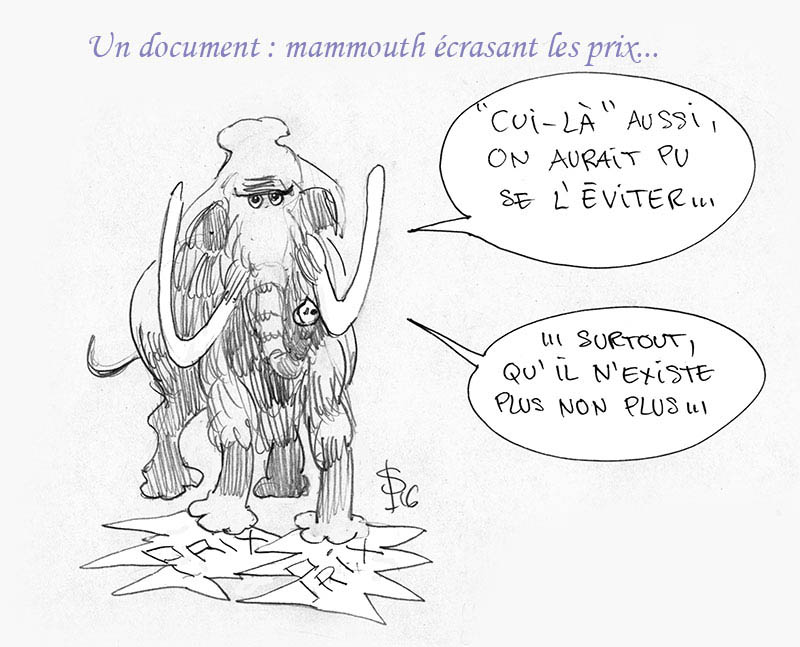
The mammoth, the most representative of prehistoric animals after the dinosaurs that became movie stars...
Siberia is the part of the world where the most mammoth remains have been found...
It's quite rare to find mammoth bodies in a good state of preservation, as it implies that the specimens were buried in liquids or semi-liquids which then froze. We can imagine, for example, that these mammoths may have been trapped by swamps or quicksand, starved to death or drowned. Many mammoths were swept away by rivers...
To date, 39 preserved mammoth bodies have been found, although only 4 are complete...
For 2,000 years, mammoth tusks have been traded and sold at a premium. The first mammoth finds were therefore often misappropriated and trafficked. We know, for example, that 1,500 tonnes of ivory were diverted to Russia during the 17th century...
An estimated 25,000 specimens extracted from the ice could not be studied scientifically...
In 1728, the first almost intact mammoth body was extracted from the Siberian permafrost, but it wasn't until 1799 that the scientific world began to take an interest in this animal, thanks to the work of Georges Cuvier, the great paleontologist, who confirmed that the mammoth is very different from today's elephant...


