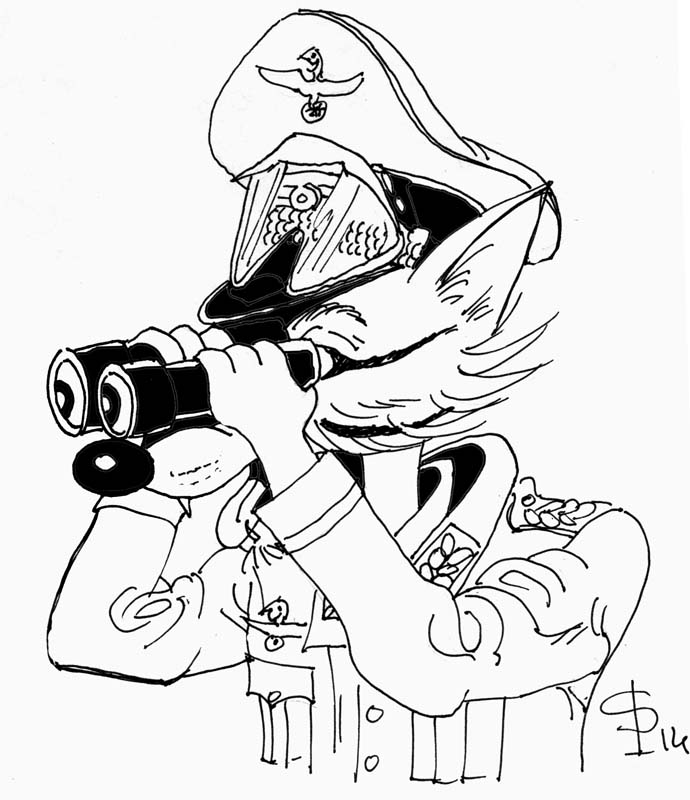
June 21, 1942: Fall of Tobruk : "Gentlemen, you fought like lions, but you were commanded by donkeys !"
Erwin Rommel.
The arrival of the "Desert Fox" redressed the balance in favor of the Axis forces. He landed on February 12, 1941 with the 5th Light Division, 80 Panzer III & IV, 70 light tanks, and at the end of May received the 15th Panzer Division. Italy sends him the Ariete Division with 60 obsolete tanks.
The Panzer III.
The standard battle tank of the Africa Korps in 1941, all versions of this armored vehicle were to follow one another in the field. From the 3.7cm cannon to the short 7.5cm, not forgetting the 5cm high muzzle velocity. Much better adapted to the desert than Allied machines, its performance and reliability easily outclassed the Cruisers used by the British. Less at ease with the well-armored Mathilda mk IIs, even if they don't have much firepower.
It should be noted that Rommel had some of his tanks repainted white on arrival, to make them less visible in the desert...
The five Panzer crew members must be "like the five fingers of a hand".
The tank commander leads under fire. He looks for the best position to reach his objective and maneuver within the section, without getting in the way of the other three tanks. Every change of position must be carefully considered, especially as the vehicle cannot usually fire while moving. It must observe the head extended out of the turret to see and command better. An arrangement that explains the terrible losses among tank commanders...
- The aimer helps his commander to observe the terrain. He opens fire without orders if the emergency calls for it. It's up to him to assess distances and choose the point on the target where he should strike.
- The loader must immediately find the type of shell required and monitor ammunition consumption, even if it means topping up supplies from damaged tanks.
- The radio operator liaises with the section leader. He must maintain his radio and check the frequency setting before combat. He is also responsible for operating the on-board machine gun, and for engaging enemy infantry attacking the tank in close combat. In the event of vehicle abandonment, he is responsible for the codes.
- The driver must choose the route according to the position to be reached, as indicated by his leader. He tries to avoid jerks to allow the pointer to aim. He studies the terrain and is wary of mines. Every stop must be used to observe the landscape and check the fuel level.
In short, the crew must be as united aboard a Panzer as aboard a boat. The mission doesn't end with combat. Tank maintenance, ammunition and fuel replenishment, the tedious and arduous task of changing tracks and undercarriages - all this is the responsibility of the entire crew, who form a veritable "community", almost autonomous within their section and even more so within their company.


